Events
Fall Issue Update
An all-star cast assembled for the fall issue — poetry, short stories, photography, and an interview with a jazz musician from Minneapolis, MN.
Read More →An Artistic Journal · Est. October 2011
A quarterly publication — online and in print — joining poets, photographers, painters, storytellers, and musicians into one open forum for cross-cultural expression.

Jazz has shaped modern American poetry at the level of sound, structure, subject, and attitude. Its blues inheritances, shifting rhythms, collective conversation, and permission to improvise gave poets new ways to make language move. A poem could swing, hesitate, repeat, break apart, or answer itself like a horn responding to a voice across a crowded club.
This relationship matters beyond literary history. It offers Australian readers a way to hear poems as performed events rather than silent arrangements on a page. In Melbourne poetry rooms, Sydney reading series, and online journals reaching across borders, jazz remains a living influence—one that joins African American cultural history with contemporary experiments in voice, line, and form.
The earliest connection between jazz and American poetry runs through the blues. Blues lyrics established a flexible architecture of repetition, variation, and delayed resolution. A line might return with a slight alteration, turning recurrence into emotional development. Poets adopted this method because it could hold grief and wit together without forcing either into a fixed conclusion.
Langston Hughes made this musical inheritance central to his writing. His poems often use short lines, refrains, conversational diction, and rhythmic accents that recall blues singing and jazz phrasing. “The Weary Blues” does not simply describe a performance; it recreates the atmosphere of hearing music late at night, when fatigue, loneliness, and beauty occupy the same room.
Sterling Brown also brought Black vernacular speech and musical cadence into American verse. His poems presented working people, travellers, musicians, and outsiders with an ear for spoken rhythms. The result was a poetry grounded in social life rather than elevated above it. Jazz helped make ordinary speech feel formally significant.
Jazz influenced poets by challenging regular metre. Traditional poetic forms often depend on predictable patterns, while jazz builds energy through syncopation—the placing of emphasis where a listener does not expect it. A poem shaped by this principle may interrupt its own rhythm, stretch a line, or leave a silence where a grammatical ending seems due.
This does not mean that jazz poetry is simply poetry with a beat. Its rhythms may be subtle: the spacing of clauses, the recurrence of consonants, the pressure of a repeated phrase, or the sudden shortening of a sentence. Like a drummer, the poet can create movement through restraint as much as through noise.
For readers in Australia, this kind of cadence can be heard in spoken-word events and poetry slams, where breath and timing influence meaning. A poem read aloud on a Melbourne tram platform or in a small Sydney venue may depend on pauses that would be invisible during silent reading. Everyday listening habits—music through headphones, radio in the car, live performance after work—also make rhythm an accessible entry point into literary analysis.
Jazz is collaborative. Even when a soloist appears to lead, the performance depends on musicians responding to one another. This principle of call and response entered modern poetry as a structure for dialogue, argument, quotation, and communal memory. A speaker makes an assertion; another voice revises it, interrupts it, or refuses it.
Amiri Baraka treated poetry as a force that could confront political power. His work often draws on jazz intensity, Black speech, and the charged atmosphere of live performance. The poem becomes an event between voices rather than a sealed statement. Sonia Sanchez similarly developed a compressed, vocal poetry in which repetition and address create the feeling of a person speaking directly into a shared space.
This exchange can also occur between a poem and its cultural sources. A contemporary writer may answer a blues lyric, a bebop solo, a spiritual, or an earlier poem without merely copying it. In Nguyen Quang Hie's work, readers can consider how artistic forms travel across languages and traditions, gaining new resonance when they encounter different histories of sound and memory.
Improvisation gave poets a model for composition that values discovery. The improvising musician does not perform without preparation; rather, technique makes spontaneous decisions possible. The same is true of poets who work with open forms. They may begin with a formal constraint, a phrase, a rhythm, or a remembered sound, then allow the poem to find an unexpected direction.
The Beat poets drew heavily on this energy. Jack Kerouac’s notion of “spontaneous prose,” Allen Ginsberg’s breath-driven lines, and the music of bebop all contributed to a culture of rapid composition and performance. Yet jazz influence should not be reduced to the Beats. Black poets had long been developing sophisticated relationships between music, speech, history, and form, often under conditions in which artistic expression was inseparable from racial politics.
Yusef Komunyakaa offers a later and particularly rich example. His poetry often turns on jazz, war, memory, and the body. Musical references in his work are structural rather than decorative: they shape how perception shifts between past and present. A saxophone’s phrase can become a model for remembering, where what is omitted may matter as much as what is stated.
Jazz encouraged poets to treat the poem as something embodied. Breath, volume, accent, gesture, and pacing become part of interpretation. This is especially clear in poetry written for performance, but it also affects poems intended for the page. Line breaks can indicate a breath; white space can resemble a rest; typography can suggest overlapping voices.
African American poets have used these resources to resist the idea that literary seriousness must sound detached or formally restrained. The voice may be witty, furious, intimate, playful, or deliberately theatrical. Music permits emotional complexity without requiring a single stable tone. A poem can move from confession to satire to lament within a few lines.
Readers exploring the relationship between physical movement and poetic construction may find a useful parallel in this reflection on line and form. Dance and jazz share an attention to timing, suspension, repetition, and release. Both arts show how a gap can carry force and how a pattern becomes expressive when it is slightly disturbed.
Jazz has carried histories of migration, segregation, labour, urban life, and Black resistance. Its influence on poetry therefore involves more than formal borrowing. When poets use blues repetition or jazz improvisation, they enter a field shaped by specific African American experiences. Responsible reading requires attention to that history rather than treating jazz as a convenient metaphor for freedom.
Contemporary poets continue to adapt these legacies. Claudia Rankine’s work, for example, often combines lyric address, documentary material, visual interruption, and social critique. While her methods cannot be reduced to jazz, they share an interest in fractured perspective and the pressure of public speech. Other poets use hip-hop, electronic sampling, spoken word, and hybrid performance to extend the conversation into new media.
The influence also travels internationally. Australian writers may encounter American jazz through recordings, festivals, university courses, streaming platforms, and local musicians. The Australian market has its own literary ecosystems, including small presses, independent bookshops, community radio, and arts festivals. Copyright remains relevant when poets quote lyrics or reproduce recordings: the Copyright Act 1968 governs protected expression, and permission may be needed even when a reference feels brief or transformative.
A cross-cultural literary journal can make these connections visible without flattening their differences. Stone Path Review’s interest in poetry, music, visual art, and translation creates a setting where readers can place an American jazz poem beside work from other traditions. Its discussion of translating classical Chinese poems is a reminder that rhythm changes when language, history, and audience change.
The strongest way to study this tradition is to combine close reading with active listening. Read a poem silently, then aloud. Mark repeated words, sudden pauses, changes in line length, and moments when a voice seems to answer another. Listen to the music named or implied by the poem, while remembering that the poem may transform its source rather than reproduce it.
Australian readers can build a local context around the American tradition. A visit to a jazz set in Melbourne, a poetry night in Brisbane, or a community arts program in Perth may reveal how musicians and writers negotiate audience, place, and cultural inheritance. These experiences do not make a reader an expert, but they make the relationship between page and performance more immediate.
For writers and editors developing work for print or digital publication, the following practices can help preserve musical complexity:
Open submission policies also matter in shaping the future of this conversation. Writers without institutional access should not have to pay simply to be considered, especially when experimental poetry already sits outside commercial expectations. Stone Path Review’s submission contact provides a direct route for creators interested in contributing to a publication built around international artistic exchange.
Jazz changed American poetry by making sound inseparable from thought. It taught poets to trust the break, the refrain, the answering voice, and the unexpected turn. It also made literary form feel communal: something created between performer and audience, inheritance and invention, memory and the present moment.
Readers can continue that exchange by listening closely, attending local performances, supporting independent journals, and making room for poems that refuse a single rhythm. Explore the work of poets shaped by blues and jazz, share their lines in classrooms and reading groups, and submit ambitious cross-cultural writing to platforms that treat experimentation as part of literature’s public life.
Identity & Recognition
Featured Book
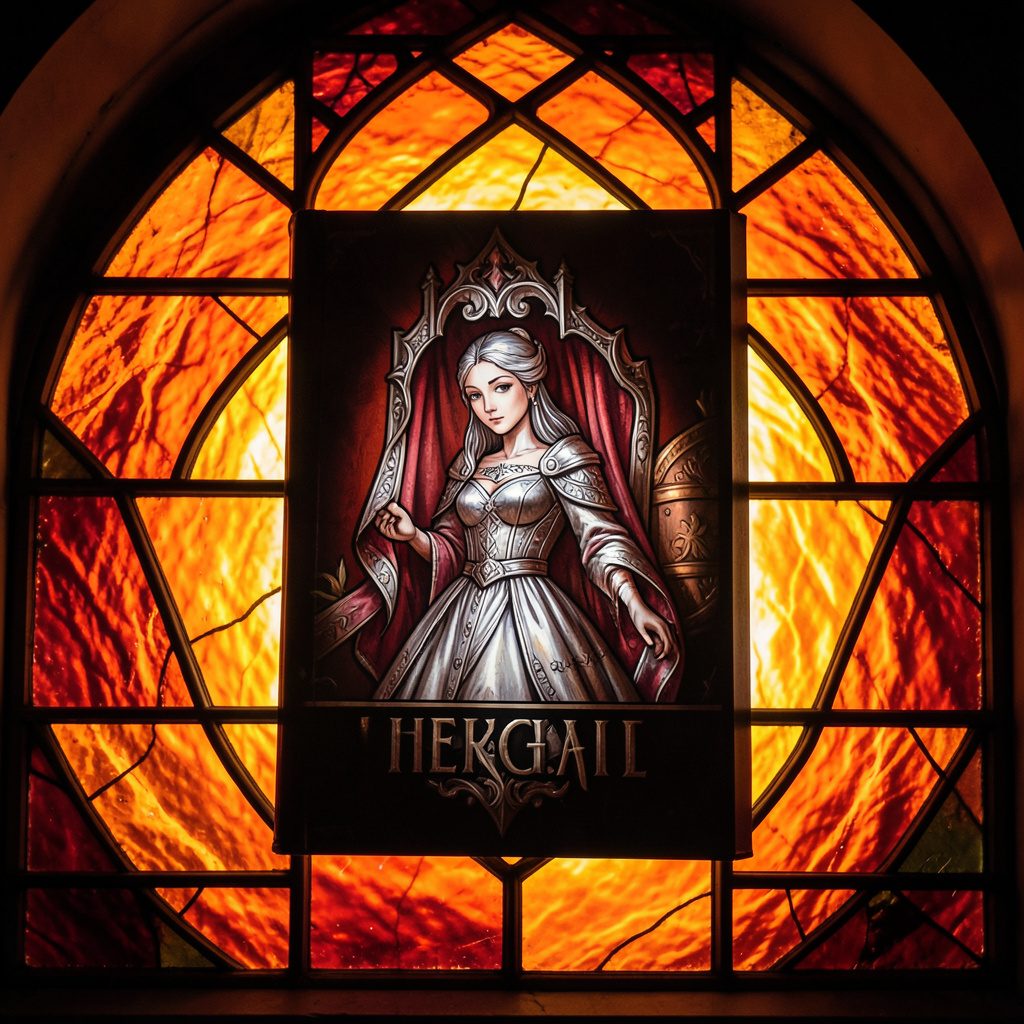
Selected works from across our quarterly issues, gathered into a printed volume. Past print runs have appeared in limited quantities and are available while supplies last.
Volumes cover poetry, short fiction, photography, paintings, drawings, reviews, and interviews — curated to reflect the breadth of artists who have shared their paths in the journal.
Browse Past IssuesInside the Pages
Since 2011, Stone Path Review has hosted contributions from more than twenty artists — poets, photographers, musicians, and filmmakers — along with interviews, readings, and film entries.
Recent volumes have included poetry from Mark Doty and Jim Harrison, an interview with a jazz musician from Minneapolis, MN, and the short film Efflorescence from Deep Field Cinema.

From the Blog
An all-star cast assembled for the fall issue — poetry, short stories, photography, and an interview with a jazz musician from Minneapolis, MN.
Read More →
A featured film entry from Deep Field Cinema, programmed as part of our ongoing screen series.
Read More →
418 Publishing, Inc. was started as the parent company of Stone Path Review, with five issues published by this point.
Read More →
Photography and artist interview, part of an ongoing series highlighting new and established contributors.
Read More →
A recorded poetry reading captured on video and shared alongside the print issue.
Read More →
Browse past quarterly issues of Stone Path Review, available online with limited print quantities.
Read More →