Events
Fall Issue Update
An all-star cast assembled for the fall issue — poetry, short stories, photography, and an interview with a jazz musician from Minneapolis, MN.
Read More →An Artistic Journal · Est. October 2011
A quarterly publication — online and in print — joining poets, photographers, painters, storytellers, and musicians into one open forum for cross-cultural expression.
Dance often arrives before explanation. A torso lengthens, a foot traces the floor, or a partner yields and redirects shared weight. Each action can be felt privately and seen publicly at once. The question of what a dancer knows about line and form is practical: how does a body organise space, time and attention so movement becomes legible without losing its complexity?
Line in dance is not merely a visual stroke. It includes the path of a gesture, the alignment of joints, the timing of a transition and the relationship between one shape and the next. Form is the larger arrangement holding those elements together. A curved arm matters because of where it begins, where it travels and what it prepares; a still stance can contain as much change as a leap.
Stone Path Review brings poetry, image, sound and performance into the same quarterly field, so dance can be considered alongside them without becoming a separate specialty. For an Australian audience, these ideas meet an everyday landscape. Sydney and Melbourne support major companies, independent studios and crowded public spaces where bodies continually negotiate distance and rhythm. A train carriage, tram platform or narrow laneway can reveal the spatial intelligence that also appears under stage lights.
Dancers speak of pathways, axes and shapes, but a body’s line is never a graphic stroke lying on a page. It is produced by muscle, breath and balance. During a plié, the legs create a changing ground; through a tendu, the foot extends a directional invitation. The dancer feels a line from pelvis to heel while also sensing gravity’s downward pull.
The same principle travels through drawing, painting and photography. A contour can be established with little pressure; a photograph can direct the eye along a pavement edge or shadow; a composition can interrupt a line and let negative space carry force. Form depends on relation. Remove the surrounding space and a line may become decorative, but place it within a composition and it gains direction, pressure and consequence.
Performance adds duration. Stone Path Review’s live arts programme gives comparison a social setting, where verbal description, embodied demonstration and visual response can meet. A phrase does not end when feet stop; it may continue in a held gaze, a fading sound or the delayed response of the room. Scale, costume, light and silence all participate in the form.
Balance is an active exchange between mass and support. In a solo, it is the relationship among the supporting foot, the lifted limb and the direction of the torso. With a partner, it becomes conversational: one body offers a counterweight, the other accepts, delays or redirects it. The visible line depends on trust made precise through touch and timing.
Close partnering exposes this knowledge because a small shift in the sternum or hip can alter the apparent line from shoulder to hand. The Spanish-language essay taller de técnica offers non-specialists a useful way to consider how placement, connection and preparation produce form. Technical description does not flatten style; it reveals the choices beneath a fluent surface.
Repetition is not simple copying. A phrase returns with altered weight, speed or focus, allowing dancers to test spatial memory and cause. Outside the studio, the same awareness follows a person through a packed carriage on a Sydney train or a busy Melbourne laneway. Turning, braking and yielding become movement problems before they become daily habits.
Geometry becomes culturally specific when movement travels between traditions. An arabesque in classical ballet, a grounded stance in a contemporary solo and a codified phrase in another dance system are not interchangeable signs. Each carries histories of training, repertoire and embodied meaning. Its line is disciplined by a community, not invented in isolation.
That caution becomes clear when language and visual form meet. The journal’s Chinese poetry translation evening invites readers into classical Chinese poems through translation and discussion. For a dancer, the encounter offers a useful parallel: a poem’s progression and a phrase’s progression both depend on pacing, emphasis and the interval between gestures. The parallel is not identity, because translation changes what can be carried across.
In Chinese poetry, calligraphy and scroll painting, form often makes space active. A composition may be encountered in stages as the eye travels across a surface, while a pause can hold as much force as a dense line. A dancer can investigate negative space by shaping the interval between one action and the next. Emptiness there is not an absence; it is duration under pressure.
In Australia, this attention to context carries particular responsibility. Aboriginal and Torres Strait Islander dance traditions are living cultural practices, not a generic source of geometric motifs. Song, movement, Country and permission matter. Formal comparison can be valuable when it names difference and follows community protocols; it becomes harmful when restricted knowledge is aestheticised for outside effect.
Training and staging in Australia are shaped by a decentralised cultural economy. Sydney and Melbourne are major hubs, while regional centres sustain distinct studio, school and touring networks. Soloists often move between company seasons, freelance projects and community engagements, so a clear line of work may cross jurisdictions and change with every commission.
Alongside Creative Australia and state or territory arts agencies, commercial seasons, festivals, grants and touring residencies create a mixed ecology that rewards adaptability. International exchange extends that field, and projects such as Sudí Europa place cultural material beyond a single national frame. Touring and collaboration then expose choreography to new audiences and performance conditions.
Movement also sits inside federal law. Under the Copyright Act 1968, eligible choreographic works can receive copyright protection as dramatic works, while performers may have rights in recordings of their performances. A commission, workshop or filmed duet should therefore clarify ownership, permitted uses and credits in writing. Agreements cannot replace cultural protocols, but they can prevent uncertainty when movement is taught, archived or reproduced.
Music offers another line: melodic contour, rhythmic pulse, dynamic shading and the speed of a silence. Dancers hear phrasing in ways that can be mapped to the spine or imagined as a pathway across the floor. A change in timbre may redirect the whole body even when no visible count changes. Musicians likewise hear meter as tension, release and expectation, not merely a beat.
In its reflection on curating mixtape sound, Stone Path Review treats sequence as an artistic form. A transition can work like a cut, while a returning motif changes meaning through its neighbours. This offers a productive bridge for movement makers: build a solo from phrases that interrupt, echo and redirect one another, allowing continuity to emerge without making every transition seamless.
That principle reaches across oral, literary and performed expression. Speech, accent and silence occupy a shared field, much as instruments occupy a room. Whether a phrase is spoken, sung or danced, its meaning depends on what comes before and after it. Listening becomes a choreographic skill: hear duration, dynamic and the space between accents.
A dancer’s knowledge becomes useful to readers when it is translated into observable details rather than treated as invisible instinct. Attention should connect bodily choices with compositional form, allowing viewers to see how pressure, delay and balance make meaning.
For a viewer, several markers sharpen that attention:
For makers, the reverse exercise turns attention into method:
Applied this way, looking and making reinforce one another. The aim is not to impose dance on every artwork, but to recognise shared formal problems: duration, resistance, relation and release.
Form also carries responsibility. A phrase derived from another culture, a borrowed costume or a reproduced image can appropriate authority even when its surface is polished. Dancers learn that alignment includes awareness of whose movement has shaped the room. Questions of consent, attribution and access belong inside aesthetic analysis because they affect what form is allowed to claim.
Comparison becomes most revealing when each mode retains its own material conditions. Dance unfolds through muscular effort and live duration; poetry through language; photography through framing; music through sound. A shared vocabulary can reveal correspondences, but it should not make the arts identical or rank one above another.
| Artistic mode | Where line appears | How form operates | What close attention reveals |
|---|---|---|---|
| Dance | A pathway through joints, weight and gesture | Phrasing, counterweight, repetition and breath | Balance, resistance, cause and effect |
| Poetry | Movement of language across lines and stanzas | Syntax, imagery, pause and pacing | Rhythm, implication and negative space |
| Photography | Edges, gestures, gazes and implied continuation | Framing, crop, focus and sequence | Omission, viewpoint and duration |
| Music | Melodic contour, pulse, timbre and silence | Motif, dynamics, transition and repetition | Memory, expectation and emotional direction |
Take this practice into the next rehearsal, gallery visit or walk home: choose one line, name the forces that shape it and describe what changes when its context changes. Artists can develop that observation into a poem, essay, image sequence, performance or video and submit it through Stone Path Review’s open process, which carries no reading or submission fee. Specific attention is how bodily knowledge enters a wider conversation about culture, form and the visible world.
Identity & Recognition
Featured Book
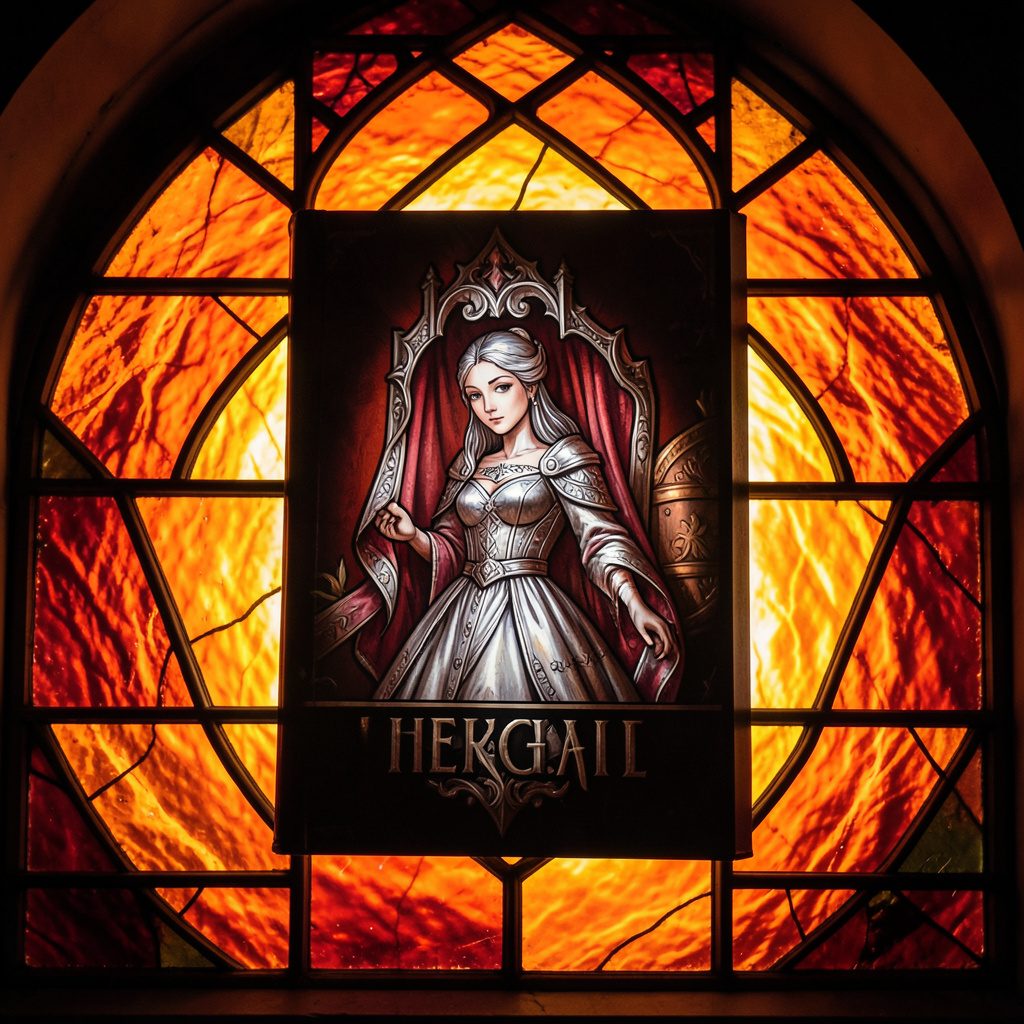
Selected works from across our quarterly issues, gathered into a printed volume. Past print runs have appeared in limited quantities and are available while supplies last.
Volumes cover poetry, short fiction, photography, paintings, drawings, reviews, and interviews — curated to reflect the breadth of artists who have shared their paths in the journal.
Browse Past IssuesInside the Pages
Since 2011, Stone Path Review has hosted contributions from more than twenty artists — poets, photographers, musicians, and filmmakers — along with interviews, readings, and film entries.
Recent volumes have included poetry from Mark Doty and Jim Harrison, an interview with a jazz musician from Minneapolis, MN, and the short film Efflorescence from Deep Field Cinema.
From the Blog
An all-star cast assembled for the fall issue — poetry, short stories, photography, and an interview with a jazz musician from Minneapolis, MN.
Read More →
A featured film entry from Deep Field Cinema, programmed as part of our ongoing screen series.
Read More →
418 Publishing, Inc. was started as the parent company of Stone Path Review, with five issues published by this point.
Read More →
Photography and artist interview, part of an ongoing series highlighting new and established contributors.
Read More →
A recorded poetry reading captured on video and shared alongside the print issue.
Read More →
Browse past quarterly issues of Stone Path Review, available online with limited print quantities.
Read More →