Events
Fall Issue Update
An all-star cast assembled for the fall issue — poetry, short stories, photography, and an interview with a jazz musician from Minneapolis, MN.
Read More →An Artistic Journal · Est. October 2011
A quarterly publication — online and in print — joining poets, photographers, painters, storytellers, and musicians into one open forum for cross-cultural expression.
A classical Chinese poem can arrive on the page like a small lantern: compact, luminous and surrounded by darkness. A few characters may suggest a river crossing, a moonlit room, a missing friend or the sound of wind moving through pines. Translation begins when that compressed world must be opened for readers who do not share the original language, historical setting or literary tradition.
For an Australian reader, the experience may begin somewhere entirely contemporary: on a tram through Melbourne, beside a window in a noisy Sydney flat, or during an evening walk along the Brisbane River. The poem’s mountains and waterways may belong to another century, yet its solitude, homesickness and attention to weather can feel unexpectedly close.
Translating classical Chinese poetry is therefore more than replacing words. It is a creative act of listening, research and restraint. The translator must decide what to preserve, what to explain and what to leave spacious enough for the reader’s imagination. That process resembles the work of photography, music and painting: meaning emerges through selection, rhythm, light and silence.
Classical Chinese poetry often relies on extraordinary economy. A short poem can contain a season, a social relationship and a change in emotional temperature without spelling out any of them. Grammatical subjects may be omitted. Tense can remain open. A line may present an image rather than state an interpretation, allowing the reader to sense whether the speaker is remembering, observing or grieving.
The famous regulated verse forms of the Tang dynasty add another layer of structure. Tone patterns, parallel lines and prescribed rhyme shape the poem’s movement. A translator working into English cannot reproduce every feature at once without producing language that feels stiff or archaic. Instead, the task may involve choosing which architecture matters most: the cadence, the visual balance, the semantic precision or the poem’s emotional turn.
This is where literal translation can become misleading. A line about “white hair” may be a physical detail, a sign of ageing, a symbol of exile or all three. A reference to a frontier pass may carry military history that an English reader will not automatically recognise. Good translation does not flatten such possibilities into a single answer. It creates a clear surface while preserving room beneath it.
Landscape in classical Chinese poetry is rarely just scenery. A river can mark separation, a mountain can represent distance from court, and the moon can connect people who are physically apart. The natural world often becomes a language for human feeling, although the poem may never identify that feeling directly.
An Australian translator might instinctively compare these images with local experience: the hush of the Blue Mountains after rain, the pale light over a South Australian salt lake or the sudden stillness of a bush track near Canberra. Such associations can open the poem, but they can also distort it. A Chinese mountain landscape is not simply an Australian one with different trees. The translator needs to honour cultural particularity before making a poem feel accessible.
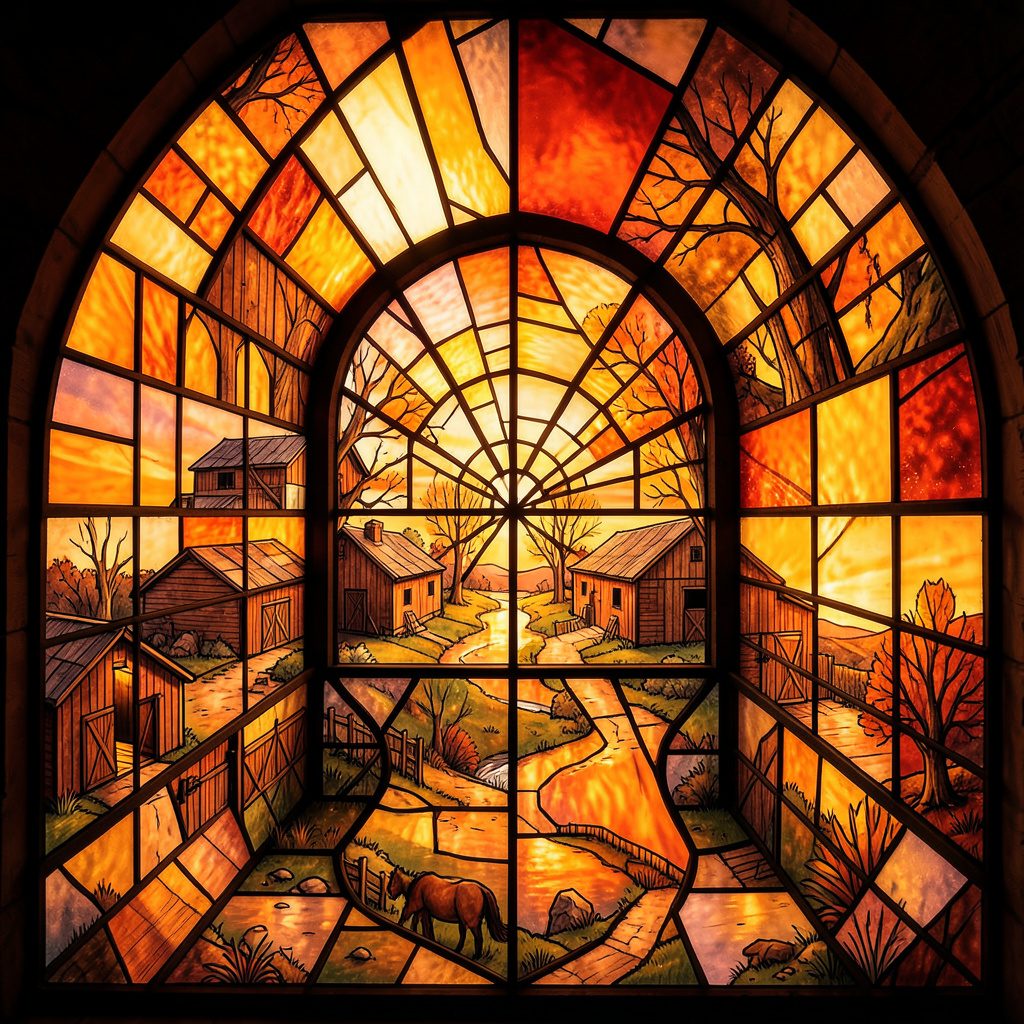
Light provides a useful way to think about this balance. A translator chooses what the reader sees first and what remains in shadow. The discussion of painting with light offers a helpful parallel: a change in illumination can alter the entire emotional force of an image. In a poem, one adjective, pause or line break can perform the same work.
The strongest versions often resist unnecessary explanation. If a poem shows a traveller setting out at dawn, the translation does not need to announce that the traveller is lonely. The cold road, the empty inn and the fading moon may already carry that feeling. Trusting the image is a form of fidelity.
English does not arrange meaning in the same way as classical Chinese. Chinese characters can remain visually spare, while English usually requires articles, prepositions and explicit grammatical links. The translator must add enough connective tissue for the poem to breathe without turning a concentrated image into a paragraph of explanation.
Lineation becomes especially important. A five-character or seven-character line may be short in the original, but its English equivalent could need twice the space. Some translators use concise free verse, while others choose a regular metre or a loose rhyme. Neither approach is automatically more accurate. The question is whether the English poem creates a comparable experience of pressure, release and reflection.
Sound matters even when rhyme does not. Repeated consonants can suggest stone, rain or wind. Long vowels may slow a farewell. A carefully placed monosyllable can make the final line feel like a door closing. Reading a draft aloud in an Australian accent, whether in a quiet study or at a spoken-word night in Fitzroy, can reveal awkward stresses that remain invisible on the screen.
The translator’s voice should be present without becoming dominant. An overly antique style may make the poem sound like a museum object, while slang can date it too quickly or pull it into a cultural setting that the original does not support. Clear contemporary English often provides the best meeting place between historical distance and present attention.
| Translation decision | Possible benefit | Potential risk |
|---|---|---|
| Keeping images close to the original | Preserves cultural texture and ambiguity | May feel unfamiliar without context |
| Adding brief notes | Clarifies history, place and allusion | Can interrupt the poem’s emotional flow |
| Using regular English metre | Gives the poem audible shape | May force unnatural word choices |
| Preserving line-by-line structure | Makes the source form visible | Can produce cramped or uneven English |
| Choosing contemporary diction | Builds immediate connection | May erase historical distance |
| Retaining repeated sounds | Carries musical qualities across languages | Can shift emphasis away from meaning |
Historical knowledge enriches a poem, but explanation needs proportion. Readers may benefit from knowing that a poet was travelling in exile, serving at a distant post or writing during political upheaval. They may need a note about a place name, a ritual or a literary allusion. Yet a translation surrounded by dense commentary can begin to resemble a lecture rather than an encounter.
A useful method is to separate kinds of information. Essential context belongs in a short headnote or unobtrusive note. Interpretive possibilities can appear in an accompanying essay. Personal reactions belong to the translator’s afterword, where they can be offered as one reading rather than a final verdict.
This distinction is particularly valuable in a cross-cultural journal. Readers in Perth, Hobart or regional New South Wales may know very little about Chinese literary history, while others may have grown up with Mandarin, Cantonese or family traditions connected to the poems. The publication should welcome both groups without treating either as a problem to be solved.
Australian literary culture already makes space for such exchanges through festivals, university journals, independent bookshops and community arts programmes. A translated poem might sit beside an original poem, a photograph, a sound work or a personal essay. That combination reflects how readers actually move between art forms, especially in a quarterly publication that values work from many places.
A poem intended for publication has a different life from one prepared for a classroom. It may be read on paper, on a phone, at a gallery event or aloud to an audience finishing an arvo coffee. Formatting, pronunciation notes and the decision to print the original script can all shape that encounter.
Including the Chinese text can be generous when it is possible and appropriate. It lets bilingual readers compare texture and gives monolingual readers a visual sense of the source, even if they cannot read it. Pinyin may help with names and place references, though it should not be treated as a substitute for understanding tone or cultural context.
Public reading also exposes the translation’s physical qualities. A line that looks elegant may be difficult to say. A sentence that works silently may lose its force when breath runs out halfway through it. Translators can test their drafts in small venues, libraries and literary gatherings, listening for where an audience leans in, loses the thread or hears an unintended emphasis.
For a journal such as Stone Path Review, this openness suits the relationship between written and visual art. The publication is an online and print forum supported by a nonprofit parent organisation, and its editorial identity reaches across poetry, fiction, criticism, photography, painting, music and video. Its editorial masthead reflects the collaborative work behind that broad artistic conversation.
The best translation does not pretend that distance has disappeared. It lets readers feel the gap between an ancient poem and their own moment while offering a bridge strong enough to cross. A moon above a Tang dynasty river remains a Chinese image, yet its quiet can reach a reader watching ferries move across Sydney Harbour or hearing rain against a tin roof in regional Victoria.
That reach depends on care. Translators should credit existing versions, acknowledge uncertainty and avoid presenting one interpretation as definitive. They should also remember that classical Chinese poetry is not a single mood or style: beside the familiar poems of longing and nature are works of satire, friendship, politics, sensuality, travel and spiritual questioning.
Stone Path Review’s open submission model, with no reading or submission fees, gives translators and artists a practical place to bring such work into public view. A carefully prepared translation can be submitted alongside a brief contextual note, an original response poem or a visual work that extends its atmosphere. Send the poem into that wider conversation, and let its old images find a new evening, a new voice and a new reader.
Identity & Recognition
Featured Book

Selected works from across our quarterly issues, gathered into a printed volume. Past print runs have appeared in limited quantities and are available while supplies last.
Volumes cover poetry, short fiction, photography, paintings, drawings, reviews, and interviews — curated to reflect the breadth of artists who have shared their paths in the journal.
Browse Past IssuesInside the Pages
Since 2011, Stone Path Review has hosted contributions from more than twenty artists — poets, photographers, musicians, and filmmakers — along with interviews, readings, and film entries.
Recent volumes have included poetry from Mark Doty and Jim Harrison, an interview with a jazz musician from Minneapolis, MN, and the short film Efflorescence from Deep Field Cinema.

From the Blog
An all-star cast assembled for the fall issue — poetry, short stories, photography, and an interview with a jazz musician from Minneapolis, MN.
Read More →
A featured film entry from Deep Field Cinema, programmed as part of our ongoing screen series.
Read More →
418 Publishing, Inc. was started as the parent company of Stone Path Review, with five issues published by this point.
Read More →
Photography and artist interview, part of an ongoing series highlighting new and established contributors.
Read More →
A recorded poetry reading captured on video and shared alongside the print issue.
Read More →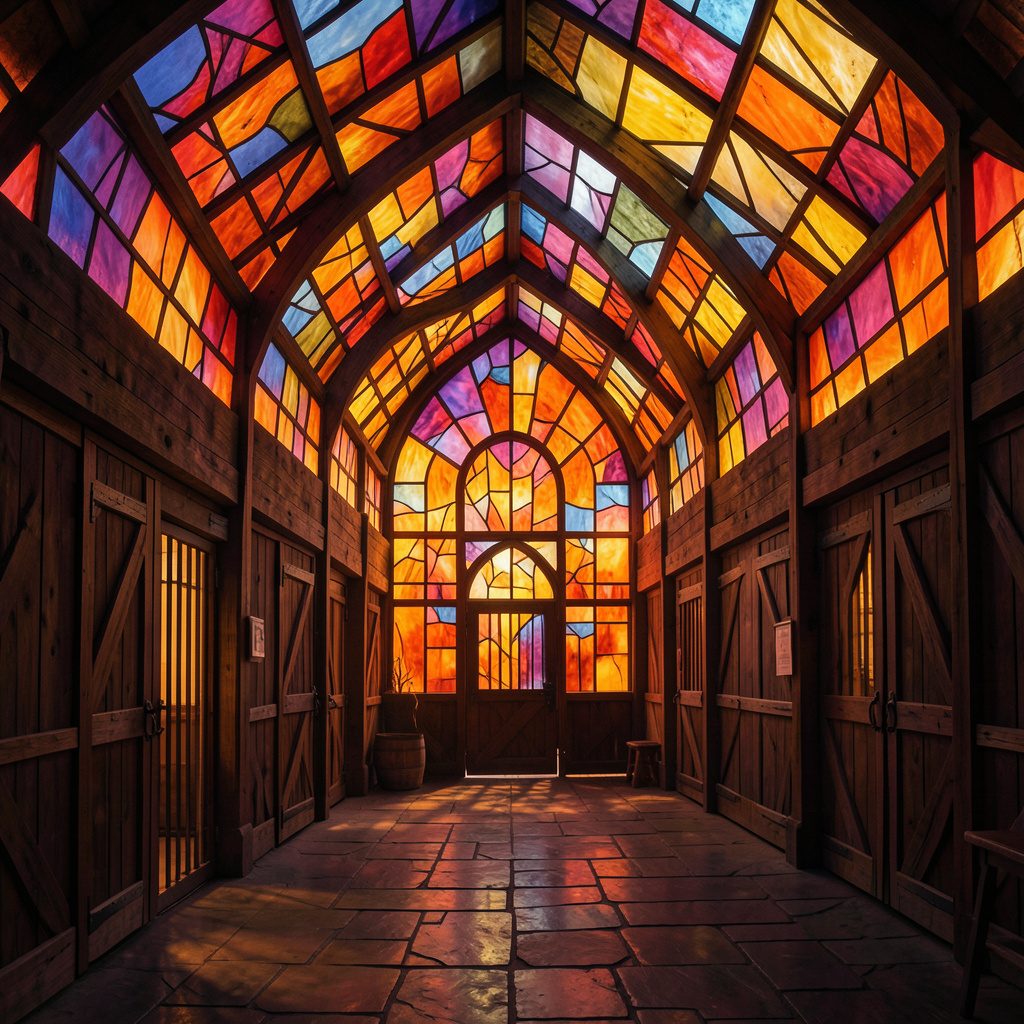
Browse past quarterly issues of Stone Path Review, available online with limited print quantities.
Read More →