Events
Fall Issue Update
An all-star cast assembled for the fall issue — poetry, short stories, photography, and an interview with a jazz musician from Minneapolis, MN.
Read More →An Artistic Journal · Est. October 2011
A quarterly publication — online and in print — joining poets, photographers, painters, storytellers, and musicians into one open forum for cross-cultural expression.
At first glance, a solitary arrowhead can look like the least consequential part of a picture. A few dark lines describe a point, a notch, perhaps a fracture in the base. Yet scale reverses once the image is placed on a wall or in a journal: the small mark attracts the eye and begins to press on everything around it. Its apparent lightness is deceptive.
The cultural weight of a single arrowhead in a drawing comes from what the shape carries without saying. It may suggest a hand that made it, a shaft now missing, a hunt or battle, a ritual, an exchange between distant communities, or the tidy version of history found on a museum label. Each possibility changes the mark, even when the graphite contour has not changed.
To look at such a point is to look at relation rather than thing. The white paper becomes air or distance; the border becomes an edge of terrain; the viewer supplies the arrow that is no longer there. This essay treats that absence as an active part of the image, connecting visual attention to material culture, translation, and the slow ethics of interpretation.
If a drawing shows an arrowhead alone, it turns a component into a portrait. Without fletching or shaft, it resists the familiar logic of a weapon and becomes harder to classify. The eye moves around its chipped edge, searching for a whole that cannot be recovered. That incompleteness gives the image quiet intensity.
Seen beside an online visual archive, the drawing seems to shift between evidence and emblem. In reproduction, a hand-sized stone point may be enlarged until scratches become grand gestures; on the page, those marks return to fragile scale. A photograph freezes an object, while a drawn contour records decisions of emphasis: which ridge is dark, which shadow can be left out.
Melbourne’s laneway studios offer a fitting setting for this comparison. A drawing made at a shared table in a former warehouse may travel to a group exhibition, a small gallery, or an online post, accumulating new meanings at each stop. The city’s trams carry these private acts of attention through public streets, where a sketchbook can become as visible as a phone screen.
Material starts with pressure. A drawn arrowhead may be built from firm contour, repeated scratches, or soft graphite rubbed until the point seems to emerge from mist. Each method carries bodily time. The artist’s wrist, breath, and hesitation remain in the mark even when the subject is historical or archaeological.
The same principle applies to a key, a leaf, or a folded paperclip: form is not a neutral container. It is a record of handling. When viewers recognise the arrowhead’s possible use, they may project speed and violence onto a static image; when they notice its chipped base, they may instead sense age, damage, and repair.
An arrowhead also asks what has been cropped out. The absent shaft suggests leverage and direction, while missing context weakens those suggestions. Its isolation may be deliberate curatorial strategy, an artistic choice, or the practical limit of a small drawing. Giving those possibilities different names prevents mystery from hardening into certainty.
The most difficult meanings are historical. Arrowheads can be associated with hunting, conflict, ceremony, trade, and skilled manufacture, but no single label safely contains them. A projectile point recovered from an archaeological site belongs to a particular landscape and community, not to a universal story of human progress. Its cultural significance should be established through evidence and, where relevant, the authority of Traditional Owners.
In Australia, that responsibility meets an evolving legal and commercial setting. Recent amendments to the Copyright Act 1968 concerning Indigenous Cultural and Intellectual Property recognise cultural knowledge and traditional cultural expressions, while state heritage rules and local council protections can affect the handling and interpretation of significant material. These laws do not replace cultural authority; they create formal channels for questions of consent, ownership, and appropriate use.
The gap between provenance and appearance becomes vivid in the local market. At Adelaide’s Central Market, a mass-made arrowhead pendant may share a shelf with stones, seed necklaces, and objects sold under broad cultural labels, while a documented artwork carries a different history of authorship and exchange. Labels, maker information, and the distinction between original and reproduction allow a buyer to see more than the point’s silhouette. The responsible choice is not to infer authority from a polished edge.
The essay on everyday objects in poetry offers a useful correction to museum thinking: meaning gathers around use, repetition, and attachment. An arrowhead might be pinned to a noticeboard, used as a book weight, or incorporated into jewellery. Each setting makes the point less isolated while adding a human scale to it.
Domestic use can soften an object’s charge, though it need not erase history. A point placed beside a cup on a kitchen table enters a rhythm of breakfast, conversation, and shared touch. The Australian habit of moving between rooms and glancing at familiar objects is ordinary, yet it gives domestic things a social life. In a Sydney flat, an object on a windowsill changes with the harbour light, joining private routine to the wider city.
Digital reproduction multiplies these lives. A cropped scan becomes a profile picture, a sticker, or a message sent between friends. Its shape survives while its scale, tactility, and relation to the body disappear. Each reuse tests whether an image can travel without its context. On a ferry crossing or a crowded platform, the arrowhead may become a quick sign for speed, danger, aim, or decision, stripped of everything that made the original object particular.
Translation makes the arrowhead’s instability more pronounced. In visual art, an arrow can mean direction, urgency, threat, romantic longing, or a mark on a map. Translators may preserve the word while shifting its associations. An image travelling between languages inherits those choices, and so does a drawing that passes from one cultural setting to another.
The reflections gathered in translating classical Chinese poems show how much can change when a classical image is carried between readers, teachers, and performers. A poem’s arrow may arrive with military force in one reading and separation in another. A drawn arrowhead can undergo comparable shifts: one audience sees ancient technology, another sees loss, and another sees a culturally specific form interpreted through a contemporary artist’s visual grammar.
This does not make meaning arbitrary. Grammar, history, and material evidence still constrain interpretation. A responsible reading names the chain of transmission: who made the mark, who documented it, who displayed it, and who reads it now. In multilingual Australia, where cities contain rich linguistic exchange yet retain histories of migration and exclusion, that chain can be neither simple nor uniform.
Close looking needs discipline. Begin with formal facts: scale, material, orientation, line weight, and the space around the shape. Notice whether the point faces into or out of the page. Then inventory the implied absences: no hand, no bow, no animal, no landscape. This separates the drawing’s evidence from the story a viewer is tempted to complete.
The companion essay on architectural lessons about space makes a related case for negative space as a carrier of structural and emotional weight. In the arrowhead drawing, the margin may be as expressive as the mark. A crowded field can imply pressure, while broad emptiness can suggest isolation. White is not merely background; it is a condition of the image.
A sound reading moves between these levels without allowing one to erase another. The line itself remains evidence, the historical account supplies context, and the viewer’s response completes no required meaning. These habits are modest, but they create room for cultural difference rather than concealing it behind a confident label.
A single arrowhead can be an artefact of manufacture, a trace of intention, an image of force, and a question about who gets to describe the past. Its weight increases when viewers resist making it mean one thing too quickly. The line on the page may be spare, but the cultural field around it is dense.
That density calls for exchange rather than final possession. Artists, writers, photographers, musicians, and readers can meet around an image without agreeing on its meaning, provided they remain accountable to evidence, context, and the people whose cultures are at stake. Stone Path Review’s open forum is suited to this kind of attention, since visual, verbal, and performed responses can sit beside one another.
Before setting the page aside, make one small response to the point you have been reading: sketch it, photograph it, translate its absence, or write a note beginning with what you can actually see. Send that work to Stone Path Review, which welcomes submissions without reading or submission fees, and let a solitary mark enter a conversation capable of crossing borders.
Identity & Recognition
Featured Book
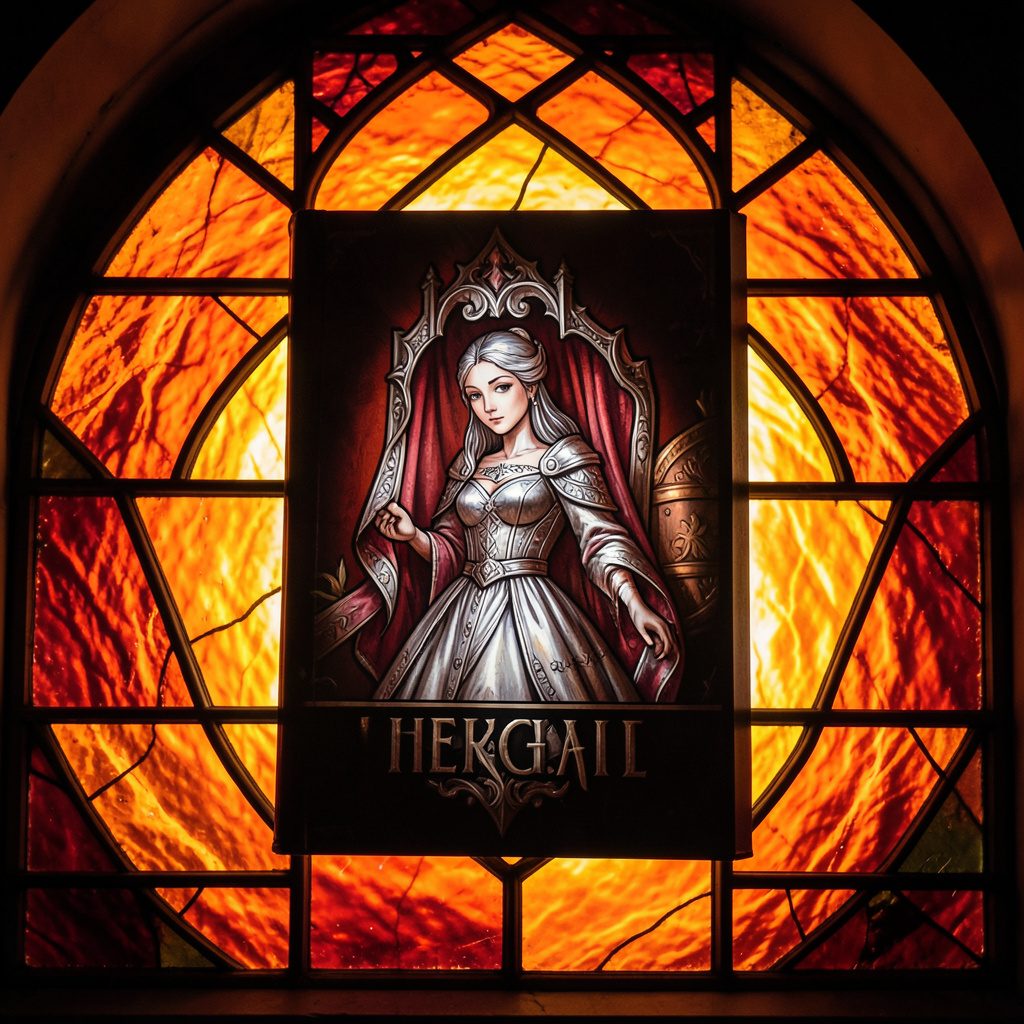
Selected works from across our quarterly issues, gathered into a printed volume. Past print runs have appeared in limited quantities and are available while supplies last.
Volumes cover poetry, short fiction, photography, paintings, drawings, reviews, and interviews — curated to reflect the breadth of artists who have shared their paths in the journal.
Browse Past IssuesInside the Pages
Since 2011, Stone Path Review has hosted contributions from more than twenty artists — poets, photographers, musicians, and filmmakers — along with interviews, readings, and film entries.
Recent volumes have included poetry from Mark Doty and Jim Harrison, an interview with a jazz musician from Minneapolis, MN, and the short film Efflorescence from Deep Field Cinema.
From the Blog
An all-star cast assembled for the fall issue — poetry, short stories, photography, and an interview with a jazz musician from Minneapolis, MN.
Read More →
A featured film entry from Deep Field Cinema, programmed as part of our ongoing screen series.
Read More →
418 Publishing, Inc. was started as the parent company of Stone Path Review, with five issues published by this point.
Read More →
Photography and artist interview, part of an ongoing series highlighting new and established contributors.
Read More →
A recorded poetry reading captured on video and shared alongside the print issue.
Read More →
Browse past quarterly issues of Stone Path Review, available online with limited print quantities.
Read More →