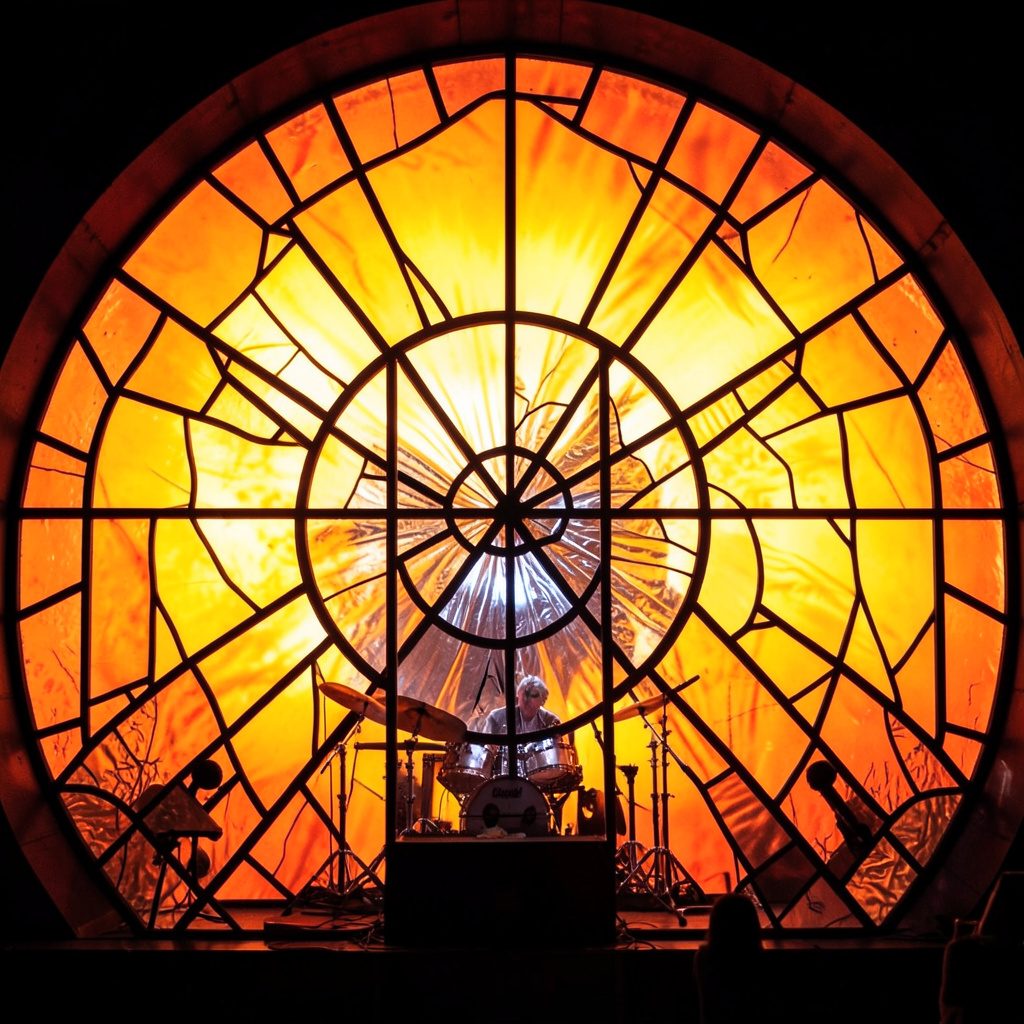
Events
Fall Issue Update
An all-star cast assembled for the fall issue — poetry, short stories, photography, and an interview with a jazz musician from Minneapolis, MN.
Read More →An Artistic Journal · Est. October 2011
A quarterly publication — online and in print — joining poets, photographers, painters, storytellers, and musicians into one open forum for cross-cultural expression.
A handmade bowl can carry more presence than a flawless object. Its rim may lean slightly, the glaze may pool in a dark crescent, or a finger mark may remain visible beneath the surface. These irregularities give the vessel a history before anyone fills it with tea, rice or flowers. They remind us that the object came from clay, fire, timing and touch rather than from a perfectly controlled machine. Learn more about 10 Vitsiä Suomalaisesta Junasta Ja Sen Myöhästymisestä.
Japanese ceramic traditions have long valued asymmetry, restraint and the evidence of making. This sensibility is often associated with wabi-sabi, a broad aesthetic appreciation of transience, simplicity and incompleteness. It does not mean that every rough or damaged pot is automatically beautiful. Instead, it asks us to notice how material, use and time work together. Learn more about Veilige Gokautomaat 215206.
For Australian viewers, this approach offers an appealing alternative to mass-produced homewares. A Melbourne studio mug with a slightly uneven handle, a Sydney pot marked by atmospheric firing or a small bowl bought at a Brisbane craft market can bring the maker’s presence into daily life. The appeal lies in the relationship between practical use and visual character.
The idea also opens a wider conversation about looking. A photograph, painting, poem or ceramic vessel can all make room for accident and ambiguity. Even an amusing detour through Finnish train delays can suggest how waiting changes our attention: when nothing happens according to schedule, small details become unexpectedly vivid.
Japanese pottery is not one uniform style. It includes regional traditions such as Bizen, Shigaraki, Mashiko, Karatsu and Mino, each shaped by local clay, fuel, kiln design and history. Some pieces are highly refined, while others celebrate rough surfaces, natural ash deposits and irregular forms. The diversity matters because “imperfection” should never be treated as a shortcut for understanding every Japanese ceramic practice.
The finished surface records a chain of decisions and events. A potter chooses how much to refine the clay, how forcefully to turn the wheel, where to trim the foot and whether to leave a natural mark. During firing, minerals shift, flames alter colour and ash settles unevenly. A dark patch or pale flash may be impossible to repeat, giving the object a singular visual rhythm.
This is why a handmade vessel can feel alive without being decorative in a conventional sense. Its beauty may sit in a wobble that makes the lip comfortable to hold, or in a glaze that changes from grey to green as light moves across it. The eye is drawn into the surface, searching for the meeting point between intention and chance.
Wabi-sabi is frequently used in lifestyle writing to describe neutral interiors, linen textiles and uncluttered rooms. That popular usage can flatten a complex aesthetic into a shopping trend. In pottery, the idea is more demanding: it involves accepting impermanence, recognising modest materials and finding value in an object that does not pretend to be untouched by life.
A tea bowl, or chawan, demonstrates this particularly well. Its proportions may feel slightly off-centre, its glaze may be quiet rather than glossy, and its foot may reveal the hand of the maker. In the tea ceremony, the bowl is handled, turned and observed from several angles. Its value is connected to touch, hospitality and repeated use, not simply to its position on a shelf.
The same attentiveness appears in the repair tradition of kintsugi, in which broken ceramics are joined with lacquer often highlighted by powdered gold, silver or other materials. Kintsugi does not erase the break. It makes the fracture part of the object’s visible biography. The practice has inspired many contemporary interpretations, although commercial products sometimes reproduce its appearance without its historical or material context.
Imperfection also has an ethical dimension. It can resist the pressure to replace anything marked by age or use. A repaired cup may be less convenient than a new one, yet it can carry memories of a kitchen, a friendship or a particular season. In a culture shaped by fast retail and disposable packaging, this durability becomes an artistic and environmental statement.
The appreciation of irregularity depends on close looking. A photograph of a pot can capture a glaze’s colour, but it may miss the thickness of the rim or the warmth retained by the clay. Handling adds information that an image cannot provide. The reverse is also true: photography can reveal shadows, reflections and details that disappear during ordinary use. This relationship between mediums is explored beautifully in painting with light, where attention becomes a form of creative practice.
Light is especially important when viewing ceramics. Morning sun may emphasise a sandy texture, while an overcast afternoon can bring out subtle variations in a celadon glaze. In an Australian home, strong northern light can make a vessel appear entirely different from the same piece seen under warm evening lamps. A pot’s beauty therefore changes with its surroundings rather than existing as a fixed visual fact.
The camera also encourages us to distinguish accident from carelessness. A chipped edge, an intentional crawling glaze and a poorly finished crack are not equivalent. The story of imperfection becomes persuasive when the object remains structurally sound and the irregularity contributes to its character. Skilled ceramicists understand this balance: freedom is supported by knowledge of clay bodies, kiln temperatures and functional design.
Contemporary artists often push this further, combining traditional firing methods with digital modelling, found materials or sculptural forms. Their work may preserve the language of Japanese pottery while questioning the idea that tradition must remain frozen. A rough vessel can therefore be both historically informed and experimental.
Japanese ceramics have a strong presence in Australia through galleries, design shops, workshops and private collections. Melbourne’s studio culture makes hand-thrown cups and wood-fired vessels easy to encounter, while Sydney’s galleries often place Japanese artists in dialogue with local and international ceramicists. In Brisbane and regional centres, community pottery classes introduce people to the pleasure of making objects that retain visible traces of the process.
Buying locally can also change how this aesthetic is understood. A weekend visit to a makers’ market may reveal Australian clay, native ash experiments and forms shaped by local use rather than Japanese imitation. Markets such as Finders Keepers have helped bring independent craft into public view, although buyers should still look for clear information about the maker, materials and firing methods. Supporting a studio directly keeps the conversation connected to labour.
There is value in placing Japanese pottery beside Australian ceramic traditions without collapsing them into one another. Aboriginal and Torres Strait Islander artists work within distinct cultural, communal and artistic frameworks, and their work should be approached with respect rather than used as a decorative comparison. The broader lesson is that materials carry place. Clay, landscape and cultural memory cannot be separated from the people who work with them.
The domestic setting matters too. A slightly uneven rice bowl may suit everyday meals more naturally than a precious ornament. A vase with a repaired line can sit beside native gum branches, while a small jar can hold tea on a verandah after rain. These objects become part of Australian routines, shaped by climate, food, architecture and patterns of hospitality.
The appeal of an imperfect pot is ultimately relational. It asks us to slow down long enough to see a variation in colour, feel a thumbprint or notice how a repaired line catches the light. This kind of attention has parallels in literature and visual art, where unfinished meanings often remain active in the mind. The renewed interest in folk tales in contemporary art reflects a similar desire to preserve ambiguity, memory and transformation.
There is also a productive tension between control and surrender. The potter must prepare the clay, calculate the firing and understand the kiln, yet cannot dictate every final mark. The viewer encounters that tension in the finished piece. A controlled silhouette may carry a wild surface; a restrained colour may conceal dramatic heat movement beneath it.
This balance can influence the way objects are chosen. Instead of asking whether a bowl matches a room perfectly, a collector might consider whether it feels good in the hand, whether its marks invite repeated attention and whether its making is honestly represented. Questions of provenance and labour remain important, especially when Japanese design terms are used to sell mass-produced goods at premium prices.
A useful distinction is between an object that welcomes time and one that merely imitates age. Authentic character develops through material knowledge, thoughtful making and use. It cannot be manufactured through a few artificial scratches or a deliberately uneven rim. The most compelling vessels feel complete in their purpose, even when they remain visually open-ended.
| Feature | Japanese pottery tradition | Mass-produced imitation | Australian studio context |
|---|---|---|---|
| Surface | Shaped by glaze, clay, ash and firing variation | Repeated finish designed for consistency | May reflect local clay, slips and kiln conditions |
| Form | Often values asymmetry and tactile balance | Usually standardised for efficient production | Can combine functional design with individual expression |
| Signs of age | Wear and repair may add meaning | Distressing is often decorative | Use may connect the object to local domestic life |
| Value | Linked to craft, history, use and attention | Commonly linked to appearance and branding | Often includes direct support for an independent maker |
| Best way to assess | Hold, inspect, research and consider provenance | Compare finish, price and production claims | Visit studios, markets or exhibitions where possible |
For readers who encounter Japanese ceramics through art rather than collecting, the subject offers an accessible entry into broader questions. What does a culture choose to preserve? How does damage alter meaning? When does an accident become a signature? These questions belong equally to a cracked photograph, a weathered painting, a voice in a poem or a bowl whose glaze changed overnight in the kiln.
Stone Path Review’s cross-cultural forum is a natural place for these connections. Artists, writers and readers can consider the vessel as an object, image and metaphor at once: something made by hand, altered by forces beyond control and carried forward through human attention. Submit an essay, photograph, poem or visual work that explores material, memory and the marks of making, and help keep this conversation open across studios, homes and continents.
Identity & Recognition
Featured Book

Selected works from across our quarterly issues, gathered into a printed volume. Past print runs have appeared in limited quantities and are available while supplies last.
Volumes cover poetry, short fiction, photography, paintings, drawings, reviews, and interviews — curated to reflect the breadth of artists who have shared their paths in the journal.
Browse Past IssuesInside the Pages
Since 2011, Stone Path Review has hosted contributions from more than twenty artists — poets, photographers, musicians, and filmmakers — along with interviews, readings, and film entries.
Recent volumes have included poetry from Mark Doty and Jim Harrison, an interview with a jazz musician from Minneapolis, MN, and the short film Efflorescence from Deep Field Cinema.

From the Blog
An all-star cast assembled for the fall issue — poetry, short stories, photography, and an interview with a jazz musician from Minneapolis, MN.
Read More →
A featured film entry from Deep Field Cinema, programmed as part of our ongoing screen series.
Read More →
418 Publishing, Inc. was started as the parent company of Stone Path Review, with five issues published by this point.
Read More →
Photography and artist interview, part of an ongoing series highlighting new and established contributors.
Read More →
A recorded poetry reading captured on video and shared alongside the print issue.
Read More →
Browse past quarterly issues of Stone Path Review, available online with limited print quantities.
Read More →