Events
Fall Issue Update
An all-star cast assembled for the fall issue — poetry, short stories, photography, and an interview with a jazz musician from Minneapolis, MN.
Read More →An Artistic Journal · Est. October 2011
A quarterly publication — online and in print — joining poets, photographers, painters, storytellers, and musicians into one open forum for cross-cultural expression.
A memoir often arrives with a large question attached: how can one life be made understandable without flattening its contradictions? Writers who work through fragments resist the tidy arrival story. They gather the instant a child learns a household phrase, the weight of a grocery bag, a friend’s laugh behind a door. Each scene may be slight, yet the pattern formed by such pieces can reveal what sustained the writer and what they were trying to leave behind.
Treated as a collage of small moments, personal history gains texture. A polished plate becomes a record of hunger; a delayed train can hold the residue of an argument; a hand hovering over a kettle can contain an unspoken apology. The memoirist’s task is not to explain every meaning in advance. It is to arrange these fragments with enough care that readers can feel the joins, sense the omissions and recognise the self taking shape across time.
A common challenge in memoir is the pressure to turn a life into a single lesson. Fragmentary writing loosens that demand. Instead of announcing a central transformation, a writer can place one modest scene beside another and allow meaning to migrate between them. Repetition becomes a route: the same chipped cup appears at three stages of a marriage, or a particular doorway returns whenever a secret enters the room.
Everyday Australian life offers abundant material without needing exotic scenery. A Sydney commuter may remember the moment a ferry turned into a silver corridor at dawn; another may recall wet shoes after missing a bus. The specificity of these details matters. Place and routine provide the pressure against which private feeling becomes visible.
Small scenes also resist neat interpretation. A grandmother polishing an old table might appear sentimental until another fragment reveals that she never allowed anyone to sit at it. Keeping both details creates productive friction. The memoir can acknowledge an image’s emotional charge while questioning the meanings a family placed upon it.
An archive for a memoir need not begin with boxes of letters. It can grow from objects within reach: a receipt, a coat with an unfamiliar scent, the blue bowl used for coins, a voice message saved at the wrong moment. Writers who collect these fragments often discover that the most revealing detail is one they initially considered too ordinary to record. Its ordinariness places it within reach of the reader’s own experience.
Art can extend that archive beyond language. The visual essay a painter’s studio demonstrates how tools, stains and spatial arrangements can act as portraits of a mind. In a memoir, a similar principle might apply to a workbench, a hospital kitchen or a narrow kitchen table. Objects become witnesses, while the spaces around them suggest relationships that may never have been stated aloud.
In Adelaide, a walk through Central Market could supply an entire sequence of textures and interruptions: the cool blast from a fish stall, paper bags rustling, a cousin choosing fruit while an argument waits unfinished. Such a scene can carry several layers of meaning without becoming a disguised transcript. Under Australia’s Copyright Act 1968, authors hold moral rights in their work, while the consent and privacy of people appearing in family photographs and stories require separate, thoughtful consideration.
Memoir written entirely in prose can make remembered life seem more fixed than it was. Images and sounds can loosen that certainty. A photograph may preserve a pose while contradicting the caption beneath it. A recurring melody may reveal an emotional association that the writer once lacked language for. These forms allow the past to occupy more than one perspective at once.
For an example of how an ordinary irritation can become artistic material, an essay on a neighbour’s loud music considers how sound passes through walls and changes domestic space. In memoir, a knock on the door, a television heard through a thin wall or a song leaking from a parked car can mark the exact point when solitude becomes negotiation. Sound often records who was permitted to enter and who remained outside.
Photography, drawing and music can also interrupt chronology. A painting might appear before the event it anticipates, while a remembered song bridges a decade. The resulting collage does not claim a single, seamless sequence. It lets images accrue meaning through proximity, inviting readers to construct connections while remaining aware that another arrangement might produce a different story.
Once collected, fragments rarely know where they belong. The first draft may move backward and forward without establishing why. Revision therefore becomes a form of listening: which scenes echo one another, which objects keep returning, and where does the emotional rhythm falter? A useful sequence may follow chronology, though it can also move by association, beginning with a sound and arriving later at the decision that sound contains.
An open digital structure offers a useful analogy for this kind of invitation. The appeal of a free card game lies partly in its immediate, play-first design, which lets a participant begin without registration. A memoir can create a comparable sense of access by allowing readers to enter through any strong scene rather than forcing them through a conventional threshold.
The resulting openness still needs boundaries. Memory can be uncertain, private or exposed to another person’s account. A responsible memoir distinguishes emotional truth from documentary certainty, identifies what remains unverifiable and considers how publication will affect living subjects. The aim is not to remove every shadow of doubt. It is to give the reader enough information to understand the writer’s ethical position.
A workable method begins with selection. Instead of asking which events deserve a place in the final narrative, a writer can ask which moments still exert pressure after the circumstances have changed. The following prompts help turn remembered scenes into usable parts of a memoir.
A second stage turns the selected fragments into a coherent whole. The writer should test several possible orders before settling on one, allowing images and ideas to echo across the finished structure.
The final sequence should feel discovered rather than imposed. If every fragment appears to illustrate a single idea, the collage may have become too controlled. Leave some irregularity: a short scene, an unresolved exchange, a detail whose importance the writer cannot fully explain.
Stone Path Review provides a place for small moments to become part of a larger cultural conversation. Its mix of memoir, fiction, essays, visual art, music and moving image reflects the way memory itself operates, reaching between disciplines as readily as it moves between years. Readers can encounter work that is intimate in scale while engaging with artists and subjects from many different communities.
To receive news about forthcoming issues, exhibitions and contributions, readers can join the mailing list. Clear sender identification and a simple unsubscribe option reflect the expectations associated with Australia’s Spam Act 2003 and make the exchange useful rather than intrusive. The journal’s online and print presence also gives a fragment a life beyond its original page, allowing it to be revisited by readers who enter through different interests.
The most practical response is to begin with what is close at hand. Choose one overlooked scene, write it with exactness and place it where a larger life might begin to emerge. Then read the current issue of Stone Path Review, share a piece that resonates and consider sending your own work for consideration. Submissions are accepted without reading or submission fees, so the only necessary starting point is a moment worth paying attention to.
Identity & Recognition
Featured Book
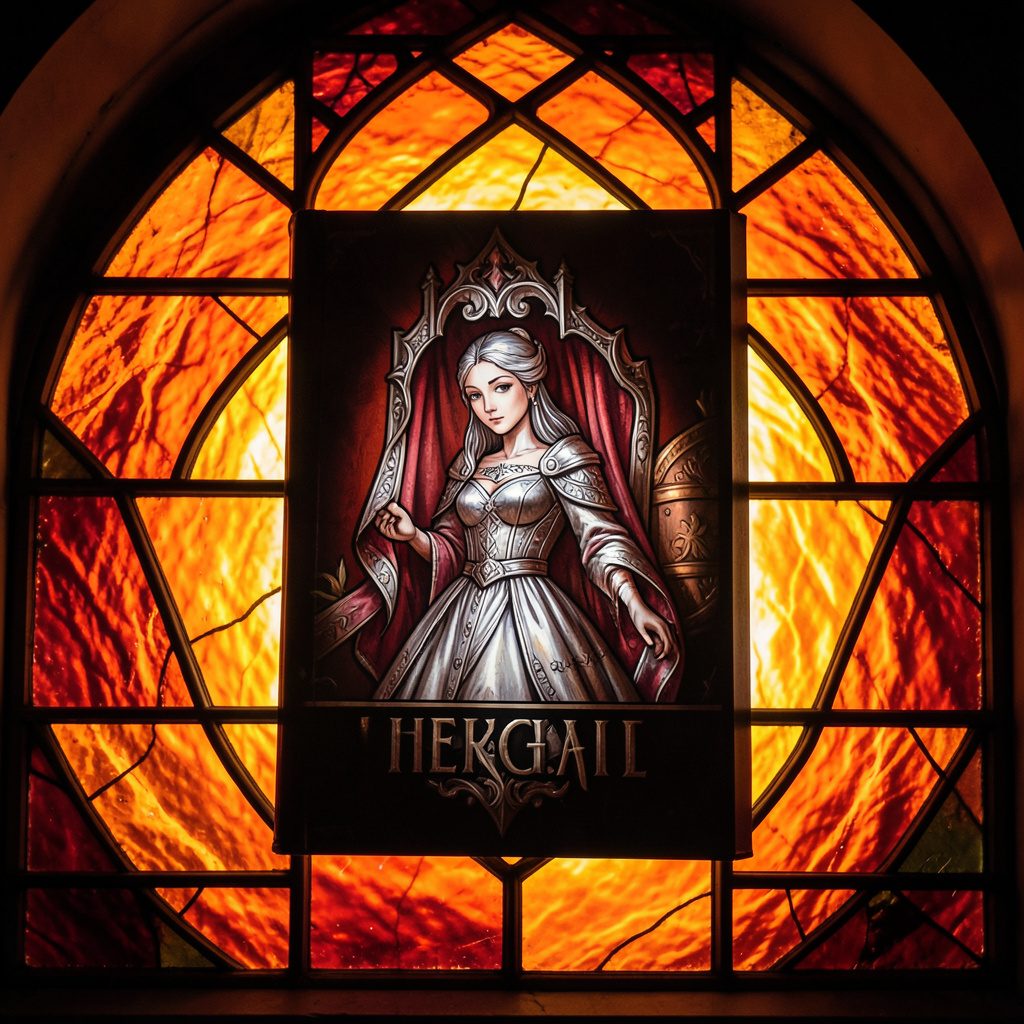
Selected works from across our quarterly issues, gathered into a printed volume. Past print runs have appeared in limited quantities and are available while supplies last.
Volumes cover poetry, short fiction, photography, paintings, drawings, reviews, and interviews — curated to reflect the breadth of artists who have shared their paths in the journal.
Browse Past IssuesInside the Pages
Since 2011, Stone Path Review has hosted contributions from more than twenty artists — poets, photographers, musicians, and filmmakers — along with interviews, readings, and film entries.
Recent volumes have included poetry from Mark Doty and Jim Harrison, an interview with a jazz musician from Minneapolis, MN, and the short film Efflorescence from Deep Field Cinema.
From the Blog
An all-star cast assembled for the fall issue — poetry, short stories, photography, and an interview with a jazz musician from Minneapolis, MN.
Read More →
A featured film entry from Deep Field Cinema, programmed as part of our ongoing screen series.
Read More →
418 Publishing, Inc. was started as the parent company of Stone Path Review, with five issues published by this point.
Read More →
Photography and artist interview, part of an ongoing series highlighting new and established contributors.
Read More →
A recorded poetry reading captured on video and shared alongside the print issue.
Read More →
Browse past quarterly issues of Stone Path Review, available online with limited print quantities.
Read More →