Events
Fall Issue Update
An all-star cast assembled for the fall issue — poetry, short stories, photography, and an interview with a jazz musician from Minneapolis, MN.
Read More →An Artistic Journal · Est. October 2011
A quarterly publication — online and in print — joining poets, photographers, painters, storytellers, and musicians into one open forum for cross-cultural expression.
A science textbook often arrives in a school bag wrapped in expectations: equations to master, terms to define, diagrams to label. Yet its pages also hold weather, motion, scale and human wonder. A photograph of a storm, a cross-section of Earth or an explanation of photosynthesis can become a compressed poem when the reader pauses long enough to hear its patterns.
The opportunity is not to rescue beauty from rigour. It is to notice how rigour sharpens attention. Under the Australian Curriculum, classrooms move among evidence, ecosystems, engineered systems and Earth’s processes, so precise description can still carry lyric energy. The second reading need not distort evidence; it reveals the human choices through which evidence is presented. The aim is a form of double vision: read the page for what it proves, then for what it quietly makes us feel.
Consider a lesson on plate tectonics. A map may show red arrows, jagged boundaries and timelines measured in millions of years. Read only for the conclusion, it looks efficient. Read for cadence, however, and those marks form a visual score: pressure beneath, fracture at the edge, slow displacement across the page. Scientific naming gives the image its stakes; figurative language lets the image remain in memory.
Other pages offer equally usable material. The mitochondrion becomes a crowded city with membranes for walls and enzymes for workers. Gravity is described as an embrace, a pull or a curve, each metaphor limited but useful. Even a set of statistics can create rhythm through repetition and contrast. A line of rainfall, a graph of temperature or a column of measurements can turn sequence into music without surrendering accuracy.
This attention changes the writer’s relationship with facts. Instead of treating a textbook as a storehouse of ready-made subjects, the poet can enter through a particular colour, sound, verb or unanswered question. A credible metaphor enlarges a fact without pretending to replace it. A specimen becomes a portrait. An algorithm resembles a set of instructions passed between generations. A coastline records erosion, weather and time in one visible sentence. The poem begins where explanation leaves a trace of mystery.
The first task is to look before interpreting. Stand close enough to a botanical diagram to notice veins, hairs, asymmetry and the precision of each label. Then move away and see the whole organism as a structure of relationships. This shift between detail and pattern is a basic scientific habit and a basic poetic resource. It also trains the eye to resist the smooth stock image.
Light offers a useful bridge between laboratory and gallery. In Adelaide, where hard southern light can make edges unusually distinct, a drawing seems to record both object and atmosphere. Darwin’s wet-season sky provides another kind of evidence: dense cloud, abrupt downpour, saturated vegetation, then clear air. Such conditions reward attention to reflection, transparency and scale, qualities also explored in photographic practice. A Stone Path Review reflection on photography and painted light shows how an artist moves between recording illumination and composing with it.
That movement matters because seeing is never entirely mechanical. Choice of angle, focus and distance shapes what enters the frame. The same principle operates in a poem: line breaks, pauses and sound patterns select a way of attending. Good science communication leaves room for uncertainty, inviting readers to follow evidence rather than receive a verdict. Scientific discipline and poetic freedom are not opposites here. Each asks for exactness, while each permits forms of inquiry that a single answer cannot contain.
Scientific imagination grows in public as well as on the page. Schoolyard experiments, museum displays, community gardens and street murals give abstract ideas a physical setting. In Brisbane, a painted wall can turn an ordinary route into a prompt for debate about place, ownership and belonging. The city becomes a living syllabus: traffic, weather, architecture and public language offer hypotheses that can be tested through looking. Art lets knowledge become visible to people who may never open a textbook.
A Stone Path Review exchange about artist and gallery is valuable for the conversation it opens around creative practice: how work is made, how it reaches an audience and how an informal public voice enters an institutional setting. The same questions surround scientific communication. Who controls the image? Which evidence is displayed? How does a diagram travel from a classroom to a newspaper, a screen or a community meeting?
Public art also reminds us that interpretation belongs to many readers. A label may guide, but it cannot contain every response. Two viewers can stand before the same image and leave with different stories, just as two careful readers can extract different metaphors from one paragraph. That openness is not vagueness; it is evidence of a work continuing to operate. The encounter may occur without specialist language, yet shared attention creates common ground from which harder questions can begin.
For readers, a useful exercise is to move through a textbook in two passes. The first gathers explicit knowledge; the second records sensory and formal choices.
Before drafting, a writer can test the material from several directions.
The exercise works best beside real books rather than in isolation from them. Borrow from a school library, an independent bookshop or the displays at a local museum. In Australia, those places often sit within easy reach of civic life, yet the objects inside may carry knowledge from distant deserts, reefs, forests and skies. Keep the source nearby, record page references, and separate documented fact from imaginative leap. Plagiarism is not poetic licence; it is the loss of a poem’s visual and ethical foundation.
Stone Path Review’s quarterly rhythm suits this kind of attention. Its online and print pages bring poems, stories, essays, reviews, photography, painting, drawing, music and video into contact with scientific insight. A short story about inheritance may sit beside an account of migration; a painting of a shoreline may hold a memory of drought; a musician’s phrase may alter our sense of time. Cross-cultural expression expands the field in which a fact can acquire meaning. The journal does not ask art to illustrate a thesis. It allows forms to disturb, extend or contradict one another.
Science itself is embedded in ownership, design and everyday choices. An Italian guide to transferring a solar contract offers a vivid example of how a technical system travels through law, property and energy use. Its details are culturally specific, but the larger question crosses borders: what happens when a structure designed to generate power changes hands? The best explanatory writing keeps such questions concrete, naming institutions, documents and lived consequences rather than hiding them behind abstractions.
Read the journal, revisit a textbook with a pencil beside it, and carry one exact observation into a poem, story, image or piece of music. Share a work that joins disciplined fact to creative attention through Stone Path Review’s open forum for artists and readers. Published by 418 Publishing, Inc., the journal welcomes submissions without reading or submission fees, making participation possible across distance and budget.
Identity & Recognition
Featured Book
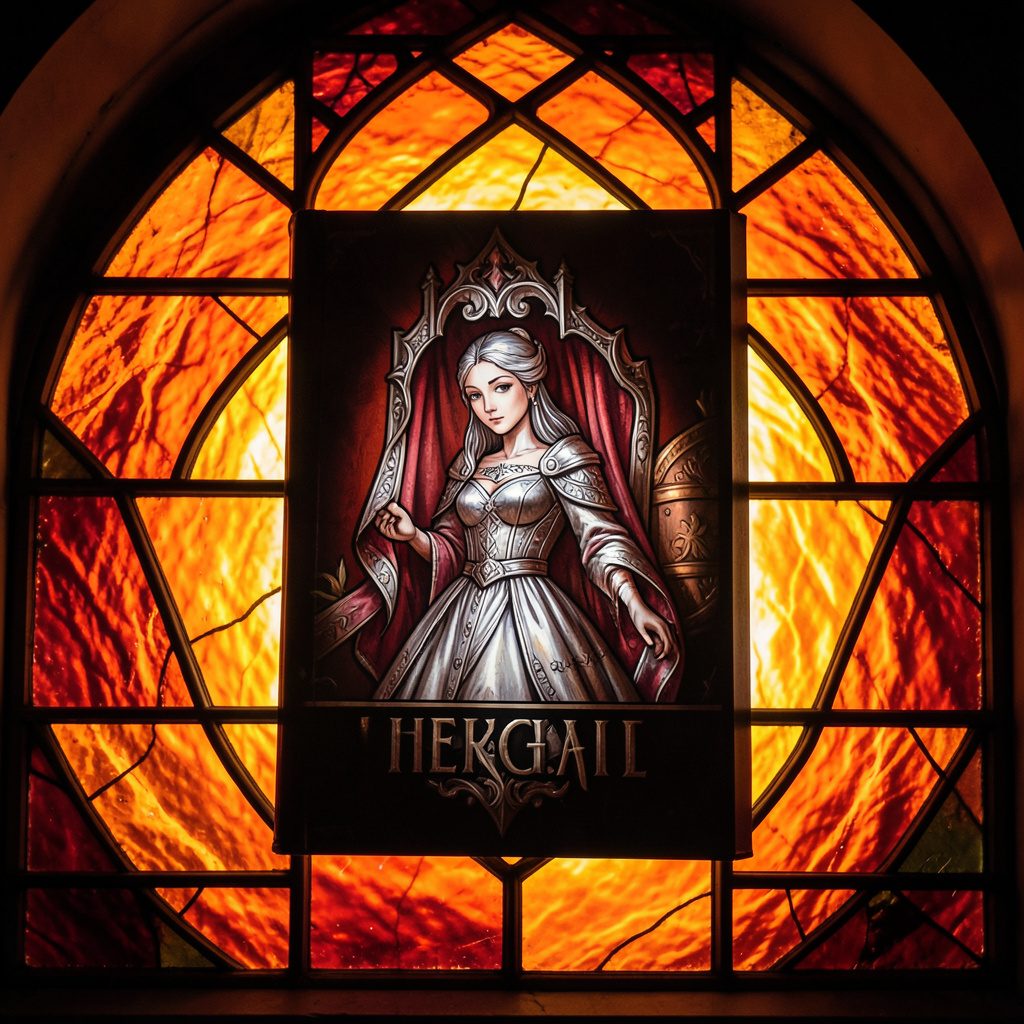
Selected works from across our quarterly issues, gathered into a printed volume. Past print runs have appeared in limited quantities and are available while supplies last.
Volumes cover poetry, short fiction, photography, paintings, drawings, reviews, and interviews — curated to reflect the breadth of artists who have shared their paths in the journal.
Browse Past IssuesInside the Pages
Since 2011, Stone Path Review has hosted contributions from more than twenty artists — poets, photographers, musicians, and filmmakers — along with interviews, readings, and film entries.
Recent volumes have included poetry from Mark Doty and Jim Harrison, an interview with a jazz musician from Minneapolis, MN, and the short film Efflorescence from Deep Field Cinema.

From the Blog
An all-star cast assembled for the fall issue — poetry, short stories, photography, and an interview with a jazz musician from Minneapolis, MN.
Read More →
A featured film entry from Deep Field Cinema, programmed as part of our ongoing screen series.
Read More →
418 Publishing, Inc. was started as the parent company of Stone Path Review, with five issues published by this point.
Read More →
Photography and artist interview, part of an ongoing series highlighting new and established contributors.
Read More →
A recorded poetry reading captured on video and shared alongside the print issue.
Read More →
Browse past quarterly issues of Stone Path Review, available online with limited print quantities.
Read More →