Events
Fall Issue Update
An all-star cast assembled for the fall issue — poetry, short stories, photography, and an interview with a jazz musician from Minneapolis, MN.
Read More →An Artistic Journal · Est. October 2011
A quarterly publication — online and in print — joining poets, photographers, painters, storytellers, and musicians into one open forum for cross-cultural expression.
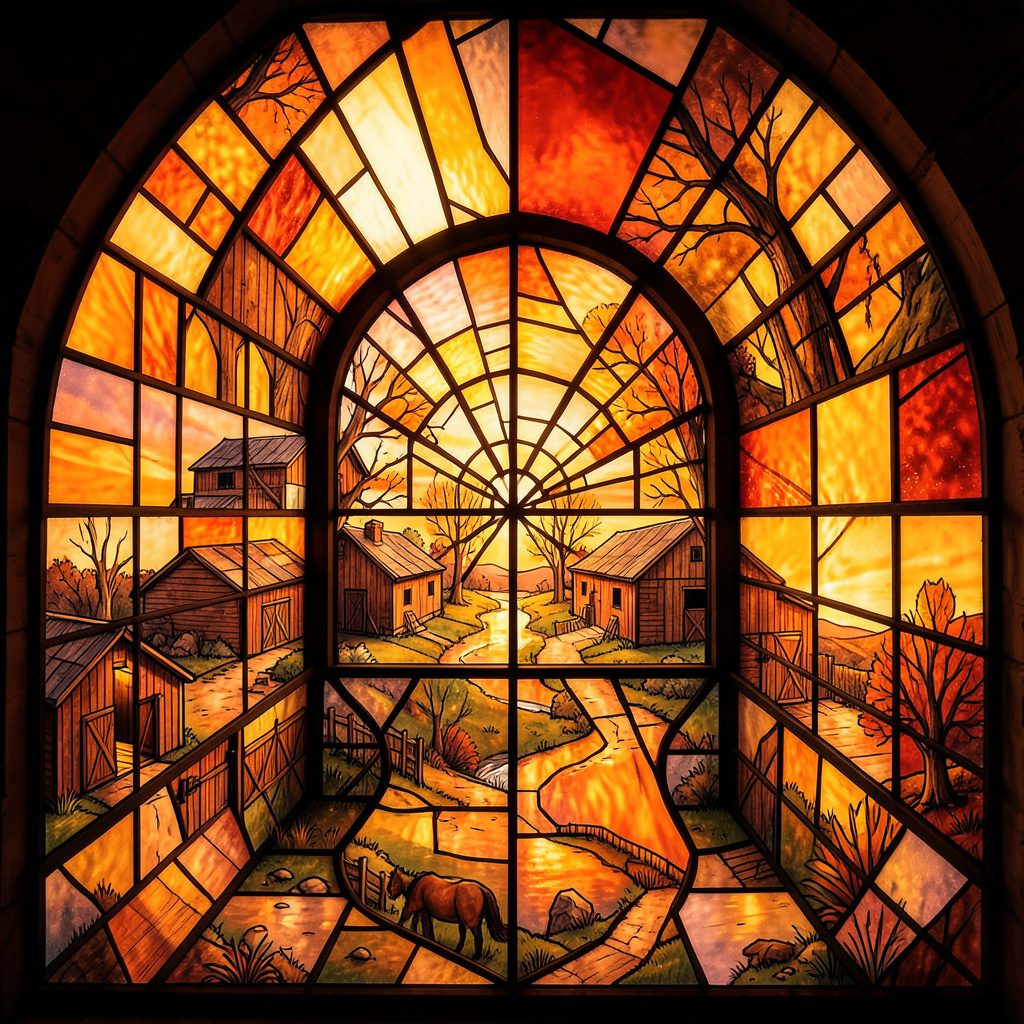
A ghost story begins where the official record thins: in a vanished house, an interrupted song, a family name missing from the ledger. Written with care, the supernatural encounter becomes a vessel for what institutions often flatten: grief, migration, class, illness and the rituals by which people remember one another. Its value lies in making absence speak without pretending every shadow has one explanation.
To treat the ghost story as an act of preservation is to regard haunting as testimony. The narrator may be unreliable, the chronology may fracture and the ending may refuse certainty; these are artistic conditions rather than defects. They reveal that memory survives as pressure, echo and residue, not as neutral fact. A credible uncanny story can hold a community’s past without claiming to solve its losses.
Stone Path Review provides a fitting setting for this inquiry because its pages already move among literature, visual art, music and video. A painted doorway, a piano motif and a short tale can each disturb the boundary between record and apparition. The form becomes potent when sound, place and cultural memory meet without being forced into a single explanation.
Preservation usually suggests stillness: a box, a date, a surface protected from weather. The haunted record works differently. It preserves through recurrence, letting a house, voice or object return because the community has not finished remembering it. What survives is relational, shaped by the people who keep returning, misremembering or refusing to leave.
Fragments are therefore structural rather than decorative. A repeated date, a scraped name or one line of song may contain more archival force than a tidy summary. The writer’s task is to place these traces in a form readers can feel while resisting the urge to explain each away. Ambiguity becomes a container for truths that cannot be verified.
This approach also keeps the ghost story distinct from a conventional ghost hunt. The point is not to catch or banish the apparition, but to identify the pressure it carries. A presence may embody a forgotten death, an old promise or the residue of place itself. What matters is the living conversation between the human narrator and what the record can no longer contain.
Memory is not a transparent medium. It edits, embellishes and protects, often in the same movement. A ghost story inherits these qualities without surrendering its imaginative life. Its distortions can reveal where a communal account has been strained, whose voice was crowded out and which official version has remained incomplete.
| Element | Ghost-story preservation | Documentary preservation |
|---|---|---|
| Time | Fractured, recursive and emotionally charged | Ordered dates and verified sequence |
| Voice | Individual speech, rumour and silence | Authorial or institutional testimony |
| Absence | Active presence shaped around a loss | Documented as a gap or annotation |
| Change | Open to reinterpretation as readers respond | Fixed by edition, custody and metadata |
Neither mode is automatically truthful. The documentary form can carry unexamined bias, while a spectral tale can distinguish fact from speculation through tone, source and context. Their strongest partnership is often productive friction: the archive challenges the story’s claims, and the story reveals what the archive left emotionally blank.
A writer can build that partnership by marking uncertainties without flattening them. If three versions of an event survive, each can occupy the narration while its speaker remains distinct. If a place has been renamed, the older name may persist in dialogue. Such choices preserve not only information but also the pressure by which communities negotiate what happened.
Sound often survives where visual evidence fails. A tune hummed by a child, bells changing tempo or a voice caught between two rooms can carry memory beyond the scene in which it was learned. In prose, sentence length, punctuation and silence perform a comparable work, making the uncanny audible before it is explained.
The relationship between tempo and meaning is explored in prose as composition. Applied to spectral writing, rhythm can suggest that the past is interrupting the present. Short declaratives may brace against a drifting memory; recurring clauses may enact a loop; a sudden gap may leave the reader suspended in the space where a voice should be.
Silence, interruption and imperfect speech should not become decorative quirks. Each must carry emotional weight. A narrator who cannot finish a sentence about a certain house reveals more than an elaborate séance scene. Regional dialect can also function as living testimony when it is used with respect, preserving class, occupation, kinship and the local terms by which people understand their surroundings.
Australian ghosts cannot be imported wholesale from an older European Gothic tradition. They emerge from a particular history of settlement, dispossession, migration, bushland and coast. The country’s immense distances intensify absence: a demolished homestead can persist in a family story, while a vanished suburb survives in old street names, bus routes and the memories of long-time residents.
Melbourne offers a dense version of this tension. A presence might turn through the laneways off Flinders Lane, carrying the scrape of café chairs and the change of light between brick walls. At the Saturday ritual of Queen Victoria Market, an object left behind—or a vendor’s remembered laugh—could become the hinge between ordinary commerce and spectral time.
Sydney supplies another register in the sandstone terraces above the harbour and the white glare that erases detail on a hot afternoon. Canberra offers its own qualities in gum-tree light and the improbable geometry of Black Mountain. These are not interchangeable spooky backdrops; each place has histories and communities that a responsible story must recognise.
Adelaide Central Market offers a busier archive of arrivals: accents, recipes, trade and family succession gathered beneath one roof. Australian readers will recognise the custom of carrying stories between kitchens, shops, school halls and community readings, where a remembered event may travel orally long before it reaches print. Setting a haunting there asks which labour and migration histories the noise almost conceals.
Every act of preservation carries an ethics of selection. To frame someone’s absence can reproduce the power that erased them. The writer therefore needs to ask what the story centres, whose privacy it exposes and whether a living community has approved the way its knowledge is used. Spectral uncertainty does not excuse careless appropriation.
Australian ghost narratives have often made Indigenous presence into atmosphere, using ancestral figures as devices for settler unease. Such patterns require particular vigilance. Aboriginal and Torres Strait Islander writers should retain authority over their own stories and inherited knowledge, while non-Indigenous artists should avoid repackaging sacred narratives as suspense. Acknowledging a source is not enough; the story must respect its boundaries.
Preservation can also mean supporting the conditions in which living memory continues. Compensation for knowledge holders, permissions for recordings and credit beyond the publication cycle are practical acknowledgements of that responsibility. The creative work of Yani Lavigne is a reminder that preservation can begin with sustained attention to atmosphere, form and detail, before interpretation is imposed.
A published ghost story enters a double afterlife. It becomes available to readers outside its first community, yet it can never be fully separated from the moment of its making. Editors therefore preserve more than final prose: permissions, drafts, recordings, correspondence and contextual notes help future readers distinguish what was witnessed, what was inherited and what was invented.
Founded by writers, editors and photographers, Stone Path Review is suited to this model because it treats artistic forms as neighbours rather than isolated departments. Its nonprofit parent, 418 Publishing, Inc., and fee-free submission policy widen access, while the quarterly rhythm gives stories time to circulate through print, online reading rooms, workshops and conversations.
Related creative spaces such as Fantasy Cloud can extend that afterlife by placing experimental work before readers who arrive through curiosity or recommendation. A haunting shared in one venue may prompt another writer to revise the archive from a different angle. The network becomes a living palimpsest, each contribution changing the pressure beneath the next.
A durable practice of spectral storytelling depends on deliberate craft as much as belief. Before publication, consider the following commitments:
These practices do not drain a story of mystery. They give mystery a shape readers can enter and critics can examine, while allowing affection, contradiction and unfinished grief to remain intact. Preservation becomes less about freezing meaning and more about maintaining the conditions for renewed attention.
Read Stone Path Review in print or online, and subscribe through the quarterly mailing list for new issues, calls for contributions and work across disciplines. If a vanished room, roadside figure or family song still carries its trace, set it down with care; preservation begins wherever ordinary memory acquires a voice.
Identity & Recognition
Featured Book
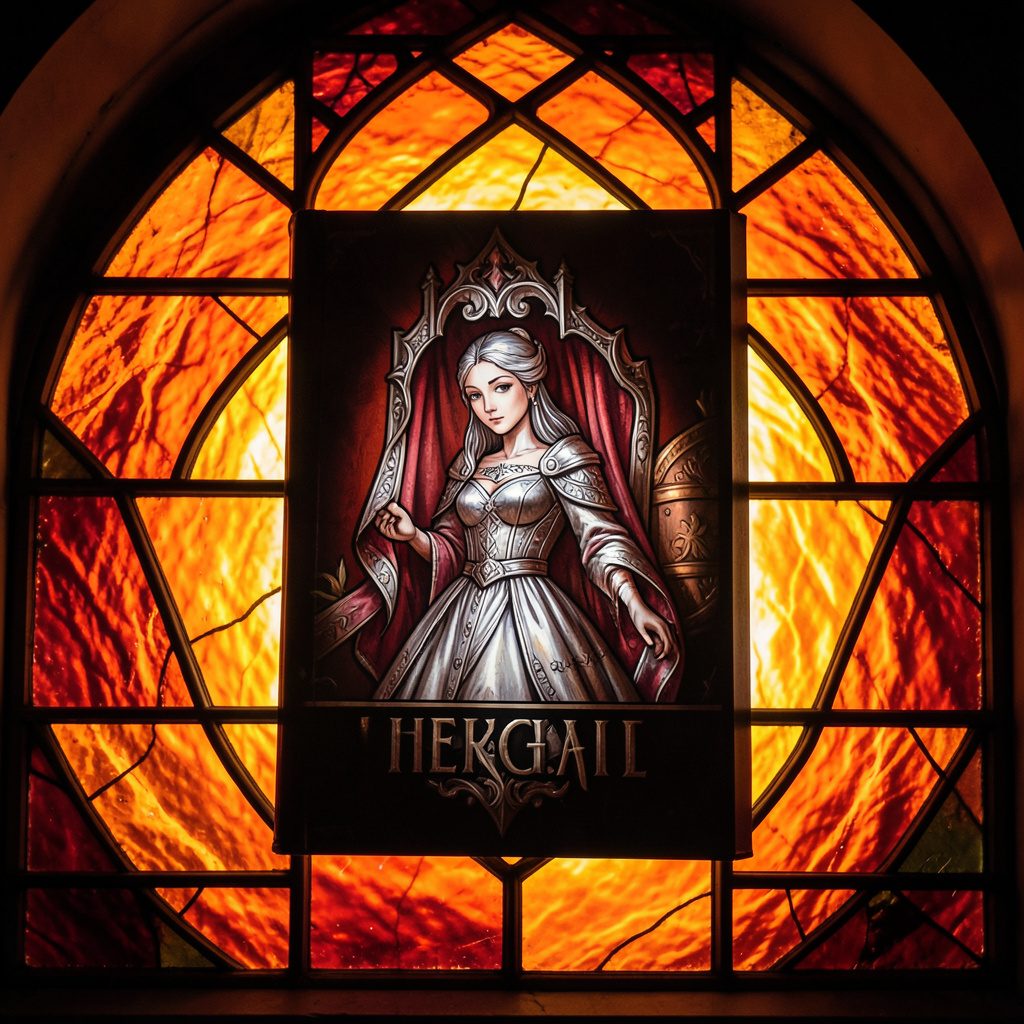
Selected works from across our quarterly issues, gathered into a printed volume. Past print runs have appeared in limited quantities and are available while supplies last.
Volumes cover poetry, short fiction, photography, paintings, drawings, reviews, and interviews — curated to reflect the breadth of artists who have shared their paths in the journal.
Browse Past IssuesInside the Pages
Since 2011, Stone Path Review has hosted contributions from more than twenty artists — poets, photographers, musicians, and filmmakers — along with interviews, readings, and film entries.
Recent volumes have included poetry from Mark Doty and Jim Harrison, an interview with a jazz musician from Minneapolis, MN, and the short film Efflorescence from Deep Field Cinema.

From the Blog
An all-star cast assembled for the fall issue — poetry, short stories, photography, and an interview with a jazz musician from Minneapolis, MN.
Read More →
A featured film entry from Deep Field Cinema, programmed as part of our ongoing screen series.
Read More →
418 Publishing, Inc. was started as the parent company of Stone Path Review, with five issues published by this point.
Read More →
Photography and artist interview, part of an ongoing series highlighting new and established contributors.
Read More →
A recorded poetry reading captured on video and shared alongside the print issue.
Read More →
Browse past quarterly issues of Stone Path Review, available online with limited print quantities.
Read More →