Events
Fall Issue Update
An all-star cast assembled for the fall issue — poetry, short stories, photography, and an interview with a jazz musician from Minneapolis, MN.
Read More →An Artistic Journal · Est. October 2011
A quarterly publication — online and in print — joining poets, photographers, painters, storytellers, and musicians into one open forum for cross-cultural expression.
A poem can be complete on a page, yet remain only partly understood in silence. Line breaks, punctuation and typography guide the eye, but they cannot reproduce the weight of a breath, the pressure of a consonant or the hesitation before a final word. Some poems use these visual cues as a score for the voice, making oral delivery part of their meaning. Learn more about Les Revues Littéraires Francophones Panorama Des Titres Indépendants En Belgique.
Other poems benefit from silence because their complexity rewards rereading. The choice is not a division between poems made for performance and poems made for the page. It is a difference in emphasis, and a reminder that reading has always included an imagined voice.
Breath gives a poem duration. A line ending may feel like a natural intake, while a longer sentence demands that the reader gather air before continuing. These physical decisions can change pace and meaning without altering a single word.
Line breaks are not simply barriers between phrases. In performance, they can become pauses, shifts in pressure or moments for an audience to anticipate what comes next. The reader becomes both interpreter and instrument, turning typographic space into sound and silence.
That transformation is especially clear when a poem moves from a printed page to a room. Stone Path Review’s poetry and performance insight offers a useful companion for considering how interpretation changes when language acquires a body, a voice and a particular acoustics.
A voice is never a neutral carrier. Timbre, accent, age, gender and emotional restraint colour every phrase, sometimes contradicting the tone a reader first imagined. A wry line can sound tender; a plain line can carry authority or unease.
Consonance and vowel patterns also become easier to hear than to see. Repeated sounds bind words into clusters, while abrupt interruptions sharpen a contrast. The mouth may register a rhythmic tension that the eye has smoothed over while scanning the page.
This does not make one definitive reading possible. It makes room for several. The purpose of an oral reading is not to uncover the poem’s only true meaning, but to let one arrangement of breath, pitch and silence illuminate a possibility the printed form had left quieter.
Australian English gives oral poetry a distinctive melodic and conversational field. Its shortened forms, lifted or flattened vowels and familiar expressions such as “arvo” or “reckon” can make a line feel intimate and responsive. At the same time, formal and regional voices coexist, giving a reading more tonal range than a simplified national caricature suggests.
The country’s live poetry culture thrives in modest, practical settings. Melbourne’s laneway venues and small café readings place a speaker close to the audience, often without a raised stage or formal amplification. In Sydney, pub-based open-mic nights create exchanges between unfamiliar voices and listeners who may not know one another.
Australia’s literary market also moves through small journals, independent booksellers, writers’ centres, literary festivals and community events. These networks often matter more to a poem’s public life than a single commercial launch. A performance at a neighbourhood venue can build the trust needed for readers to encounter the printed work.
Poetry has carried memory through recitation for centuries. Repetition helps a community preserve a story, a warning, a joke or a lament, while performance allows each telling to change with its speaker and circumstances. Print expanded that reach, but it did not replace the meeting of voice and listener.
Many Aboriginal and Torres Strait Islander cultural traditions place profound importance on spoken language, song, ceremony and inherited knowledge. Permissions, gender roles and forms of public presentation vary between communities, so the presence or absence of written poetry cannot be treated as a simple cultural absence.
Independent publications continue to support creative exchange across borders. A survey of Belgian literary journals shows a parallel with Australia’s smaller literary networks: local scenes gain wider reach when journals, events and translation connect distinct artistic worlds.
A live reading creates a shared present tense. The audience hears each breath and responds to a delay, a glance or a change in volume. That responsiveness can alter the performer as much as the listeners, producing a reading that belongs to that particular room.
Silence also becomes collective. In private reading, a pause belongs to the individual reader; in a venue, it contains the awareness of other people waiting. That can lend a difficult passage greater tension, though performers still need skill and judgement to keep the silence active rather than empty.
Digital recordings widen access but introduce their own frame. A phone speaker conceals the performer’s distance from the listener, while captions and transcripts can make a performance legible to deaf and hard-of-hearing audiences. The best digital presentation therefore treats audio and visual language as partners rather than competing versions of the same event.
Reading a poem aloud reveals decisions the eye may overlook. A phrase that appears balanced can become breathless, while an awkward-looking line break may create a useful pause. The voice tests the poem’s physical architecture without insisting on a single correct delivery.
The following practices help a poem speak without turning the exercise into an audition. They work best as invitations to notice, and each reader can adapt them to the language and setting of the poem.
Spoken poetry can begin without a stage, a publication or specialist knowledge. A poem can be read aloud at a dinner table, in a classroom, at a community gathering or during an open-mic evening. Listening counts too: audiences become participants when they give a performer their full attention.
For creators, a literary journal can provide the printed afterlife of work first heard in a room. Stone Path Review welcomes poems, stories, essays, reviews and creative work from around the world, with no reading or submission fees. Details of its international, nonprofit publishing model are available at About Stone Path Review.
Read one poem aloud tonight. Let the breath decide where the page ends, and let the room begin.
Identity & Recognition
Featured Book
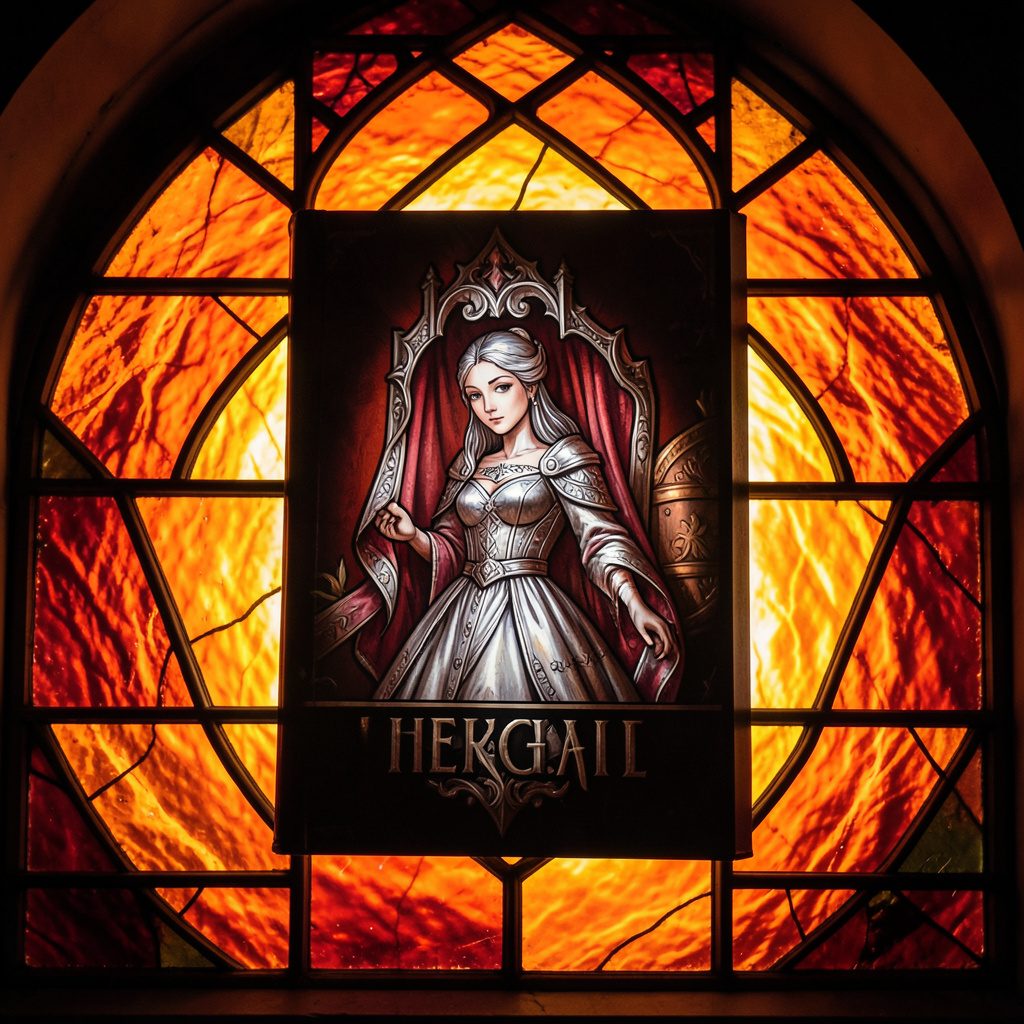
Selected works from across our quarterly issues, gathered into a printed volume. Past print runs have appeared in limited quantities and are available while supplies last.
Volumes cover poetry, short fiction, photography, paintings, drawings, reviews, and interviews — curated to reflect the breadth of artists who have shared their paths in the journal.
Browse Past IssuesInside the Pages
Since 2011, Stone Path Review has hosted contributions from more than twenty artists — poets, photographers, musicians, and filmmakers — along with interviews, readings, and film entries.
Recent volumes have included poetry from Mark Doty and Jim Harrison, an interview with a jazz musician from Minneapolis, MN, and the short film Efflorescence from Deep Field Cinema.

From the Blog
An all-star cast assembled for the fall issue — poetry, short stories, photography, and an interview with a jazz musician from Minneapolis, MN.
Read More →
A featured film entry from Deep Field Cinema, programmed as part of our ongoing screen series.
Read More →
418 Publishing, Inc. was started as the parent company of Stone Path Review, with five issues published by this point.
Read More →
Photography and artist interview, part of an ongoing series highlighting new and established contributors.
Read More →
A recorded poetry reading captured on video and shared alongside the print issue.
Read More →
Browse past quarterly issues of Stone Path Review, available online with limited print quantities.
Read More →