Events
Fall Issue Update
An all-star cast assembled for the fall issue — poetry, short stories, photography, and an interview with a jazz musician from Minneapolis, MN.
Read More →An Artistic Journal · Est. October 2011
A quarterly publication — online and in print — joining poets, photographers, painters, storytellers, and musicians into one open forum for cross-cultural expression.
Printmaking begins before an image becomes visible. A sheet of paper meets a carved block, a screen, an etched plate, or a stencil; pressure transfers ink; a hand or machine releases the impression. Each pull gathers a set of conditions into a physical record. Because that record can be made again, printmaking asks the artist to notice what stays stable, what shifts, and what a small change can reveal.
What a Printmaker Learns from Repetition is therefore less a lesson in endurance than a practice of close attention. The same gesture can carry a different weight because the paper has moved, the ink has thinned, or yesterday’s decision has become visible in morning light. A print becomes a way to think through time rather than a finished object detached from the acts that produced it. As an artistic quarterly, Stone Path Review places print beside poetry, photography, film, and work from many cultures, opening a wider conversation about attention across forms.
The matrix comes first. Whether the artist cuts lino, scratches copper, burns a screen, or arranges stencils, the image begins as a set of decisions that will be tested through repetition. A cut that seems clean on the bench can print as a soft edge; a pale line may disappear under pressure; a gap intended to breathe can close with damp paper. The first proofs make those translations visible. Their awkwardness is useful because it identifies where intention and material have not yet met.
Repetition also gives form to experiences that resist a single clean statement. The discussion of trauma in lyric poetry is relevant here for a formal reason: the poem and the repeated print both depend on pressure, interval, and the possibility that excess meaning emerges through restraint. In each, a measured series can hold what a direct description would flatten. The edge, the blank interval, and the recurrence of a mark can become carriers of memory without turning that memory into illustration.
Australian studio culture makes this exchange visible. In shared print rooms around Collingwood, artists commonly pull proofs for one another, saying “give it another go” when a colour needs another pass or “that line is too keen” when it cuts too sharply. Such plain language keeps attention on the work. Collingwood’s warehouse spaces, with their shared benches and fluctuating humidity, also make visible how paper and ink respond differently to Melbourne weather.
In relief printing, pressure travels through the hand and into the block. In intaglio, it drives ink into recessed lines. In screen printing, it squeezes ink through a mesh; in lithography, it brings stone or plate and paper into delicate contact. The vocabulary differs, yet each process refuses total command. An edition gains coherence when the printer learns where consistency helps and where it should yield to the particular sheet in front of them.
Patience is not simply waiting. It is changing the scale of judgement. A large sheet viewed on a drying rack may reveal a rhythm that looked fussy at arm’s length; a small edition may reward close inspection of embossing, plate tone, or the slight drift of a registration mark. Repeated pulling develops an eye for these relationships. The artist begins to recognise useful errors early enough to keep them and destructive habits early enough to correct them.
The same tension between protocol and variation appears in awards-season styling, where an outfit must remain coherent through photographs, movement, flash lighting, and rapid changes. A print similarly has to survive viewing distances. Seen at the National Gallery of Victoria across a busy gallery, its shapes must hold; seen close up in a dealer’s room in Sydney, its grain and ink variations become part of the encounter. Repetition supplies the visual grammar that allows both conditions to coexist.
An edition is often introduced by a promise: twelve impressions from one plate, thirty screenprints, or a small run assembled from several printed elements. Once that promise is made, each impression begins to record time. It bears evidence of ink viscosity, paper grain, drying, pressure, and the order in which colours were laid down. Numbering makes that record social as well: the edition says that several works share a lineage while remaining individually situated.
The best editions do not erase their differences. A faint plate mark, a little more colour at one corner, or a registration line visible only against light can keep the hand in the work. These variations are not automatically defects. They can show how the matrix met one sheet rather than another, preserving the event of making within a group of related objects. A technically flawless run may feel strangely impersonal if every trace of process has been removed.
Print and photography have long shared technical vocabularies around edition, sequence, and the artist’s proof. For wider perspectives on image-making and visual culture, the online PVM magazine offers a useful point of comparison. The conversation becomes especially practical at Australian fairs and gallery stockrooms, where the question is not simply whether an edition is limited, but whether its variations support its meaning. A limited run with no conceptual or material distinction may satisfy a sales category without satisfying the work.
Repetition can generate form through pattern. A row of the same silhouette can measure distance; a grid can expose subtle shifts; a motif returning at regular intervals can acquire rhythm, memory, or pressure. Seriality allows an artist to compare tiny changes with unusual clarity. It also offers a practical method for moving through uncertainty: make several versions, then let the group reveal which direction feels alive.
That method depends on keeping records. Date each sheet, note ink batches and paper weights, photograph proofs, and mark the changes that seemed insignificant. Over time, the archive becomes a second matrix. It lets the artist see recurring decisions, abandoned ideas, and changes in appetite. Without such records, memory often edits a process into a cleaner story than the studio actually lived. Repetition becomes valuable when it preserves uncertainty rather than smoothing it away.
Repetition can also become compulsive, especially when production promises certainty or profit. The Australian gambling context discussed in real-money baccarat risks is not about printmaking, yet it offers a useful parallel: a repeated action can begin to substitute for judgement. Applied to a print studio, that parallel means checking whether another pull serves the image or merely relieves anxiety. An Adelaide open-studio evening can be a useful check. Printers pin sequences to the wall, discuss each difference plainly, and let peers identify where variation is producing energy rather than merely producing volume.
Print editions enter a market built on confidence in scarcity. Buyers learn to ask about edition size, numbering, condition, framing, and provenance. These questions are practical, but they can shape the work before it is made. An edition of five may encourage careful experimentation; an anticipated run of two hundred can encourage safer choices and standardised colour. Repetition therefore carries a quiet economic pressure, especially when material and studio time must be paid for before the first sale.
Australia’s market operates through a mix of galleries, independent studios, art fairs, and direct online sales. At Melbourne Art Fair, a print may be offered through a dealer on a commission basis or sold directly by an artist, with prices quoted in Australian dollars and GST treatment stated where applicable. Collectors are often keen on numbered editions, yet the exchange can sound refreshingly direct: “Is this the full run?”, “Can we see the proof sheet?”, “Is framing included?” These questions can support informed buying when answers are clear.
The fair-go principle has a particular relevance to editions. Scarcity should not be manufactured through misleading claims, and a limited edition should have a credible material and numerical limit. Artists also need to account for paper, ink, plates, screen exposure, freight, insurance, unpaid studio hours, and unsold stock when setting prices. If repeat production becomes the only route to income, the practice risks confusing financial survival with artistic value. A healthy market can support repetition when it rewards discernment, fair terms, and the artist’s control over how a work is reproduced.
Repetition sharpens judgement when it is treated as an active correspondence with the work. The printer learns how long a plate should rest, how a damp sheet changes registration, and how much ink can remain on the surface without filling the paper’s tooth. These acquired judgements resist easy rules. They are local, material, and often personal, which is why one printmaker’s recipe may fail under another studio’s conditions. Experience becomes a set of informed adjustments rather than a formula.
It also changes the meaning of an edition. Instead of asking whether every impression is identical, the artist can ask what each repetition makes newly perceptible. Colour may deepen, a hidden passage may appear, or the composition may find a new balance under the pressure of a slightly different hand. Looking back across a completed run can reveal the history of those decisions. The edition then becomes a sequence of encounters rather than a row of interchangeable objects.
A useful practice is to revisit one plate, block, or stencil after a season of work. Print a short series without trying to improve it immediately. Place the sheets beside earlier proofs and allow the differences to become arguments, corrections, and new questions. Stone Path Review welcomes writing, visual art, music, and other creative work for its open, international readership, and its quarterly pages can hold such observations in dialogue with work from other cultures.
For readers who want to encounter new essays, poems, stories, images, and moving-image work, join the Stone Path mailing list. Published by 418 Publishing, Inc., a nonprofit parent organisation, Stone Path Review does not charge reading or submission fees and offers both print and online editions. Subscribe to the next quarterly issue, and share your own proof, reflection, or work with Stone Path Review’s international readership.
Identity & Recognition
Featured Book
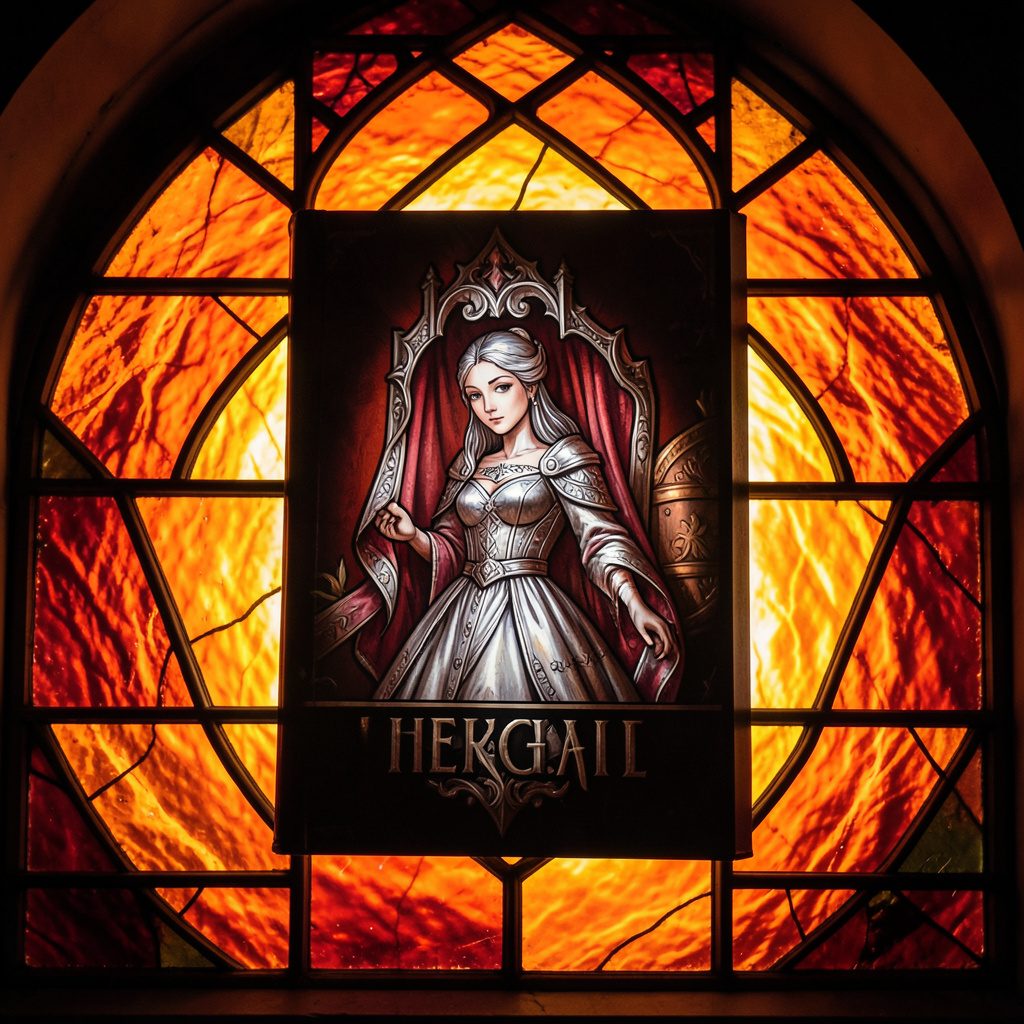
Selected works from across our quarterly issues, gathered into a printed volume. Past print runs have appeared in limited quantities and are available while supplies last.
Volumes cover poetry, short fiction, photography, paintings, drawings, reviews, and interviews — curated to reflect the breadth of artists who have shared their paths in the journal.
Browse Past IssuesInside the Pages
Since 2011, Stone Path Review has hosted contributions from more than twenty artists — poets, photographers, musicians, and filmmakers — along with interviews, readings, and film entries.
Recent volumes have included poetry from Mark Doty and Jim Harrison, an interview with a jazz musician from Minneapolis, MN, and the short film Efflorescence from Deep Field Cinema.
From the Blog
An all-star cast assembled for the fall issue — poetry, short stories, photography, and an interview with a jazz musician from Minneapolis, MN.
Read More →
A featured film entry from Deep Field Cinema, programmed as part of our ongoing screen series.
Read More →
418 Publishing, Inc. was started as the parent company of Stone Path Review, with five issues published by this point.
Read More →
Photography and artist interview, part of an ongoing series highlighting new and established contributors.
Read More →
A recorded poetry reading captured on video and shared alongside the print issue.
Read More →
Browse past quarterly issues of Stone Path Review, available online with limited print quantities.
Read More →