Events
Fall Issue Update
An all-star cast assembled for the fall issue — poetry, short stories, photography, and an interview with a jazz musician from Minneapolis, MN.
Read More →An Artistic Journal · Est. October 2011
A quarterly publication — online and in print — joining poets, photographers, painters, storytellers, and musicians into one open forum for cross-cultural expression.
Most galleries are designed to be seen before they are heard. Even when a work contains music, speech, field recording or mechanical noise, its placement is usually governed by visual relationships: wall area, sightline, lighting and the movement of visitors. Curating for the ear reverses that hierarchy. It asks how a room directs attention, how silence acquires shape, and how an audience becomes physically aware of a work through proximity, duration and resonance.
An acoustic exhibition does not simply add sound to a display of objects. It treats the gallery as a sounding instrument, with entrances, corners, thresholds and shared walls carrying as much meaning as the works themselves. The visitor’s body enters the composition. A motorbike idles beyond the doorway; a whispered text becomes almost inaudible near the street; a low-frequency vibration can be felt before it can be located. Such conditions require close attention to local acoustics, but they also demand a curatorial language capable of describing rhythm, density, texture and spatial direction.
| Exhibition approach | Primary invitation | Role of sound | Likely visitor movement | Central curatorial risk |
|---|---|---|---|---|
| Visual-led with acoustic accents | Looking closely at objects and images | Sound provides atmosphere or intermittent contrast | Slow circulation around a conventional display sequence | The soundtrack becomes decoration rather than meaning |
| Sound-led listening room | Listening actively to spatial works | Sound structures the entire encounter | Variable pauses, returns and changes in direction | Disorientation, fatigue or excessive volume |
| Hybrid acoustic gallery | Moving between looking, listening and reading | Different works alternate modes of attention | A deliberate rhythm of concentration and transition | Uneven transitions or poorly matched sound levels |
The familiar “silent gallery” is rarely silent. Air-conditioning, fluorescent lights, footsteps, street traffic and the building’s own mechanical rhythm establish a constant acoustic floor. Some of this noise enters through ducts and vents; some leaks from exhibitions in adjacent rooms. Even a pristine white cube contains thresholds: a louder lobby, a muffled cinema, a stairwell where voices gather. A curator attentive to the ear begins by measuring these conditions instead of assuming that the architecture is neutral.
Sound also changes the scale of looking. Two objects that appear equivalent from a doorway may create radically different experiences when one hums and the other remains still. A sculpture may become directional, exposing the angle from which a visitor first encounters it. A recording may make the gallery seem larger, connecting an apparently compact room to a street, coastline or contested memory. Headphones intensify this displacement by creating a private acoustic bubble, while open speakers allow neighbouring visitors to overhear one another’s listening. The choice is not simply technical; it determines whether an exhibition feels communal, intimate or exposed.
A sonic composition can include silence, but never as an empty absence. In a gallery, a pause between works may sharpen anticipation, reveal the sound of the building or turn other visitors’ footsteps into an accidental performance. Density matters too. A sequence built around dense layers can become exhausting without moments of release. The most persuasive acoustic galleries move between exposure and withdrawal, giving the ear time to adjust. Their curators treat these fluctuations as structural elements rather than problems to be smoothed away.
An acoustic exhibition needs an order that can be felt as well as understood. The entrance is often the first composition: a narrow passage, a sudden wash of sound or a carefully maintained quiet can prepare the visitor’s body for what follows. Within the main space, isolated listening stations can create islands of attention, while a continuous composition may guide movement across the floor. Transitional spaces deserve particular care because the ear retains traces of what it has just heard. A work should not end abruptly at the door unless that interruption is deliberate.
Programme planning must also account for the visual without treating it as a lesser sense. A painting, photograph or sculpture can be sequenced against a live performance, allowing one medium to interrupt another. Musicians may respond to a visual work in real time, while a sound artist may use architectural details already present in the building. For examples of approaches that place visual and sonic practices in dialogue, the MAS RAH programme offers a useful comparative reference. The strongest programmes do not isolate one “sound room” beside conventional galleries; they allow resonance, friction and shared attention to reshape the exhibition as a whole.
Documentation and access require as much planning as installation. Visitors may need transcripts, captions, plain-language descriptions, seating, volume warnings or ear protection. Quiet hours and alternate routes can make a sensory exhibition more welcoming, particularly for people with hearing, vestibular or anxiety-related sensitivities. Artists should also decide how recording, broadcasting and archiving relate to the live encounter: a work designed for a resonant room may lose its scale through compression, and a durational performance may exist differently for those who arrive late. Clear communication preserves complexity without making every work respond to the same body.
Australian venues offer varied acoustic conditions because many exhibition spaces occupy adapted buildings rather than purpose-built cultural centres. White Bay in Sydney, with its workshops and the long-running activity around Carriageworks, sits close to road and rail infrastructure, while Melbourne’s Windsor and Collingwood districts contain former warehouses, narrow laneways and street-facing studios. A polished timber floor in one converted factory may reveal every heel strike; a room above a busy pub may introduce an irregular pulse. These details are not obstacles outside the exhibition plan. They are part of its local identity.
The way curators and installers discuss sound in Australian galleries is often direct and practical. Questions such as “Can you hear this from the door?” or “Have you had a squiz at the back?” compress complex judgements into plain speech. “No worries” can soften a note about excessive volume, while an invitation to “give it a listen” makes participation feel low-pressure. This informality is valuable when it accompanies rigor. Visitors are likely to ask plainly what a recording contains, whether a work can be touched, how long it runs and why it has been placed there. A sonic exhibition benefits from answering those questions without retreating into specialist jargon.
The Australian art market supports sound-led work through several overlapping channels: artist-run spaces, independent galleries, council exhibition programs, university galleries, public commissions and direct sales at art fairs. Institutions such as the Art Gallery of New South Wales and the National Gallery of Victoria can provide major presentation platforms, while smaller spaces often build closer relationships with local audiences. Distances between Australian cities and regional centres also shape touring economics, so a work that requires extensive equipment or specialist crew may circulate less easily than a compact installation. Local adaptation, portable scores and collaborations with venues familiar to regional audiences can therefore be as important as international prestige.
There is no universal soundtrack for a gallery. The practical task is to compose with what is already present: the building’s noise, the sound of people, the materials on display and the changing light. A working repertoire helps curators test ideas before committing to an expensive technical system.
Curatorial and spatial priorities
Access, documentation and public programmes
These priorities should remain adaptable rather than becoming a formula. A warehouse in Melbourne’s north may need controlled amplification, while a smaller community gallery in regional Australia might rely on a single performer, a modest speaker and carefully timed entry. Testing with actual audiences is crucial because the gallery changes as bodies occupy it. Footsteps, whispered conversations and the rustle of clothing become part of the score, while unexpected distractions may reveal an acoustic weakness or an opportunity for collaboration.
The process is iterative. Curators can begin with inexpensive trials using portable speakers, recorded sound levels and temporary seating, then revise the route as patterns of attention emerge. Artists benefit from hearing their work in context, but they should also retain control over how it is transmitted. Musicians may require particular acoustics, while visual artists may seek changes in lighting, circulation or duration. Local technicians, access advisers, performers and front-of-house staff can all identify conditions that a curatorial group might overlook. The result is an exhibition whose sound has been shaped through practice rather than imposed as a final layer.
A sound-led exhibition often continues to echo after the doors close. Recordings, performance photographs, audience notes and technical documents can preserve some of its qualities, though no archive reproduces the exact pressure of a room or the presence of a particular crowd. Stone Path Review can extend that afterlife by publishing essays, conversations and visual documentation that connect a temporary installation to the artistic concerns surrounding it.
This approach also fits the journal’s cross-cultural remit. Sound travels between traditions, technologies and generations, but it does so differently in every place. A reading performed in a Sydney studio, a field recording made in the Northern Territory and a work heard in a Melbourne stairwell may share a subject without sharing the same meaning. Editors, artists and readers can treat those differences as productive evidence, allowing acoustic exhibition-making to be discussed across borders rather than reduced to a transferable technique.
Curators, artists, musicians, writers and audiences all contribute to the texture of a listening room. Sharing a work while it is still unfolding helps that exchange continue beyond a single event and beyond one city. Subscribe to the Stone Path mailing list today to receive new essays, event notices and opportunities to contribute.
Identity & Recognition
Featured Book
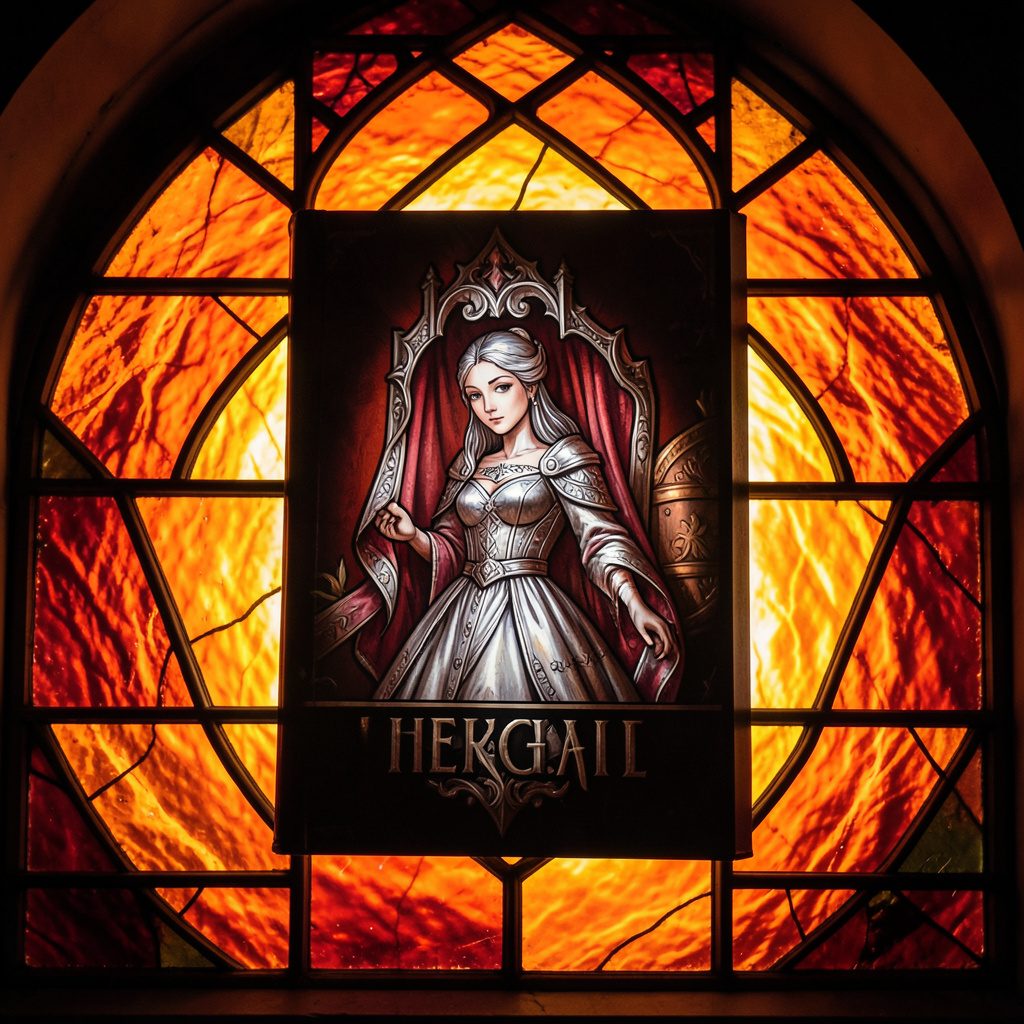
Selected works from across our quarterly issues, gathered into a printed volume. Past print runs have appeared in limited quantities and are available while supplies last.
Volumes cover poetry, short fiction, photography, paintings, drawings, reviews, and interviews — curated to reflect the breadth of artists who have shared their paths in the journal.
Browse Past IssuesInside the Pages
Since 2011, Stone Path Review has hosted contributions from more than twenty artists — poets, photographers, musicians, and filmmakers — along with interviews, readings, and film entries.
Recent volumes have included poetry from Mark Doty and Jim Harrison, an interview with a jazz musician from Minneapolis, MN, and the short film Efflorescence from Deep Field Cinema.

From the Blog
An all-star cast assembled for the fall issue — poetry, short stories, photography, and an interview with a jazz musician from Minneapolis, MN.
Read More →
A featured film entry from Deep Field Cinema, programmed as part of our ongoing screen series.
Read More →
418 Publishing, Inc. was started as the parent company of Stone Path Review, with five issues published by this point.
Read More →
Photography and artist interview, part of an ongoing series highlighting new and established contributors.
Read More →
A recorded poetry reading captured on video and shared alongside the print issue.
Read More →
Browse past quarterly issues of Stone Path Review, available online with limited print quantities.
Read More →