Events
Fall Issue Update
An all-star cast assembled for the fall issue — poetry, short stories, photography, and an interview with a jazz musician from Minneapolis, MN.
Read More →An Artistic Journal · Est. October 2011
A quarterly publication — online and in print — joining poets, photographers, painters, storytellers, and musicians into one open forum for cross-cultural expression.
A scroll is often imagined as a digital gesture: a thumb moves down a screen and a succession of images arrives. As an artistic form, however, the scroll is also a material and structural principle. It gathers separate episodes into a continuous encounter, allowing an artwork to unfold at the pace of a reader, viewer or passer-by rather than at the pace of a fixed stage.
Serial art depends on this tension between continuity and difference. A poem, photograph, drawing, track or moving-image scene can stand alone, yet acquire new force when placed beside its predecessor and successor. Stone Path Review’s quarterly rhythm offers a useful model: each issue can operate as a chapter while the publication as a whole becomes a long-form visual and verbal sequence, revisited across print and screen.
Early painted scrolls already understood that sequence is a form of time. A landscape is encountered as the viewer’s body travels beside it; details come into view, then recede, while the whole remains partly out of reach. The collection at the National Gallery of Australia in Canberra preserves examples of this long, spatial reading, where the artwork exists through movement rather than a single frontal instant.
A website or phone screen changes the scale of that encounter. A visitor can move forwards or backwards, pause over a caption, enlarge an image or leave and return later. Digital archives make this fluidity central. The Julian Eltinge project illustrates how a project-based site can lead viewers through a body of work as a navigable visual field, with the interface directing attention while allowing individual pieces to retain their edges.
Serial art adds another layer: the episodes do not have to resolve into a final image. A recurring character, colour, sound or compositional rule can hold a sequence open, while each new instalment introduces variation. This makes a scroll more flexible than a conventional storyboard and more cumulative than a gallery wall hung for simultaneous viewing. The work’s meaning emerges from the route taken through it.
Repetition is what lets a continuous work remain intelligible. In a sequence of paintings, the same motif may be redrawn at different scales or placed in altered settings. In a suite of photographs, a gesture might recur, while lighting or framing shifts the emotional temperature. Each element can be read as a unit, a response to the one before and a prompt for what follows.
Digital image collections make this serial logic especially visible. The downloadable holiday wallpaper packs turn a set of related pictures into a repeating field that renews a device whenever it is opened. Their appeal lies partly in recognisable variation: the images belong to one occasion, yet each tile offers a different composition. The boundary between individual picture and overall environment becomes wonderfully unstable.
A serial artwork can use that instability deliberately. Sudden blank panels can slow the eye; a recurring sound can bridge distant scenes; captions may contradict what the images appear to show. Scale can also shift the meaning of recurrence. A small drawing repeated hundreds of times may suggest labour or ritual, while the same mark enlarged across a wall can become architecture. The format asks artists to consider what each episode contains and how its gaps and joins make it felt.
On a crowded tram in Melbourne, many passengers perform the same quiet motion: phone in one hand, thumb in a small repeated arc. This everyday habit gives the digital scroll its cultural setting. It is a private reading space that can also be public, full of parallel journeys and interruptions. An artist working in this form must decide whether the screen is a manuscript, a shop window or a performance.
That decision affects pace. A succession of nearly identical images may create a contemplative loop, while rapidly changing panels can produce urgency. Fixed endpoints reward completion; infinite feeds reward repetition. Sound, motion and scrolljacking can add emphasis, though they can also make access difficult for readers with vestibular sensitivities or limited bandwidth. Captions, transcripts, high-contrast text and a printable version let the sequence survive beyond a particular device.
A commercial page offers a useful contrast. The pay-ID casino guide demonstrates how payment instructions, bright prompts and repeated incentives can turn a continuous page into a transaction machine. PayID is now familiar in many Australian households and small businesses, and the guide sits within a tightly regulated market shaped by the federal Interactive Gambling Act 2001 and state rules such as New South Wales’s restrictions on gambling venues. Such an interface is worlds away from an art scroll, yet it exposes the same mechanics of attention, delay and reward.
Once published online, a serial work gains another dimension: readers can circulate individual episodes. A striking image may travel beyond its original context while the sequence remains available as a whole. Comments and reposts introduce timing, response and audience judgment into a form often described as private. The artist must decide whether those encounters are part of the work’s field or simply evidence of its afterlife.
Game interfaces make the mechanics of reward unusually explicit. An expanding wild feature turns a symbol into a growth sequence, enlarging it until it dominates the screen. The visual logic is simple but powerful: repetition establishes a rule, variation announces a payoff, and the next round resets the field. An artwork can borrow this clarity without adopting its hierarchy, using gradual enlargement or a recurring chime to mark movement rather than compulsion.
Physical editions still matter within this ecosystem. At Rose Street Market in Richmond, Melbourne, visitors handle prints, zines and handmade books, giving serial imagery a tactile life that a feed cannot reproduce. For Australian artists working across media, the Copyright Act 1968 also makes authorship, moral rights and the licensing of reproduced material central questions. The practical lesson is to plan the sequence and its rights together, so that an edition, performance and online presentation remain connected parts of one project.
A serial artwork needs a governing idea that is strong enough to hold separate episodes together and loose enough to permit surprise. Before producing more material, define what the audience can recognise, what may change and where the work might stop. The following practices can turn that idea into an actionable structure:
These choices make continuity practical. They also preserve room for accident: a photograph that resists the visual system or a sound that interrupts the expected rhythm can become the most generative episode. The sequence should feel governed, not over-engineered.
The strongest serial works make return feel different from continuation. Their images remain recognisable, but each appearance changes the conditions of looking. By controlling pace, scale, repetition and interruption, an artist can create a form that belongs to the web without being trapped by the feed’s demand for endless novelty.
Stone Path Review invites artists and writers from around the world to contribute work that unfolds across pages, screens, performances or recordings. A proposal may centre on a visual sequence, a suite of poems, a photographic narrative, a moving-image cycle or an audio work connected by a shared formal idea. The journal accepts submissions without a reading or submission fee, reflecting its role as an open forum for cross-cultural artistic exchange. Send your proposal or completed work to Stone Path Review and begin the next sequence.
Identity & Recognition
Featured Book
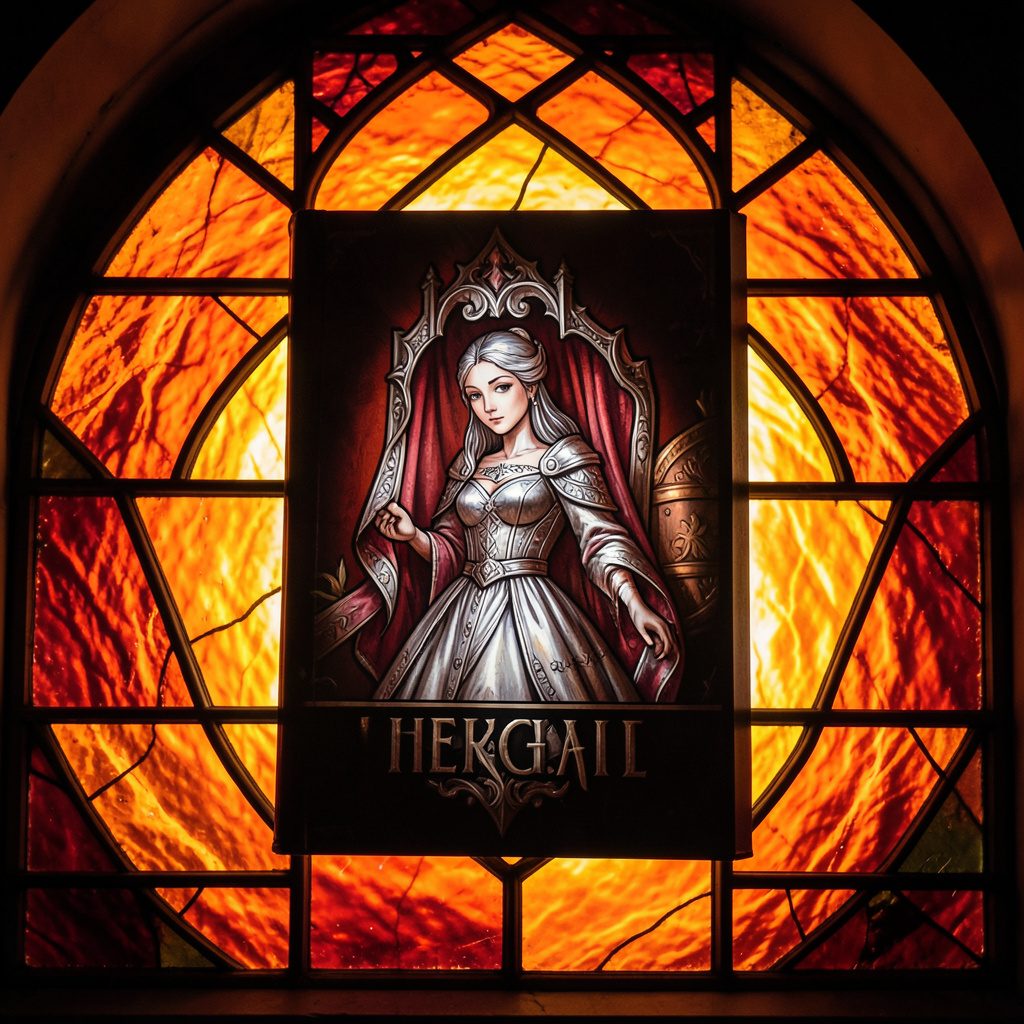
Selected works from across our quarterly issues, gathered into a printed volume. Past print runs have appeared in limited quantities and are available while supplies last.
Volumes cover poetry, short fiction, photography, paintings, drawings, reviews, and interviews — curated to reflect the breadth of artists who have shared their paths in the journal.
Browse Past IssuesInside the Pages
Since 2011, Stone Path Review has hosted contributions from more than twenty artists — poets, photographers, musicians, and filmmakers — along with interviews, readings, and film entries.
Recent volumes have included poetry from Mark Doty and Jim Harrison, an interview with a jazz musician from Minneapolis, MN, and the short film Efflorescence from Deep Field Cinema.
From the Blog
An all-star cast assembled for the fall issue — poetry, short stories, photography, and an interview with a jazz musician from Minneapolis, MN.
Read More →
A featured film entry from Deep Field Cinema, programmed as part of our ongoing screen series.
Read More →
418 Publishing, Inc. was started as the parent company of Stone Path Review, with five issues published by this point.
Read More →
Photography and artist interview, part of an ongoing series highlighting new and established contributors.
Read More →
A recorded poetry reading captured on video and shared alongside the print issue.
Read More →
Browse past quarterly issues of Stone Path Review, available online with limited print quantities.
Read More →