Events
Fall Issue Update
An all-star cast assembled for the fall issue — poetry, short stories, photography, and an interview with a jazz musician from Minneapolis, MN.
Read More →An Artistic Journal · Est. October 2011
A quarterly publication — online and in print — joining poets, photographers, painters, storytellers, and musicians into one open forum for cross-cultural expression.
The role of chance in photographic composition is easily confused with carelessness. Yet every photograph already contains a negotiation between intention and contingency: the photographer chooses a position, lens, exposure and moment, while light, weather, gesture and accident alter what can enter the frame. Composition becomes meaningful when the artist can recognise how those forces cooperate. Planning establishes direction; chance supplies the detail that reason could not have specified.
Australian streets offer a particularly legible version of this tension. Sydney’s ferry wharves produce sharp reflections beneath hard midday light, while Melbourne’s trams, graffiti and narrow laneways keep changing under the photographer’s feet. Neither place is a neutral backdrop. Their rhythms make the act of looking feel physical and provisional, as though a decisive frame could be replaced by a better accident one second later.
Chance also operates after capture. A tilted horizon may expose a pattern that looked unpromising in the viewfinder; a stranger crossing the scene may interrupt a clean architectural arrangement; a burst of rain may dissolve distant detail into tonal fields. These outcomes are not neutral accidents. They ask whether the photographer can loosen the hierarchy between the planned subject and the peripheral event, then decide what deserves to remain.
Stone Path Review’s quarterly mixture of poetry, fiction, essays, photography, painting, drawing, music and video provides a fitting context for that decision. Its cross-cultural open forum treats composition as a live exchange rather than a sealed technique. A camera may begin the encounter, but selection, sequence, caption and juxtaposition continue it. The question is not whether chance should rule the image, but how much unpredictability an image can bear without losing its internal purpose.
A camera records a finite set of possibilities, yet arrives at the frame through a chain of contingent acts. Focus may settle on the wrong branch; a pedestrian may enter at the decisive instant; a cloud may move between the estimated light and the exposure. Aperture, shutter speed, ISO and lens choice shape the field of possibility, but they never eliminate uncertainty. They establish conditions in which an unforeseen form has a chance to become legible.
Casino games make this logic unusually explicit. A guide to roulette rules in Australia describes betting structures, probabilities and the house edge, translating the wheel’s movement into terms the player can act upon. Photography offers a comparable structure without the wager: intent supplies a stake, framing accepts a result, and editing decides what relation the result will hold to the wider sequence. The analogy is useful precisely because it keeps agency visible rather than crediting chance with authorship.
Composition is therefore the art of making selective use of disorder. The edge of a shadow can balance a face; a flash of colour can redirect the eye; an empty patch can become active negative space rather than an error. The decisive act may be what the photographer refuses to crop away. Looking closely at a chaotic frame can reveal a latent geometry, while admitting that the geometry arose through timing, patience and a willingness to be displaced.
Street photography makes chance unavoidable because the street does not hold still for the maker. Around Melbourne, tram bells, wheel tracks, shop signs and cyclists enter the visual field before a formal arrangement can be completed. A reflective shop window may borrow another scene; a passing coat may supply the scale missing from a facade. The photographer works with an environment that is already editing itself, one movement at a time.
Southbound ferries in Sydney create another variable system: glare, wake and a compressed crowd can turn an ordinary crossing into layered depth. At Adelaide’s Central Market, stacked fruit, handwritten prices and moving shoppers offer dense colour and repeated diagonals, yet a single trolley or plastic bag can redirect the composition. Brisbane’s sudden summer rain works differently, softening outlines and introducing reflections into pavements. These local conditions offer formal lessons about contingency.
Useful street practice keeps the camera ready before the visual accident arrives:
The aim is not to hunt novelty at every turn. A visually loud moment can exhaust an image, while a small misalignment may open it. Chance works best when the photographer has enough observational patience to distinguish the first arrangement from the one that has just become possible. The sequence matters too: the frame that seems incomplete beside another may acquire tension when placed after a calm image in the final edit.
Editing is often described as a phase of correction, but it can instead be the place where chance is given a second life. Cropping may rescue an accidental relationship; a wider frame may restore context that the initial selection removed. In a digital workflow, this might mean duplicating, shifting and comparing candidates. With film, it means choosing among contact sheets and resisting the urge to treat every irregular edge as a mistake.
The argument that print journals remain vital is especially relevant to this process. Print sequencing asks the artist to consider how one image affects the next through pace, scale and physical duration. Stone Path Review extends that concern across genres, allowing a photograph to converse with an essay, poem or drawing rather than stand as an isolated portfolio object. In independent booksellers and small-press markets across Australia, such made sequences still matter as alternatives to the endlessly scrollable image feed.
Several editing habits help preserve productive uncertainty:
Curating is another compositional act. A caption can direct interpretation, but it should not close every route into the picture. Leaving some details unnamed can preserve the productive gap between what is visible and what a reader infers. This is especially valuable in a journal read across cultures, where an image may carry local associations that viewers elsewhere will approach differently. Interpretation changes with the sequence, the page and the company it keeps.
Chance also enters through memory, where resemblance and discrepancy coexist. A remembered coastline may return through reflected light on a windscreen; a family table may appear in the geometry of café chairs. The image need not reproduce the past exactly to recall it. Its value may lie in the accidental correspondence between present observation and stored experience, a visual hinge between what happened and what the photographer thought had disappeared.
The journal’s essay on memory through stitching offers a productive parallel. Each stitch joins separate pieces while preserving their difference, much as a photographic sequence can connect views without forcing them into one continuous claim. The embroidered surface records decisions through repeated acts, and a photograph records decisions through framing and ordering. In both practices, apparent spontaneity depends on material rules: thread direction, colour relationships, margins, pace and the placement of one element against another.
That combination of rule and openness is relevant to artists working across cultures. A camera may record the apparent randomness of a suburban footpath or the aligned windows of an apartment block, then place that image beside a handwritten note or a found object. The result can hold public space and private memory together without resolving them. Meaning emerges from adjacency: the viewer notices what the image echoes, what it withholds and what a new context asks it to carry.
The encounter with a photograph continues after publication. On a screen, the reader may enlarge a detail and bypass the sequence; on a page, the image meets the scale of the body and the turn of the next sheet. Print and online versions do not offer identical acts of looking, yet both can make accidental relationships available to a wider public. Sharing also introduces a new layer of contingency: strangers may see a formal quality the maker had treated as neutral.
A portfolio such as Yani Lavigne’s photography demonstrates how images can be offered as propositions rather than final evidence. In an open artistic forum, each contribution enters a field of correspondences with other work, other places and other visual languages. The reader’s response does not complete the artist’s composition, but it does extend its possibilities. Chance enters at this level through selection, interpretation and conversation, where an unforeseen pairing can make both works more available to thought.
Artists ready to contribute should review Stone Path Review’s current submission guidance online. Creators may submit poems, short stories, essays, reviews, photography, paintings, drawings, music or video for publication in print and online. Stone Path Review welcomes submissions without reading or submission fees, giving work that crosses genres and borders a route into an international artistic forum.
Identity & Recognition
Featured Book
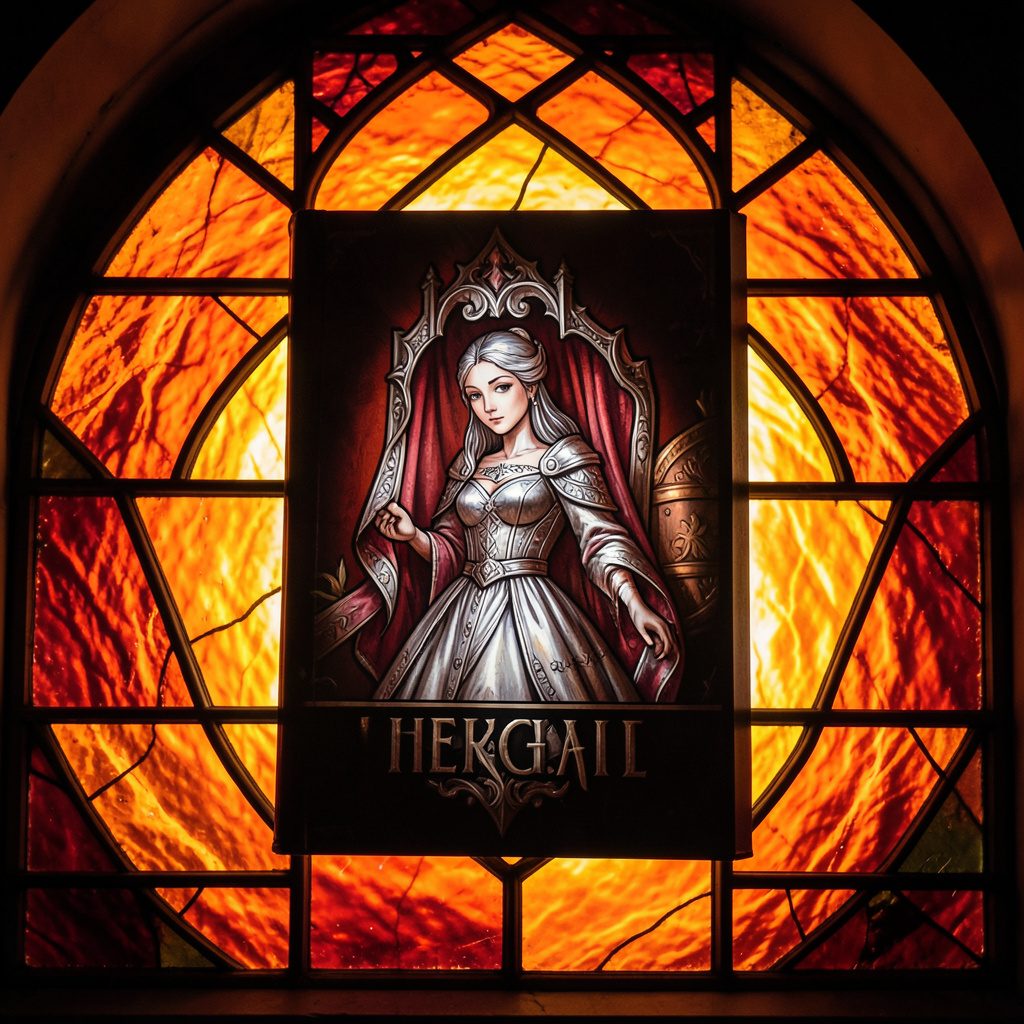
Selected works from across our quarterly issues, gathered into a printed volume. Past print runs have appeared in limited quantities and are available while supplies last.
Volumes cover poetry, short fiction, photography, paintings, drawings, reviews, and interviews — curated to reflect the breadth of artists who have shared their paths in the journal.
Browse Past IssuesInside the Pages
Since 2011, Stone Path Review has hosted contributions from more than twenty artists — poets, photographers, musicians, and filmmakers — along with interviews, readings, and film entries.
Recent volumes have included poetry from Mark Doty and Jim Harrison, an interview with a jazz musician from Minneapolis, MN, and the short film Efflorescence from Deep Field Cinema.
From the Blog
An all-star cast assembled for the fall issue — poetry, short stories, photography, and an interview with a jazz musician from Minneapolis, MN.
Read More →
A featured film entry from Deep Field Cinema, programmed as part of our ongoing screen series.
Read More →
418 Publishing, Inc. was started as the parent company of Stone Path Review, with five issues published by this point.
Read More →
Photography and artist interview, part of an ongoing series highlighting new and established contributors.
Read More →
A recorded poetry reading captured on video and shared alongside the print issue.
Read More →
Browse past quarterly issues of Stone Path Review, available online with limited print quantities.
Read More →