Events
Fall Issue Update
An all-star cast assembled for the fall issue — poetry, short stories, photography, and an interview with a jazz musician from Minneapolis, MN.
Read More →An Artistic Journal · Est. October 2011
A quarterly publication — online and in print — joining poets, photographers, painters, storytellers, and musicians into one open forum for cross-cultural expression.
Documentary photography carries an unusual charge. Unlike a poem or a short story, a photograph walks into the world with a claim that it happened, that the people in it were really there, that the moment was preserved rather than invented. That claim gives the medium its authority, and is also the seed of its ethical trouble. Every frame a photographer releases is a small act of testimony, and testimony, as any barrister in the Sydney courts will tell you, is only as honest as the witness telling it.
For practitioners working in Australia, the question of what it means to witness well has become increasingly charged. The country is home to a long lineage of photographers — Max Dupain, David Moore, Mervyn Bishop, Trent Parke — whose work has shaped how the nation sees itself. Their images of Sydney beaches, Melbourne streetscapes, outback communities, and Aboriginal life are now read as both art and artefact. That double status is itself an ethical problem: the same picture can be praised in a gallery at the National Gallery of Australia and debated in a lecture at the University of Melbourne for what it left out.
The stakes rise when the camera turns toward people in distress. Photojournalists covering offshore processing on Nauru, the aftermath of the Black Summer bushfires along the south coast, or the housing struggles of remote communities in the Northern Territory have to balance speed, dignity, and access. The temptation is to chase the iconic image; the discipline is to question whether such an image is owed to anyone at all.
Every documentary photograph inherits the history of the ones that came before it. When a photographer raises a camera in a public housing estate in Carlton or on a footpath outside a Centrelink office in Bankstown, they are stepping into a visual tradition that includes both the sympathetic and the sensational. Australia's tabloid press has long traded in imagery of marginalised lives, and that history has left a residue of mistrust that documentary photographers must reckon with, whether they like it or not.
This is why the question of intent is never enough on its own. A photographer can mean nothing but good, and still produce a frame that flattens a community into a single sorrowful note. The medium's history, particularly the way Aboriginal and Torres Strait Islander peoples were photographed throughout the twentieth century, shows how easily a documentary project can slide from observation into extraction. Researchers at the State Library of New South Wales have spent years working through these archives, and the conversations around them now routinely ask not just who took a picture, but who it was taken for, and who it continues to belong to.
The honest answer, in many cases, is that the picture no longer belongs to the photographer at all. It belongs to the subject, to the family, to the community. A useful starting point for thinking through the choices that shape a documentary image is to notice how even small visual choices carry moral weight long before any caption is written.
Consent in this field is rarely a signed form. It is a conversation that begins when a photographer appears with a camera and continues, sometimes for years, after the image is published. In the communities around Broome and the Dampier Peninsula, photographers working with Aboriginal families often describe consent as something that has to be renewed every time an image is reused, reprinted, or shared on social media. The act of consenting to a photograph in 1995 is not the same as consenting to its circulation on Instagram in 2026, and the difference matters.
There is also the question of what consent can cover. A person photographed in grief outside a hospital in Adelaide may understand what it means to be in a single news photograph, and yet have no way of anticipating that image appearing decades later in a retrospective book or a documentary film. Photographers who work for decades on a single community, as many have done in the Kimberley, learn to treat relationships as ongoing projects of trust rather than one-off permissions.
Even in fast-moving news situations, photographers are beginning to rethink the assumption that being in public equals being photographable. Recent guidance from Australian press councils has nudged practitioners toward asking, when feasible, and toward explaining how an image will be used. For longer-form documentary projects, reading photographs without people can sharpen an eye for the compositional choices a frame makes — choices that become ethical long before the shutter clicks.
The digital darkroom has complicated every promise the medium once made. A photograph can now be subtly rearranged in Photoshop, its sky replaced, its figures repositioned, its colours tuned to feel more dramatic than the original moment. Documentary photography's contract with the viewer rests on the idea that what was there is what is shown. When that contract is broken, even quietly, the consequences ripple through every image that follows.
This does not mean the edit suite is off-limits. Cropping for composition, modest contrast adjustments, dust removal, and tonal corrections have always been part of the craft. The line sits at the moment an edit changes what the photograph claims to record. Removing a rubbish bin from a street scene in Collingwood, darkening a sky over the Twelve Apostles, or duplicating a figure to balance a composition can feel harmless in the moment and yet quietly convert a documentary image into a constructed one.
Photographers working in the long-form tradition have responded in different ways. Some publish their unedited files alongside the final image, a kind of receipt. Others write detailed captions that name the intervention, the way a scientist would describe a methodology. A few refuse heavy editing altogether and accept the flatness of available light. None of these choices is automatically the more ethical one; each depends on the audience, the subject, and the story being made.
In Australia, no discussion of documentary ethics can sit apart from the question of Country. To photograph on Aboriginal land is to work within protocols that predate the camera by tens of thousands of years. Many communities now expect photographers to seek permission not from individuals alone, but from elders, from cultural authorities, and from the relevant land councils. A portrait taken without that layered consent can cause real harm, particularly when it involves cultural practices, ceremonial objects, or sacred sites.
This is not a courtesy; in many cases it is a legal and cultural obligation. Respect for community protocols can mean delaying a shoot, changing a location, or in some cases putting the camera down entirely. Photographers who have worked closely with communities in Arnhem Land, the APY Lands, or the Torres Strait often speak of being told, sometimes gently and sometimes firmly, that a moment is not theirs to record. Those refusals are not obstacles to the work; they are the work.
The same principle extends to migrant and refugee communities whose representation in Australian media has historically been shaped by outsiders. Working alongside community photographers and crediting families themselves are ways of moving from documentation toward collaboration.
Few areas of documentary practice have been scrutinised as harshly as the imagery of suffering produced for fundraising and aid campaigns. The familiar tropes — the downcast child, the tear-streaked face, the unflinching gaze into a tin shelter — have been critiqued for stripping subjects of agency and turning them into props for donor emotions. Australian audiences are exposed to this imagery constantly, from appeals at train stations in Perth to full-page advertisements in Brisbane, and photo festivals such as Head On in Sydney have begun to grapple openly with how such imagery circulates.
The ethical alternatives are not always comfortable. Showing resilience instead of despair, naming individuals instead of reducing them to a population, or letting people speak in their own words through captions all require more time and more trust than a quick fly-in shoot. Some photographers have chosen to refuse assignments that demand the iconic suffering frame, even when it costs them work. Others have built long partnerships with organisations that share editorial control with the communities they depict.
The viewer, too, carries a share of the responsibility. Learning to read an aid photograph with suspicion — to ask who benefits from the framing, what the caption hides, and whose voice is absent — is a skill worth practising. There is also a quiet parallel with the way people lock down personal conversations in their private digital lives: both small acts are about recognising who gets to see what, and on whose terms.
The viewer is not a passive consumer of documentary images; every share, every save, every scroll-past is a small ethical decision. Slowing down with a photograph is the first habit worth building, because most ethical harms in this field are made easier by speed. A frame looked at for ten seconds longer is a frame that gets harder to flatten.
This is the work of ethical viewing, and it can be practised the way one practises a craft. The following checklist is meant for any reader who wants to treat documentary photography as a serious form of attention rather than a stream of content.
A photograph is never just a photograph. It is a small bundle of decisions — by the photographer, by the subject, by the editor, and by every pair of eyes that meets it. Treating those decisions with care is not a separate part of the work; it is the work itself, and it is the fair go the medium owes to anyone who steps in front of a lens.
If this conversation is one you want to keep having, the Stone Path Review mailing list is a quiet way to have each quarterly journal land in your reading, along with reflections on the questions the work raises.
Identity & Recognition
Featured Book
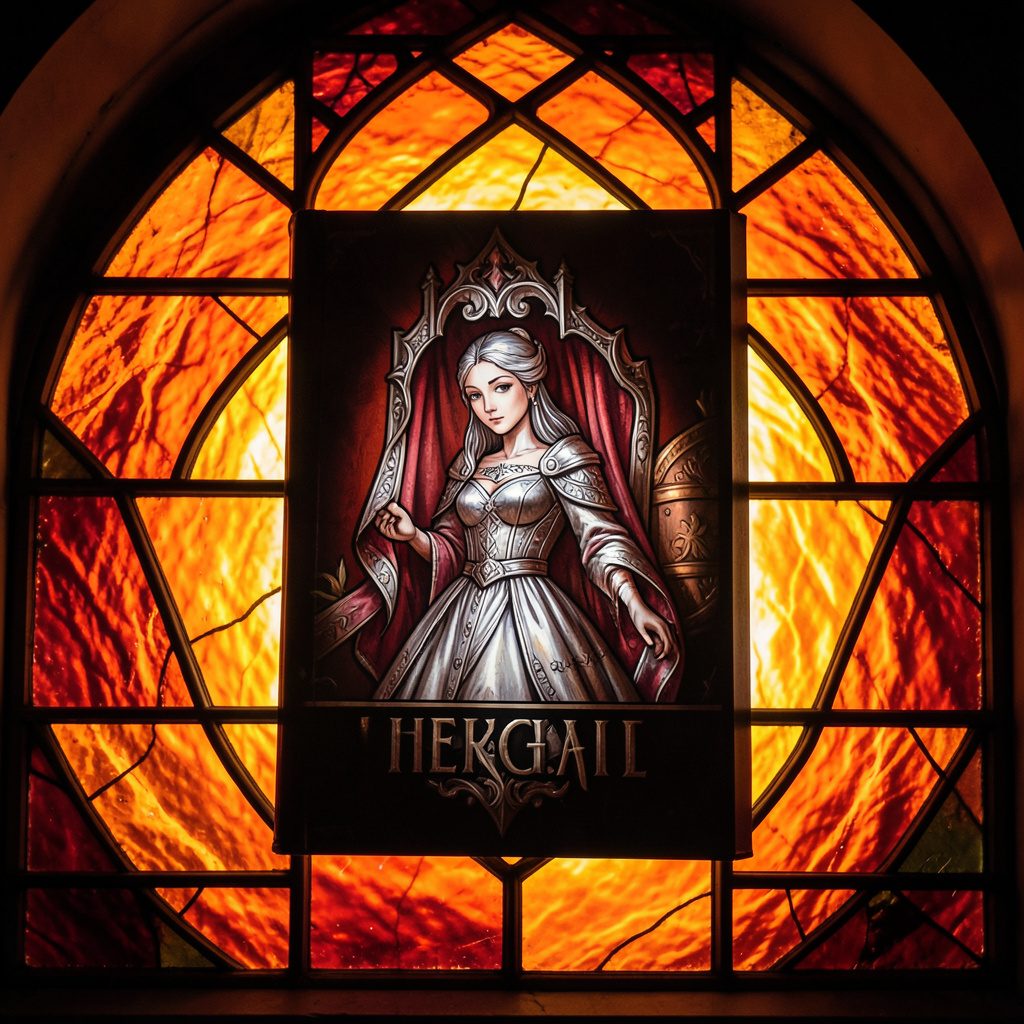
Selected works from across our quarterly issues, gathered into a printed volume. Past print runs have appeared in limited quantities and are available while supplies last.
Volumes cover poetry, short fiction, photography, paintings, drawings, reviews, and interviews — curated to reflect the breadth of artists who have shared their paths in the journal.
Browse Past IssuesInside the Pages
Since 2011, Stone Path Review has hosted contributions from more than twenty artists — poets, photographers, musicians, and filmmakers — along with interviews, readings, and film entries.
Recent volumes have included poetry from Mark Doty and Jim Harrison, an interview with a jazz musician from Minneapolis, MN, and the short film Efflorescence from Deep Field Cinema.
From the Blog
An all-star cast assembled for the fall issue — poetry, short stories, photography, and an interview with a jazz musician from Minneapolis, MN.
Read More →
A featured film entry from Deep Field Cinema, programmed as part of our ongoing screen series.
Read More →
418 Publishing, Inc. was started as the parent company of Stone Path Review, with five issues published by this point.
Read More →
Photography and artist interview, part of an ongoing series highlighting new and established contributors.
Read More →
A recorded poetry reading captured on video and shared alongside the print issue.
Read More →
Browse past quarterly issues of Stone Path Review, available online with limited print quantities.
Read More →