Events
Fall Issue Update
An all-star cast assembled for the fall issue — poetry, short stories, photography, and an interview with a jazz musician from Minneapolis, MN.
Read More →An Artistic Journal · Est. October 2011
A quarterly publication — online and in print — joining poets, photographers, painters, storytellers, and musicians into one open forum for cross-cultural expression.
A haibun is a compact literary form in which prose and poetry share the same journey. A prose passage establishes movement, memory, or observation; a haiku-like poem then alters the reader’s angle, leaving an image suspended in the mind. The form is brief, but its small scale can hold travel, grief, humour, weather, history, and sudden recognition.
The Japanese poet Matsuo Bashō is often associated with the form, especially through his travel writings, yet contemporary haibun has moved well beyond a record of pilgrimage. Writers now use it for city walks, family stories, ecological witnessing, dream sequences, and fragments of autobiography. Its strength lies in the tension between narrative continuity and poetic interruption.
For Australian writers, the form offers a flexible way to hold contrasting landscapes and registers together. A piece might move from a crowded Melbourne tram to a silent suburban garden, or from the salt glare of a Western Australian coast to a few spare lines about a shell. The prose can carry cultural and geographical context while the poem creates room for what cannot be fully explained.
Haibun also suits an era of compressed attention. Readers encounter a complete arc without requiring a long narrative commitment, while writers can test the relationship between scene and silence. Done well, the form does not decorate prose with a poem; it makes each mode necessary to the other.
The prose section of a haibun usually supplies a situation. It may introduce a journey, describe a room, recall a conversation, or follow an ordinary task. This passage needs enough clarity for the reader to know where they are, but it should avoid explaining every emotional consequence. The poem gains power when it arrives beside an open space.
The poetic section then reframes the prose rather than summarising it. A paragraph about waiting at a hospital might lead to an image of rain on vending-machine glass. A description of an old family house could turn towards a single moth circling a ceiling light. The relationship may be associative, ironic, or quietly disruptive. What matters is the pressure between the two parts.
That pressure gives the form its distinctive rhythm. Prose moves through time; poetry often pauses it. Prose names circumstances; a short poem may make those circumstances newly strange. The best haibun leaves a slight gap between what has happened and what the reader senses.
A haibun is not simply a paragraph followed by a haiku. Traditional haiku conventions can inform the poem, including attention to season, concrete imagery, and a turn between images, but contemporary practitioners interpret those principles in varied ways. Some use three short lines, while others write a more open lyric fragment.
The prose should have its own music. Sentence length, paragraph breaks, and recurring sounds can create a pace that prepares the poem without announcing it. A clipped account of a late-night walk may make the poem feel like a held breath. A flowing travel narrative may require a sharp, spare ending to interrupt its momentum.
Contrast can also operate through scale. The prose might describe a national landscape, a family history, or a public event, while the poem narrows to a fly on a windowsill. That small detail does not reduce the larger subject. It gives the reader a physical point from which to approach it.
Place is one of the form’s richest resources. A haibun can gather the sensory facts of a location without becoming a guidebook: the metallic rattle of a Melbourne tram, the damp smell of a Sydney ferry terminal, cicadas rising from a Brisbane evening, or the long blue distance visible on a road outside Adelaide. Such details make a setting lived rather than merely labelled.
Australian landscapes also invite careful attention to season. Summer may mean heat haze, flies, and the dry crackle of grass in one region, while it means sudden storms or humid evenings in another. Writers should resist turning the country into a collection of postcard symbols. Specific observation is more persuasive than generalised claims about the bush, the coast, or wide-open space.
Cultural context matters in the same way. A poem set near a river, shopping strip, or public reserve can acknowledge the histories held by that place without treating them as atmospheric decoration. When a writer is working on land with deep First Nations significance, research, respect, and positional awareness should shape the language and the limits of the piece.
Revision in haibun involves examining the seam between prose and poem. Does the poem reveal something the prose could not carry? Does the prose create a meaningful condition for the poem, or is it merely a long caption? Reading the piece aloud can expose repeated information, weak verbs, and a final line that explains rather than resonates.
Compression should be selective. Removing a sentence may sharpen the work, but cutting every connective detail can leave the reader without a place to stand. A few precise facts—a cracked blue mug, a train announcement, the smell of eucalyptus after rain—can support emotional complexity more effectively than direct statements of feeling.
Writers may also find that vulnerability requires control rather than disclosure. A reflective resource on creative self-compassion can be useful when personal material feels exposed or unfinished. The goal is not to flatten difficult experience into a lesson, but to create enough artistic distance for the work to remain attentive and humane.
A haibun often depends on a speaking voice with a clear relationship to memory. That voice may be trustworthy, uncertain, embarrassed, or deliberately evasive. The prose can admit gaps in recollection, while the poem offers an image that seems to know more than the narrator does. This is especially effective in work about childhood, family conflict, migration, or loss.
Unreliability need not involve a dramatic lie. It can appear through omission, self-protection, mistaken chronology, or an insistence that an event meant less than it did. Writers exploring this possibility may find useful craft parallels in unreliable narrators, particularly the way contradiction can draw readers deeper into a story.
The form’s brevity makes ethical handling important. A poem should not be used to manufacture mystery around another person’s pain, and a sudden image should not trivialise a serious subject. Ask what the work is paying attention to, whose perspective is missing, and whether the final turn opens thought rather than closing it with a convenient revelation.
Haibun becomes clearer when read alongside many kinds of writing. Compare travel diaries with prose poems, lyric essays with flash fiction, and traditional haiku with contemporary short-form verse. Notice how different writers handle white space, titles, chronology, and the point at which an image becomes more powerful than an explanation.
The form is also well suited to literary journals because it sits between categories. An editor may encounter a work that belongs partly to poetry, partly to nonfiction, and partly to experimental prose. Publications such as Stone Path Review welcome cross-genre work within a wider conversation among writers, photographers, visual artists, and readers.
For Australian contributors, the local literary market offers several useful routes: independent bookshops, small magazines, writers’ centres, and festivals such as those in Sydney, Melbourne, Brisbane, and Perth. Submission guidelines still matter. Check whether a journal accepts hybrid forms, whether simultaneous submissions are allowed, and whether the publication requests Australian spelling or particular manuscript formatting.
A strong submission usually presents the haibun as a complete artistic object. Avoid adding a lengthy explanation of its structure unless requested. A concise title, clean spacing, and a short biography are often enough. If the piece includes cultural knowledge, personal history, or place-based material, make sure the language reflects care rather than merely seeking local colour.
The following distinctions can help during drafting. They are not fixed rules; contemporary writers often combine or reshape them.
| Form | Main Movement | Typical Strength | Common Risk |
|---|---|---|---|
| Prose poem | Image to image | Dense atmosphere and musical compression | Becoming opaque without a grounded scene |
| Haiku | Observation to turn | Precision, season, and sudden perception | Treating the three-line shape as a formula |
| Lyric essay | Reflection through association | Spacious thought and layered context | Losing momentum through abstraction |
| Haibun | Prose scene to poetic shift | Narrative depth joined to concentrated image | Repeating the same idea in both sections |
Begin with a scene rather than a theme. “Grief” is too broad to draft from, but a paper cup left on a hospital windowsill may lead somewhere. Write the prose without forcing it to become poetic, then make a separate list of images, sounds, and physical details. The poem can grow from that second layer.
A final draft should feel inevitable without feeling predictable. Its prose offers a path, its poem changes the light along that path, and the space between them allows the reader to complete the movement. Submit work that has been allowed to become quiet, exact, and fully itself.
Stone Path Review provides a welcoming home for writing that crosses boundaries between forms and traditions. Read widely, shape the encounter between paragraph and poem, and send forward the small moment that continues to glow after the page has ended.
Identity & Recognition
Featured Book
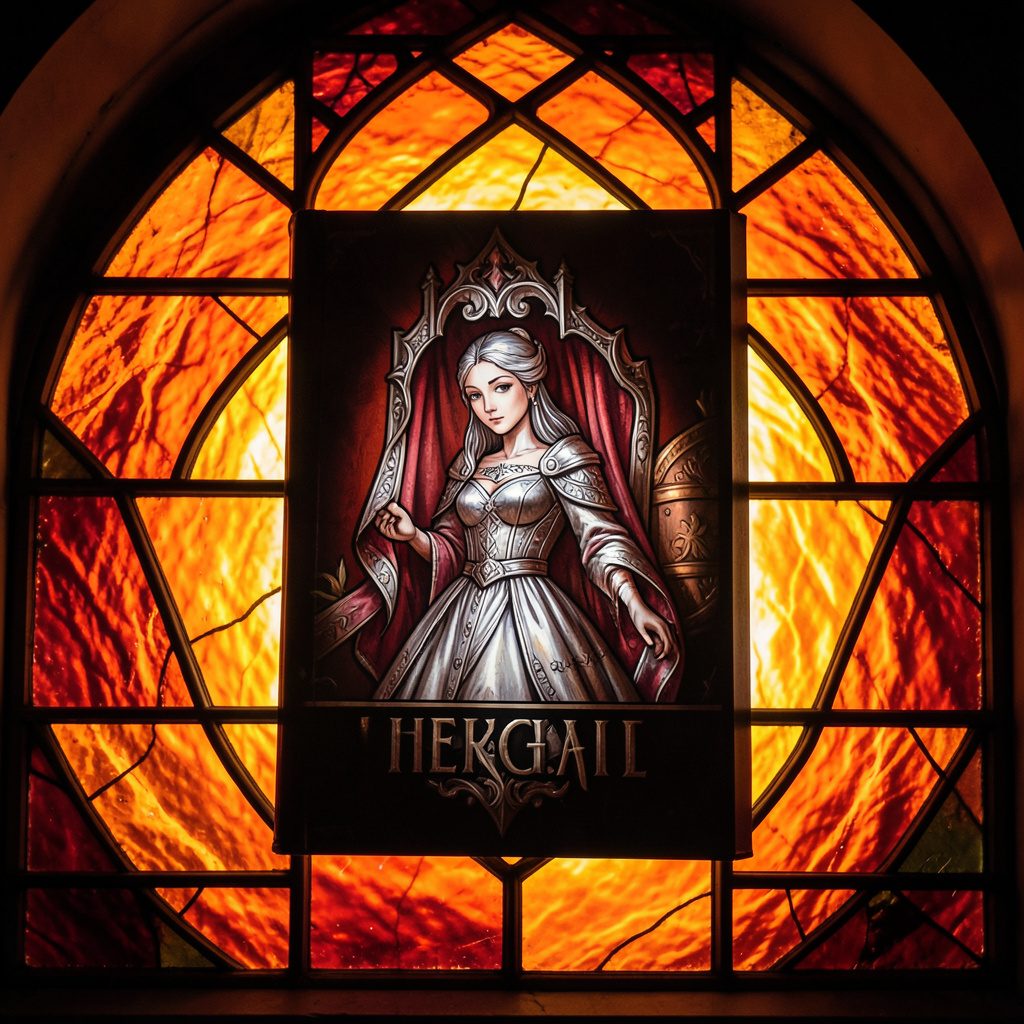
Selected works from across our quarterly issues, gathered into a printed volume. Past print runs have appeared in limited quantities and are available while supplies last.
Volumes cover poetry, short fiction, photography, paintings, drawings, reviews, and interviews — curated to reflect the breadth of artists who have shared their paths in the journal.
Browse Past IssuesInside the Pages
Since 2011, Stone Path Review has hosted contributions from more than twenty artists — poets, photographers, musicians, and filmmakers — along with interviews, readings, and film entries.
Recent volumes have included poetry from Mark Doty and Jim Harrison, an interview with a jazz musician from Minneapolis, MN, and the short film Efflorescence from Deep Field Cinema.

From the Blog
An all-star cast assembled for the fall issue — poetry, short stories, photography, and an interview with a jazz musician from Minneapolis, MN.
Read More →
A featured film entry from Deep Field Cinema, programmed as part of our ongoing screen series.
Read More →
418 Publishing, Inc. was started as the parent company of Stone Path Review, with five issues published by this point.
Read More →
Photography and artist interview, part of an ongoing series highlighting new and established contributors.
Read More →
A recorded poetry reading captured on video and shared alongside the print issue.
Read More →
Browse past quarterly issues of Stone Path Review, available online with limited print quantities.
Read More →