Events
Fall Issue Update
An all-star cast assembled for the fall issue — poetry, short stories, photography, and an interview with a jazz musician from Minneapolis, MN.
Read More →An Artistic Journal · Est. October 2011
A quarterly publication — online and in print — joining poets, photographers, painters, storytellers, and musicians into one open forum for cross-cultural expression.
An erasure poem does not merely mention absence; it makes absence readable. A line may be struck through, a phrase may disappear beneath a block of white, or a page may preserve only the pressure of words that once occupied it. The practice draws on blackout writing, redaction, found poetry and concrete verse, in which typography, silence and the physical page carry as much meaning as the surviving language. Learn more about Comment Les Musées Suisses Repensent Leurs Collections D Art Contemporain.
Such openness unsettles the usual contract between writer and reader. A crossed-out phrase can suggest censorship, grief, private revision or simple material damage, and the poem keeps those possibilities in motion. For Australian writers and readers, the form carries local weight: in a Brisbane alley, damp and sunlight can blur a pasted notice until its message survives only as isolated words.
Some erasure poems remove words from a found document; others use black ink, correction fluid or opaque digital shapes to bury language until only fragments remain. A third group arranges type so tightly that a phrase becomes a narrow slit of light, turning negative space into a visible presence. These methods are related but not interchangeable. Blackout writing hides the word, redaction implies a decision about disclosure, and palimpsest writing allows one version to show through another.
The form can imitate an official file without claiming to reproduce an actual event. Its tension comes from the reader’s awareness of editing: what remains has been selected, and the page bears the strain of that choice. The final effect also depends on the reader’s willingness to look more slowly. White space is not automatically emptiness; it may be a pause, a refusal, an error, or the place where several possible sentences collide without settling into one.
On a Melbourne laneway, a half-scraped paste-up is already a lesson in form. Council maintenance, rain and torn corners all alter the message, leaving a clean rectangle where a voice had been. An erasure poem need not treat this as evidence of censorship, but it can preserve the uncertainty. A visual record of the damaged poster, then a poem made from its surviving lines, would keep the political question and the physical fact together: municipal care removes traces of informal speech, while art records both the disappearance and the conditions surrounding it.
Redaction belongs to a public culture as well as a private craft. Official letters, edited photographs and censored publications all demonstrate that omission can carry authority. A European discussion of reframing contemporary collections places that tension in a museum setting, where the objects selected for display and those left out both shape cultural memory. An erasure poem asks a related question without pretending to stand for an institution: whose speech survives when a page is authorised for public view?
The same question follows records made by government. In the Australian Capital Territory, the Freedom of Information Act 1991 provides a framework for public access while allowing exemptions for some law-enforcement, intelligence and privacy material. When an agency decides to release a document with passages removed, the surviving notation can become a striking sign that disclosure has limits. Federal copyright law adds another layer: under the Copyright Act 1968, copyright generally arises when an original work is created, without formal registration. Neither rule is a poetic instruction, but both complicate any assumption that a visible text tells the whole story.
A palimpsest keeps more than one time on a surface. A sentence written over another may reveal pressure, hesitation or an abandoned argument, and the older layer can resist the final one. Reading erasure ethically means distinguishing documented suppression from anonymous wear, deliberate revision from accidental loss. Calling every gap censorship flattens history; treating every gap as a decorative trick ignores power. A careful poem leaves both questions active.
Different procedures produce different kinds of evidence. Visual cues can suggest what a writer wants the reader to notice, though they do not settle the poem’s meaning or identify one correct interpretation. The main approaches can be compared by their visible features, likely effects and common interpretive risks.
| Approach | Visible feature | Likely effect | Common interpretive risk |
|---|---|---|---|
| Blackout | Covered words with traces left visible | A withheld statement and concentrated fragments | Reading every blackout as state censorship |
| Redaction | A marked deletion in an otherwise orderly document | Institutional authority and limited disclosure | Treating the mark as proof of the removed content |
| Palimpsest | Earlier writing visible beneath a later layer | Revision, memory and competing versions | Assuming the surviving layer is the final truth |
| Negative space | Blank areas that shape the page | Silence, duration and the reader’s contribution | Mistaking emptiness for lack of craft |
| Found text | An existing document altered through selection | Editing, context and material history | Assuming the maker is separate from the source’s history |
None of these approaches has a single meaning. A poem may combine a typewriter redaction with a hand-drawn blot, making institutional language and personal injury overlap. A companion essay on grief in abstract sculpture offers a useful parallel: a carved void can register loss through the volume removed, while a blackout registers it through the shape of the obstruction. Neither comparison fixes the meaning, but both sharpen attention to surface, mass and the ethical weight of what cannot be recovered.
A first reading can move at the pace of the surviving fragments. These cues offer a practical way to look more closely without reducing the poem to a puzzle with a solution.
The page’s order matters as much as its gaps. A deletion at the beginning frames what follows; one near the end may retrospectively alter the weight of everything preceding it. Holding these possibilities together allows ambiguity to remain active rather than becoming an obstacle.
The practice does not demand rare materials. Photocopy a public notice, a recipe or a page from a secondhand book, then obscure selected words with ink, correction fluid or a flap of paper. A digital opaque layer can reproduce the effect, though the screen removes some of the tactile friction. Local observation often supplies the first fragment: on a Sydney ferry, the geometry of railings, warning signs and wake lines can become found text, provided identifiable passengers are left out of the frame.
An erasure can circulate as part of a larger body of work rather than arrive as a sealed submission. A personal publication such as Abrete’s blog can serve as a testing ground for experiments that later become poems, artists’ books or installations. Independent bookshops and literary festivals also sustain an Australian market for small-run poetry chapbooks, where modest printed experiments can be sold at accessible prices. The material object still matters: stapling, ink coverage and the dimensions of a page change how omission is read. For shared attention beyond the page, the journal events listings can connect these experiments with readings, conversations or exhibitions.
Several exercises can lead into the form without imposing a single method:
These exercises are starting points, not recipes for a finished effect. Test each version in print and aloud. The gap should feel deliberate even when its cause remains unresolved, and any found text should be handled with awareness of its original context.
A finished poem often contains less than its maker first gathered, but publication changes what that reduction can do. In a journal, a sequence of erasures can preserve scale, pacing and the visual logic of consecutive pages. Stone Path Review’s mix of poetry, short fiction, essays, visual art, music and video gives the work a broad artistic neighbourhood, allowing a poem about withheld speech to encounter other forms of expression across cultures.
Readers are invited to notice differences as well as affinities. A poem can conceal one voice and reveal the pressure of another; placing it beside painting, music or film changes the questions a reader brings. Such encounters are especially valuable when the subject is silence, because different artistic traditions carry different risks and obligations around what they leave out.
Before sending work, read Stone Path Review’s purpose and follow the current submission guidance. The journal is published by 418 Publishing, Inc., a nonprofit parent organisation, and accepts submissions without reading or submission fees. Send an erasure poem or a related visual work, credit any found text, and contribute to an open, cross-cultural conversation about the marks that make meaning.
Identity & Recognition
Featured Book
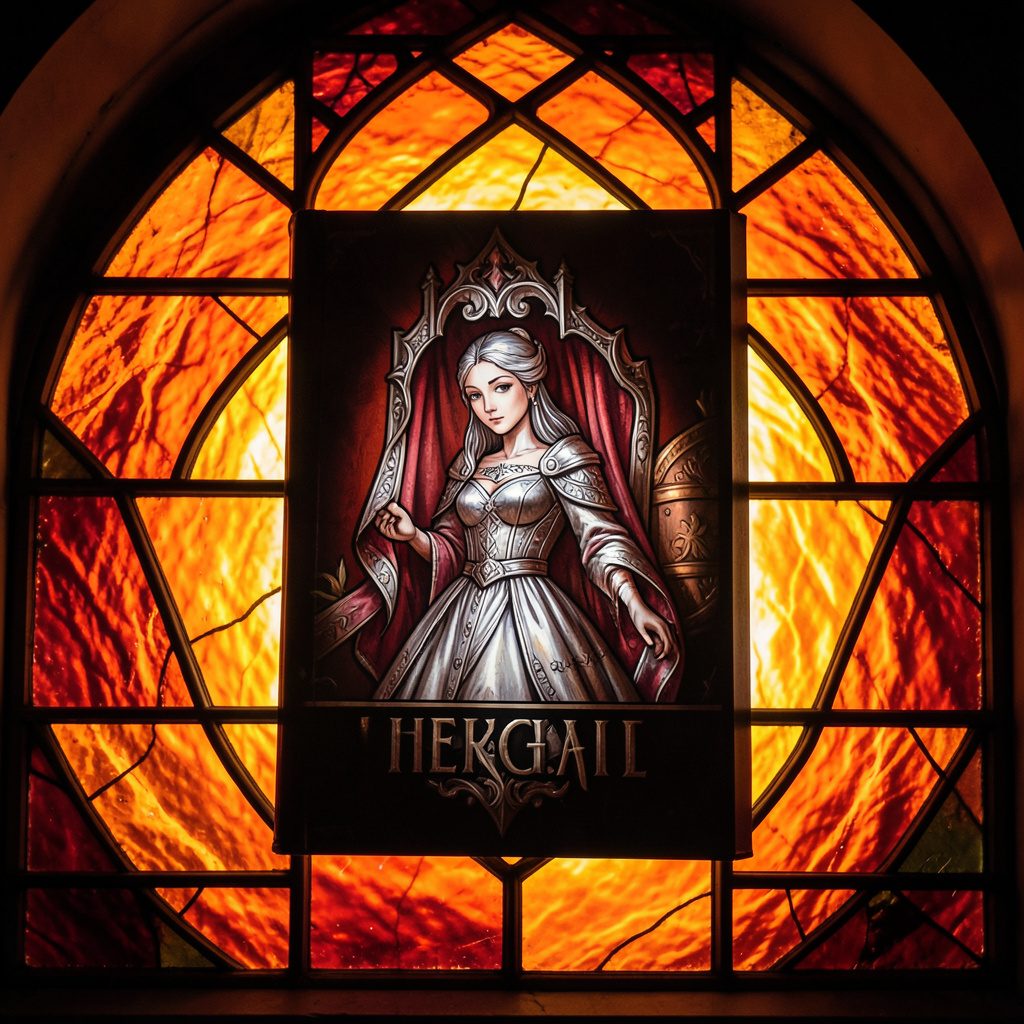
Selected works from across our quarterly issues, gathered into a printed volume. Past print runs have appeared in limited quantities and are available while supplies last.
Volumes cover poetry, short fiction, photography, paintings, drawings, reviews, and interviews — curated to reflect the breadth of artists who have shared their paths in the journal.
Browse Past IssuesInside the Pages
Since 2011, Stone Path Review has hosted contributions from more than twenty artists — poets, photographers, musicians, and filmmakers — along with interviews, readings, and film entries.
Recent volumes have included poetry from Mark Doty and Jim Harrison, an interview with a jazz musician from Minneapolis, MN, and the short film Efflorescence from Deep Field Cinema.
From the Blog
An all-star cast assembled for the fall issue — poetry, short stories, photography, and an interview with a jazz musician from Minneapolis, MN.
Read More →
A featured film entry from Deep Field Cinema, programmed as part of our ongoing screen series.
Read More →
418 Publishing, Inc. was started as the parent company of Stone Path Review, with five issues published by this point.
Read More →
Photography and artist interview, part of an ongoing series highlighting new and established contributors.
Read More →
A recorded poetry reading captured on video and shared alongside the print issue.
Read More →
Browse past quarterly issues of Stone Path Review, available online with limited print quantities.
Read More →