Events
Fall Issue Update
An all-star cast assembled for the fall issue — poetry, short stories, photography, and an interview with a jazz musician from Minneapolis, MN.
Read More →An Artistic Journal · Est. October 2011
A quarterly publication — online and in print — joining poets, photographers, painters, storytellers, and musicians into one open forum for cross-cultural expression.
A collaborative poem begins with an unusual proposition: a text is not simply handed over by one maker but composed through exchange among several people. It may be written in relays, built from marginal notes, or assembled from recorded speech. Its coherence comes from deciding how differences should meet on the page. Every line can carry two consciousnesses: the person who imagined it and the person who heard, altered, or answered it.
Success depends on practices often hidden from view: agreement, attribution, revision, and consent. Setting matters too. A project shared across Melbourne and Berlin differs from one made around a kitchen table, while live performance changes the balance again. For an artistic journal such as Stone Path Review, collaborative poetry offers both a rigorous publishing challenge and an open invitation to readers to enter the making process.
The first distinction is between a poem with several credited makers and a genuinely collaborative one. A themed anthology may gather separate responses; a collaborative composition lets one person’s contribution alter what another can write next. Even a response poem becomes reciprocal if each writer reads the preceding material and allows it to affect the next response. The sequence then matters, because each voice inherits a situation created by the others.
The practical distinctions can be mapped as follows:
| Aspect | Individually authored poem | Collaborative poem | Editorial question |
|---|---|---|---|
| Voice | One developing perspective | Several distinguishable or blended voices | How will individual identities remain visible? |
| Structure | Planned as a unified arc | Built through sequence and exchange | What determines order and pacing? |
| Revision | Authorial revision | Negotiation or mediated editing | Who can approve a substantive change? |
| Credit | One byline and one biography | Shared or varied attribution | How should roles and contributions be named? |
| Sources | Usually selected by the author | May include prompts, responses, recordings, or found language | What permissions and acknowledgements are needed? |
These categories describe working conditions rather than fixed outcomes. A collaborative poem can be tightly unified or deliberately fractured. It may use consensus, rotating editors, or a final decision-maker. The useful question is not whether the work is democratic, but whether its method is understood and ethically handled.
Before sharing a draft, collaborators should state what they can contribute and what they expect in return. Is the project deadline-driven? Can a line be cut without consultation? Will anonymity be needed at any stage? A short written protocol prevents misunderstandings that a friendly conversation can leave vague. It can name a decision-maker, set a cooling-off period after disagreement, and distinguish editorial corrections from changes that alter a contributor’s meaning.
A useful prompt may come from shared reading. One participant might underline a phrase in a casino strategy review, while another notices its rhythm or diction. The source belongs to the exercise, not automatically to the finished poem. Found phrases should be transformed, contextualised, and credited where appropriate. Starting from the same text can still produce divergent responses, but the source gives the group an object around which disagreement becomes precise.
Consent should remain active throughout the process. Contributors need to know when a workshop text may be quoted, whether anonymous contributions can later be identified, and how disagreements will be recorded. A shared document can store these permissions beside the draft. The group can then revise a poem without having to reconstruct what was permitted after publication.
Collective work often drifts toward the fastest or most confident speaker. Structures can counter that pressure without forcing every contribution into the same mould.
Several forms suit different group sizes:
Found language can sharpen these exercises. Promotional phrases in a new keno bonus guide can be treated as specimens of urgency, repetition, and reward, then placed beside an image that changes their tone. The group should record why each fragment was selected and ensure its use does not imply endorsement.
A few checks help maintain balance without slowing the work into administration:
Choose a structure that reveals the poem’s subject rather than displaying the method as an end in itself. When every voice remains audible, differences can generate pressure, counterpoint, and surprise without requiring the group to erase its internal friction.
When collaborators work across time zones, a shared document can create an illusion of continuous conversation. Comments accumulate, timestamps blur, and a late reply may answer an idea already abandoned. The group should distinguish live exchange from stored material. For each round, set a genuine closing time, archive the version circulated then, and begin the next round from that fixed point. This keeps each decision intelligible.
Links can become part of a poem’s material structure. A guide to live broadcast links helps readers reach a time-sensitive event, showing how a route can carry practical as well as semantic meaning. In a collaborative edition, a link might lead to a recording, source text, or translation. It should be tested before publication and saved in the archive if its destination may change. Accessibility notes should explain what each link opens and offer another route where possible.
Digital work also requires decisions about privacy, attribution, and translation. Colleagues may work from different drafts or understand dialect differently. Schedule a final check for accuracy, but distinguish factual verification from one person’s approval of the finished aesthetic. Shared tools organise the work; they do not remove the need for trust.
Australian readers encounter small journals through subscriptions, independent bookshops, literary festivals, zine fairs, libraries, and a modest but durable postal network. Quarterly print can feel countercultural rather than archaic: a finite run gives the object physical value, while Australia Post and local pickup points carry it beyond metropolitan centres. For Stone Path Review, this ecology rewards editions that are portable, collectible, and designed to circulate.
Events in Melbourne, Sydney, and Brisbane often extend a poem’s life beyond the page. At some pub-based readings in Melbourne and Sydney, guests bring their own drinks and mingle before the formal beginning, turning a shared reading into both social ritual and critical exchange. Community libraries and state library programmes provide another route through displays, workshops, and recorded sessions. The audience for a collaborative poem may therefore include people who never meet its makers.
Publication raises specific questions under the Copyright Act 1968 (Cth). Depending on whether contributions are separable, collaborators may be joint authors, each may own a separable contribution, or a contract may allocate rights. Moral rights concerning attribution and integrity also require care. Consent to edit is not consent to change meaning, and contributors should decide in advance how credit, takedown, and future reuse will work. Where traditional knowledge or cultural material is involved, authorship alone is never authority: relevant custodians must be consulted and permissions recorded.
A collaborative poem read aloud reveals timing that private drafting can conceal. A hesitation may belong to the character of the work, while another may expose an unresolved dispute. Rehearsal should include decisions about pauses, overlaps, volume, and who controls the room. Musicians can treat syllables as percussion, while a spoken-word performer may leave a gap for listeners to complete the thought.
Cinema offers a useful parallel. In silence building tension, silence operates as an active compositional choice rather than an absence. The same principle can guide a reading in which reduced texture lets an audience hear breathing, paper, or a change in spatial attention. Silence should not conceal poor preparation, though; its placement needs the same agreement as any spoken passage.
Recordings and hybrid editions require technical as well as artistic attention. Captions, transcripts, and descriptions of visual cues should accompany the work. Street noise, air-conditioning, and passing trams can shape what an audience hears near a Melbourne venue, so those conditions belong in the soundcheck. A published version should also work for readers using headphones or assistive devices.
Release is another collaborative act. The byline should show the relationship among contributors rather than flattening them into a decorative list. A collective biography can name each maker, while a colophon records roles, source permissions, editing passes, and performance decisions. If later revision is possible, establish whether it creates a new version or revises the released one, and retain a public record of what changed.
Care continues after applause. Participants may need different forms of acknowledgement, and a project can expose unequal access, language privilege, or unpaid labour. Checking in after the first reading allows the group to revise credit, withdraw material, or acknowledge assistance that the page could not show. Those choices protect the people as well as the poem.
Stone Path Review invites writers, artists, performers, translators, and readers to propose collaborative poems that make their process legible without explaining away its surprises. A submission can include a concise description, contributor roles, permissions, and a sample or link to the shared work; there are no reading or submission fees. Contributors seeking a live edition can also outline the performers, venue assumptions, and access needs. Start with a draft that invites another voice, and send the project for consideration.
Identity & Recognition
Featured Book
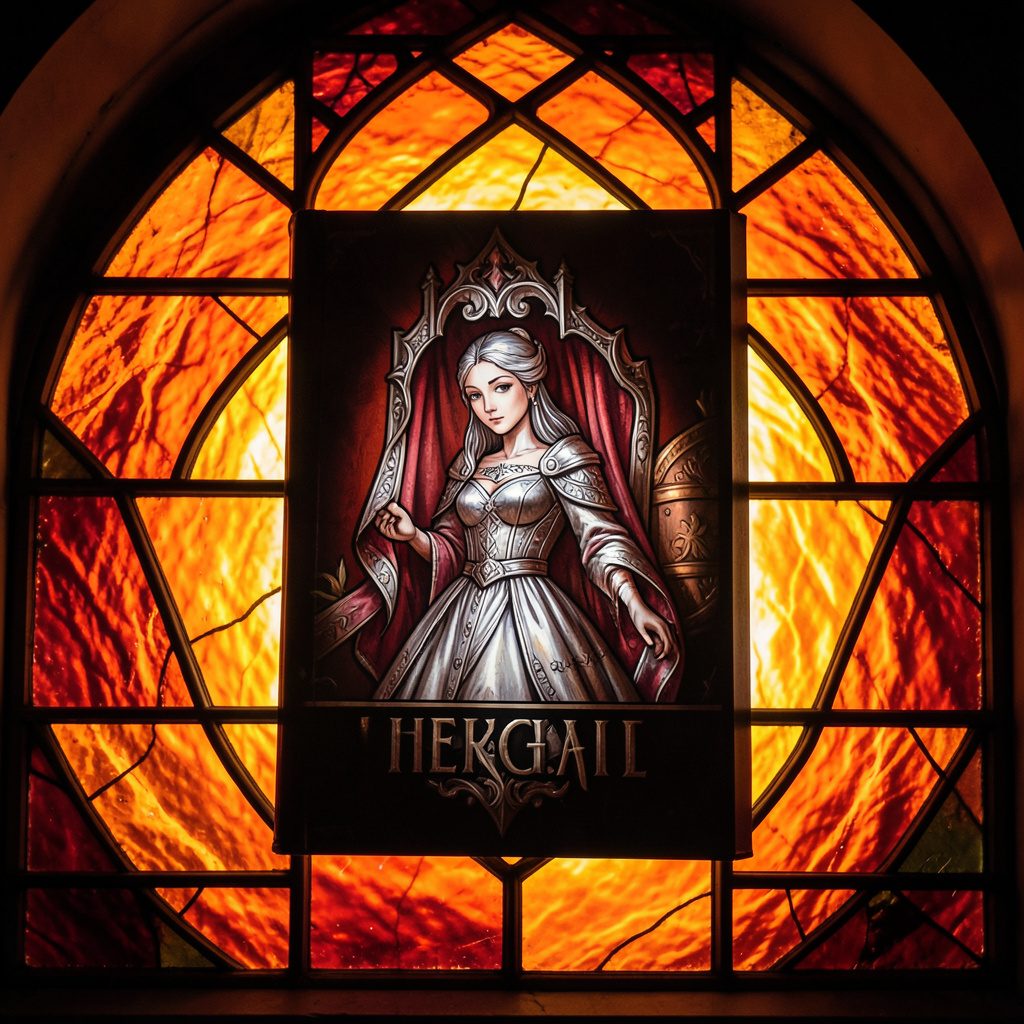
Selected works from across our quarterly issues, gathered into a printed volume. Past print runs have appeared in limited quantities and are available while supplies last.
Volumes cover poetry, short fiction, photography, paintings, drawings, reviews, and interviews — curated to reflect the breadth of artists who have shared their paths in the journal.
Browse Past IssuesInside the Pages
Since 2011, Stone Path Review has hosted contributions from more than twenty artists — poets, photographers, musicians, and filmmakers — along with interviews, readings, and film entries.
Recent volumes have included poetry from Mark Doty and Jim Harrison, an interview with a jazz musician from Minneapolis, MN, and the short film Efflorescence from Deep Field Cinema.

From the Blog
An all-star cast assembled for the fall issue — poetry, short stories, photography, and an interview with a jazz musician from Minneapolis, MN.
Read More →
A featured film entry from Deep Field Cinema, programmed as part of our ongoing screen series.
Read More →
418 Publishing, Inc. was started as the parent company of Stone Path Review, with five issues published by this point.
Read More →
Photography and artist interview, part of an ongoing series highlighting new and established contributors.
Read More →
A recorded poetry reading captured on video and shared alongside the print issue.
Read More →
Browse past quarterly issues of Stone Path Review, available online with limited print quantities.
Read More →