
Events
Fall Issue Update
An all-star cast assembled for the fall issue — poetry, short stories, photography, and an interview with a jazz musician from Minneapolis, MN.
Read More →An Artistic Journal · Est. October 2011
A quarterly publication — online and in print — joining poets, photographers, painters, storytellers, and musicians into one open forum for cross-cultural expression.
The sonnet has lived through the printing press, the typewriter, and the laptop without losing its architecture of argument and turn. Now it is meeting the smartphone, the feed, and the hyperlink, and poets from Brisbane laneway readings to Sydney gallery floors are testing what the form can hold when line breaks are no longer dictated by parchment or print runs. Their experiments suggest that the inherited fourteen-line container can stretch, compress, and mutate without abandoning its essential pulse.
This piece traces the lineage of the fixed form, surveys how Australian writers are bending it for screen culture, and offers practical pathways for poets who want to draft, refine, and submit a sonnet suited to the way people read now. Along the way, it considers the craft decisions that matter when a poem lives both on the page and inside a tap-through gallery.
When Petrarch codified the sonnet in fourteenth-century Italy, he gave it a task: build toward a volta, a turn of thought, inside a frame of fourteen lines. Shakespeare tightened the rhyme scheme and added narrative muscle; the Romantics loosened it; modernists like Wilfred Owen and Robert Lowell broke the meter to fit the wars and griefs of their century. Each disruption kept the scaffolding because the scaffolding itself was a kind of promise to the reader: trust that within these boundaries, surprise will arrive.
Digital publishing invites a different kind of disruption, one that is less about breaking rules than about expanding the surface a poem can occupy. The fourteen lines may now stretch across a scrolling thread, pulse inside a vertical Instagram square, or unfold across a web page where hover states reveal additional stanzas. The promise remains, but the contract is renegotiated each time a poet places the form beside a video clip, a captioned photograph, or a hyperlinked source. The challenge is to let the new affordances deepen the turn rather than distract from it.
A scroll behaves like a stanza in slow motion. The eye arrives at the bottom of the screen expecting completion, then finds another couplet; the volta arrives not at line nine but somewhere between the third and fourth viewport. Poets working in this register have learned to pace their imagery the way cinematographers pace a cut, withholding the volta until the reader has reached for a finger swipe. The form rewards compression in the first half and expansion in the second, mirroring the breath of someone leaning forward into a device.
Multimodal layers are also reshaping the sonnet's silhouette. Image-text sonnets anchor a fourteen-line meditation to a single photograph, turning the picture into a kind of extra rhyme. Spoken-word videos of the same poem re-choreograph line breaks through pause and intonation. Hyperlinked sonnets let a reader detour through annotations, archival footage, or translations, then return to the volta refreshed. The page is no longer a flat surface; it is a room one can move through, and the sonnet is adapting to that room without forgetting its geometry.
Australia's literary ecosystem has long been hospitable to formal reinvention, and the current moment is no exception. Brisbane-based Meanjin has run features on contemporary formalists who braid Renaissance structures with First Nations narrative cadence, while Sydney's annual writers' gathering has hosted panels debating whether meter still has a job in a country whose everyday speech bends vowels so freely. In Melbourne, the spoken-word rooms of Fitzroy and Carlton have become testing grounds for poets who perform sonnets against ambient beats, then publish the cleaned-up text through small press chapbooks that travel as far as Perth and Hobart.
Digital platforms extend that reach further. The Australian Poetry Library, hosted out of Sydney, archives hundreds of sonnets from the colonial era to the present, giving contemporary writers a way to read predecessors without leaving the browser. Red Room Poetry commissions new sonnets each year for projects that pair verse with photography from regional galleries, and several of those commissions now live as scrollable web pieces rather than printed broadsides. The Copyright Act 1968 governs how those poems can be reproduced online, and most Australian journals now ask for digital rights alongside print rights in their contracts. It is a small procedural detail, but it shapes what is possible when a sonnet goes live.
The first decision a poet makes is whether the screen should be invisible or essential. In the invisible mode, the sonnet reads on a phone as cleanly as on paper: fourteen lines, generous white space, no images. In the essential mode, the digital environment becomes part of the meaning, and the poet chooses line lengths, font weights, and scroll speeds with intention. Both approaches are valid, and the choice should follow the poem's own desire.
Sound still matters, even when no one reads aloud. Internal rhyme, assonance, and the muscular monosyllables that helped Gerard Manley Hopkins and, later, the Australian poet John Foulcher anchor lines in memory, can carry a reader through a thumb-scroll. Drafting in longhand on the train from Wynyard to Circular Quay, or in a Canberra cafe before a workshop, can help a poet hear where the meter strains. Then comes revision: cut the filler, sharpen the volta, and test the work on a phone with the brightness turned low. A sonnet that survives that test is ready for an audience.
A finished poem needs a home, and the options have multiplied. Some Australian writers send traditional text sonnets to longstanding print journals such as Meanjin or Quadrant; others pitch scroll-form pieces to newer online quarterlies that welcome image and audio attachments. Reading the masthead of a publication tells a writer who the editors are and what they have championed in past issues, which is often the best predictor of fit.
The journey from submission to print now often involves several format negotiations. A poem accepted for the print edition may be reformatted for the journal's web layout; an online piece may be archived in a PDF companion. Either way, the contract should be read for clauses about digital reuse, translation rights, and duration. These details are unglamorous, but they protect the work long after the screen has scrolled past.
| Aspect | Traditional sonnet | Digital sonnet |
|---|---|---|
| Form | 14 fixed lines on the page | 14 lines, expandable via scroll, image, or sound |
| Volta | Single turn at line 9 | Turn paced across viewports or media layers |
| Reading time | One continuous sitting | Pauses, swipes, and sometimes audio playback |
| Audience reach | Local subscribers and library copies | Global readers via web, social, and aggregators |
| Rights | Print reproduction rights | Print plus digital reproduction, sometimes worldwide |
| Companion media | None typical | Photographs, audio, video, hyperlinks |
The sonnet was always a portable form, and its portability is what kept it alive across oceans and centuries. Now that portability extends to the open web, where a poem can travel from a writer's notes app to a Melbourne gallery wall to a subscriber's inbox in a single afternoon. For poets who feel the pull of both tradition and innovation, the moment is unusually welcoming. Draft a sonnet that knows it will be read on glass, send it into a journal that takes the form seriously, and trust that the volta still works, even when the reader is scrolling. Stone Path Review accepts sonnets of any shape, and its editors read submissions without fees. Submit a poem that bends the line, and help the form grow into its next century.
Identity & Recognition
Featured Book
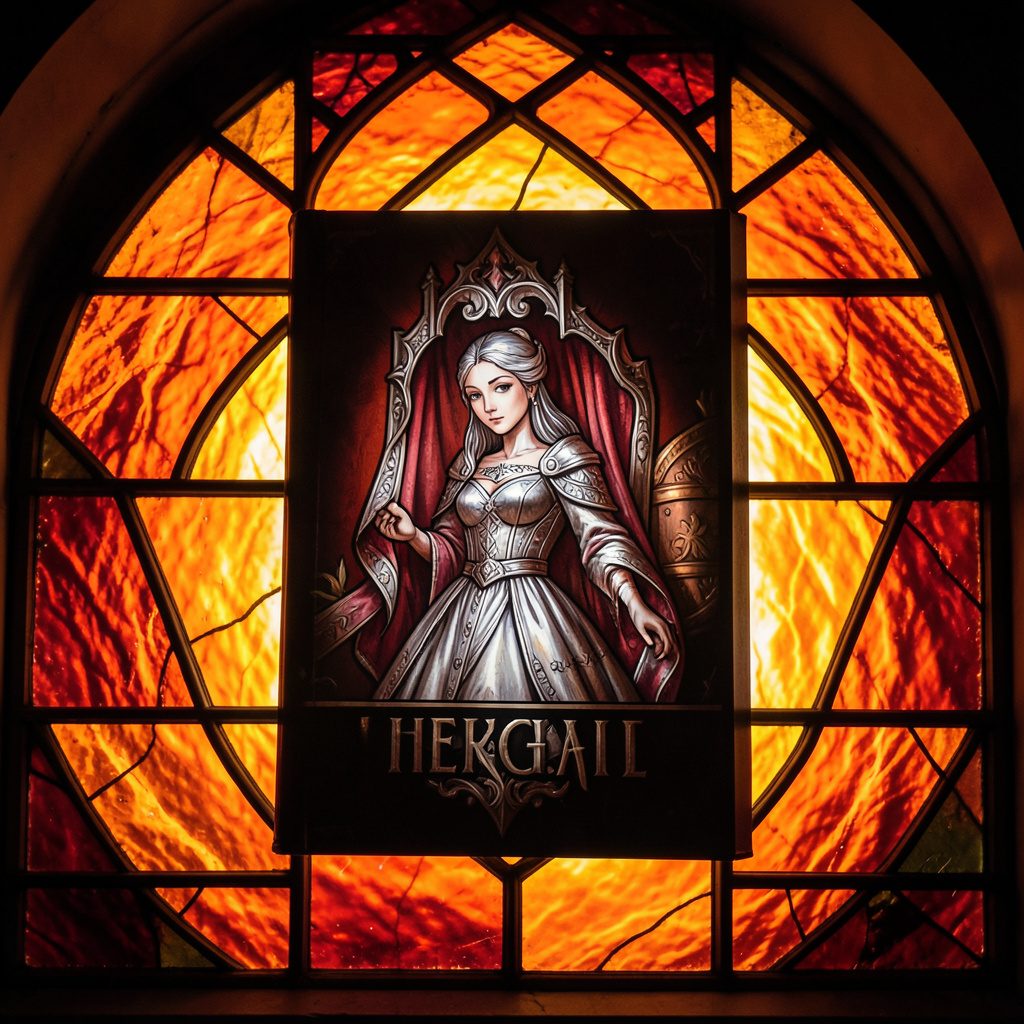
Selected works from across our quarterly issues, gathered into a printed volume. Past print runs have appeared in limited quantities and are available while supplies last.
Volumes cover poetry, short fiction, photography, paintings, drawings, reviews, and interviews — curated to reflect the breadth of artists who have shared their paths in the journal.
Browse Past IssuesInside the Pages
Since 2011, Stone Path Review has hosted contributions from more than twenty artists — poets, photographers, musicians, and filmmakers — along with interviews, readings, and film entries.
Recent volumes have included poetry from Mark Doty and Jim Harrison, an interview with a jazz musician from Minneapolis, MN, and the short film Efflorescence from Deep Field Cinema.

From the Blog
An all-star cast assembled for the fall issue — poetry, short stories, photography, and an interview with a jazz musician from Minneapolis, MN.
Read More →
A featured film entry from Deep Field Cinema, programmed as part of our ongoing screen series.
Read More →
418 Publishing, Inc. was started as the parent company of Stone Path Review, with five issues published by this point.
Read More →
Photography and artist interview, part of an ongoing series highlighting new and established contributors.
Read More →
A recorded poetry reading captured on video and shared alongside the print issue.
Read More →
Browse past quarterly issues of Stone Path Review, available online with limited print quantities.
Read More →