Events
Fall Issue Update
An all-star cast assembled for the fall issue — poetry, short stories, photography, and an interview with a jazz musician from Minneapolis, MN.
Read More →An Artistic Journal · Est. October 2011
A quarterly publication — online and in print — joining poets, photographers, painters, storytellers, and musicians into one open forum for cross-cultural expression.
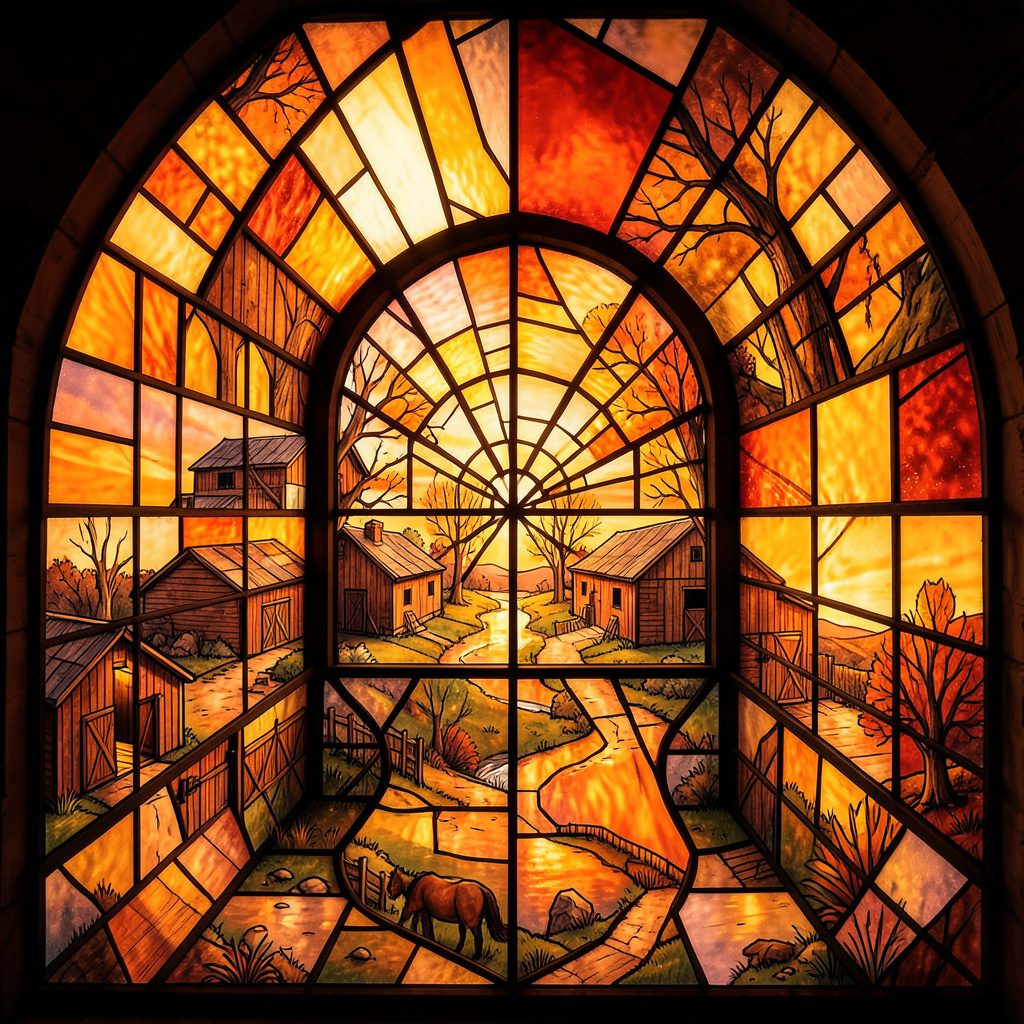
A photograph can record what the eye cannot hold still. Wind leaves no permanent body, heat often appears only as shimmer, and time becomes visible through erosion, growth, fading, repetition, and absence. The camera does not make these forces visible by itself; the photographer builds a set of clues that allows viewers to sense them.
This kind of work asks for patience rather than spectacle. A bent grass stem, a curtain lifting in an open window, cracked bitumen, or a shadow shifting across a wall can carry more force than an obvious dramatic scene. The image becomes a meeting point between evidence and imagination.
For photographers in Australia, invisible subjects are close at hand. The sharp glare of a Perth afternoon, the dry movement of grass outside Canberra, salt on a Sydney railing, and the long shadows of a Melbourne winter all offer distinct visual languages. Everyday routines—walking to a tram, waiting for a bus, hanging washing, driving through heat—provide a rich structure for observing change.
The strongest photographs in this field often resist explanation. They leave enough information for recognition, while preserving some uncertainty. A successful image of wind does not need to show a storm. It may show a landscape that appears to have just been touched.
Wind is easiest to photograph indirectly. Look for consequences: dust gathering along a kerb, seed heads leaning in one direction, laundry twisting on a line, or ripples travelling over a wheat field. Reflections can help, especially when a lake, glass façade, or polished bonnet reveals movement that the main scene conceals.
Choose a stable reference point and allow the moving element to contrast with it. A brick wall behind trembling leaves gives the frame a visual anchor. A person’s coat pulled sideways by a gust can suggest force more clearly than a wide landscape. Slow shutter speeds may turn branches into soft strokes, while a fast shutter can separate individual particles of spray or dust.
Wind also has a sound and physical presence that a still image cannot directly reproduce. You can compensate through sequencing: make several images from the same position as conditions change. A group of frames can suggest rhythm, direction, and duration. Even when shown as a single photograph, this awareness of sequence will help you avoid an image that merely looks blurred.
Heat often announces itself through distortion. On a road outside Adelaide or across a sunlit car park in Brisbane, distant objects may appear to swim above the surface. Use a telephoto lens to compress the layers of air between you and the subject. The resulting shimmer can make a fence, tree, or building seem unstable.
Look for heat’s social effects as well. A closed blind, an empty playground at midday, a dog pressed into the narrow strip of shade beneath a ute, or a queue gathered beneath an awning can communicate temperature through behaviour. The image becomes documentary without relying on a thermometer or caption.
Exposure requires care in harsh Australian light. Protect highlights on concrete, pale sand, and white walls, then preserve enough shadow detail to retain the atmosphere of the scene. Shooting in RAW gives greater control later, but editing should not turn ordinary warmth into an exaggerated orange effect. Colour can suggest heat; it should not replace observation.
At night, heat may remain in materials after the sun has disappeared. Asphalt, corrugated metal, brick, and stone release warmth slowly. A hand near a wall, condensation on a cold drink, or a cat resting on a veranda can indicate the day’s accumulated temperature. These small details often feel more convincing than a theatrical red filter.
Time becomes legible when something changes against a stable background. Photograph the same doorway over several months, return to a damaged billboard, or observe a tree through drought, rain, flowering, and leaf loss. Repetition transforms an ordinary subject into a record of duration.
A diptych or grid can make this process explicit, though a single frame can also contain several temporal layers. Peeling paint may reveal multiple colours from earlier renovations. A construction fence can stand before a building that is half-demolished. A person’s reflection may overlap with an older advertisement in a shop window.
Try to avoid treating age as a decorative texture. Rust, dust, and cracks gain meaning when connected to use, neglect, weather, or repair. A well-worn footpath outside a station records thousands of journeys, while a new concrete surface records expectation. Time is present in both the mark and the human activity surrounding it.
The Australian landscape offers strong examples of slow transformation, from coastal erosion to bush regeneration after fire. When working in areas affected by disaster or environmental change, approach with restraint. Images should acknowledge lived consequences rather than turn damage into an aesthetic resource detached from the people and animals involved.
Invisible subjects can be suggested through camera technique, but technique works best when it serves the idea. A long exposure can draw wind across a scene, while a rapid shutter speed can isolate a suspended instant. A shallow depth of field may make heat haze appear dreamlike; deep focus can place a tiny sign of change within a broad environment.
Distance changes interpretation. From a tram window, wind might appear as a pattern of passing trees and reflected light. Close to the ground, the same weather becomes grit against a shoe, a leaf trapped in a drain, or loose soil moving across concrete. Try several viewpoints before deciding which one communicates the force most precisely.
Motion blur should have a direction. If every part of the frame is equally indistinct, the viewer may read the image as accidental camera shake. Keep one edge, object, or plane relatively clear. This contrast gives the movement somewhere to begin and makes the invisible action easier to infer.
You can also work with the limits of focus. Photographing through a hot window, mesh screen, wet glass, or scratched plastic introduces a barrier between the viewer and the subject. Such surfaces are useful when the theme involves time, memory, or changing conditions, because they make perception itself part of the image.
A weather diary does not need specialised equipment. Record the date, approximate time, direction of light, wind conditions, temperature as reported by a local service, and a short note about what people were doing. The written record can guide later editing, even if it never appears beside the photograph.
In Sydney, try following harbour water, ferries, and flags through a full day. In Melbourne, use tram stops, plane trees, and changing cloud cover as recurring markers. In Darwin, wet-season surfaces and sudden storms can create a different rhythm from the dry season. In Perth, intense afternoon light can reveal how heat changes distance and colour.
Everyday habits are valuable evidence. Australians often seek shade under verandas, carry water bottles during hot weather, check the Bureau of Meteorology before outdoor plans, and alter travel around heavy rain or extreme heat. These behaviours can place an invisible force inside a human story without requiring a posed portrait.
The local market also matters. A phone camera can be enough for a strong study, while a second-hand mirrorless body, used tripod, neutral-density filter, or compact audio recorder may expand your options without turning the project into a shopping exercise. Photograph the tools you already have in use before deciding that new equipment will solve a conceptual problem.
Photographing public space in Australia is generally possible, but public access does not erase every ethical or legal consideration. Privacy expectations, trespass rules, council restrictions, and permissions for commercial use can affect a project. A person visible in a public place may still be vulnerable, especially in images involving illness, grief, children, or housing insecurity.
The Copyright Act 1968 protects creative works, including photographs, and it also affects how you reproduce other people’s images, murals, artworks, and published material. If a billboard, gallery piece, or street artwork is central rather than incidental, check whether permission is needed for your intended use. Keep records of permissions and captions, particularly when submitting work for publication.
Respect cultural authority when photographing Country, ceremony, significant sites, or Indigenous-made works. A visually striking landscape is not automatically available as a neutral backdrop. Local guidance, signage, Traditional Owner protocols, and site-specific restrictions should shape your approach. The camera should not claim ownership over a place simply because it can record it.
When the subject is atmospheric, consent can be easy to overlook because wind or heat seems impersonal. Yet people often carry the effects of these forces in their bodies, homes, and livelihoods. Allow subjects to understand how the photograph may be used. For a broader sense of how an independent arts publication is assembled, visit the Stone Path masthead, where editorial and creative roles are made visible.
Editing is where a scattered observation becomes a visual argument. Begin by removing images that explain the same effect in the same way. Keep photographs that create tension: a still object beside movement, a hot surface beside cool shade, or a new structure beside a trace of what stood there before.
Ask what the viewer can infer without a caption. If the photograph depends entirely on a written statement saying “this was a very windy day,” the visual evidence may need strengthening. Captions can supply place, date, or context, but they should not perform all the imaginative work.
Sequence matters when several images are shown together. Open with a recognisable scene, move towards ambiguity, and finish with an image that leaves a physical or emotional residue. A quiet photograph of an empty chair after images of movement can give the series a sense of duration. Think in terms of tempo, pause, and return.
Visual culture frequently borrows the language of uncertainty to sell certainty. Online advertising, for example, may use motion, glare, and dramatic timing to make a promise feel inevitable; this bet refund example shows how a commercial message can turn risk into a polished visual proposition. Your own work can use similar visual devices for a different purpose: to invite attention without disguising ambiguity.
The following habits can help turn an abstract idea into a consistent body of work:
A project becomes stronger when its method is repeatable. You might revisit one suburban street after hot days, rain, and strong winds, or follow a coastal path through a full year. The resulting photographs can reveal changes that a single visit would hide, while the repeated route gives the work a clear physical boundary.
Stone Path Review welcomes work that crosses photography, writing, sound, and moving image. Its upcoming events can offer useful points of connection for artists thinking about process, place, and public presentation. A photograph of the invisible gains force when it enters conversation with other forms rather than standing as a technical demonstration.
Photograph the next gust before it passes, the patch of road that trembles in the afternoon, or the wall that holds the day’s heat after sunset. Return to it with attention, keep the evidence honest, and let the image preserve a question that the eye alone cannot answer. Submit the work, share the sequence, and give wind, heat, and time a visible life.
Identity & Recognition
Featured Book

Selected works from across our quarterly issues, gathered into a printed volume. Past print runs have appeared in limited quantities and are available while supplies last.
Volumes cover poetry, short fiction, photography, paintings, drawings, reviews, and interviews — curated to reflect the breadth of artists who have shared their paths in the journal.
Browse Past IssuesInside the Pages
Since 2011, Stone Path Review has hosted contributions from more than twenty artists — poets, photographers, musicians, and filmmakers — along with interviews, readings, and film entries.
Recent volumes have included poetry from Mark Doty and Jim Harrison, an interview with a jazz musician from Minneapolis, MN, and the short film Efflorescence from Deep Field Cinema.

From the Blog
An all-star cast assembled for the fall issue — poetry, short stories, photography, and an interview with a jazz musician from Minneapolis, MN.
Read More →
A featured film entry from Deep Field Cinema, programmed as part of our ongoing screen series.
Read More →
418 Publishing, Inc. was started as the parent company of Stone Path Review, with five issues published by this point.
Read More →
Photography and artist interview, part of an ongoing series highlighting new and established contributors.
Read More →
A recorded poetry reading captured on video and shared alongside the print issue.
Read More →
Browse past quarterly issues of Stone Path Review, available online with limited print quantities.
Read More →