Events
Fall Issue Update
An all-star cast assembled for the fall issue — poetry, short stories, photography, and an interview with a jazz musician from Minneapolis, MN.
Read More →An Artistic Journal · Est. October 2011
A quarterly publication — online and in print — joining poets, photographers, painters, storytellers, and musicians into one open forum for cross-cultural expression.
A photograph arrives carrying its own weather, rhythm, and silence. A caption can open a door into that experience: identify a place, name a visible action, or offer a question that sends the eye back into the frame. Its useful work is not to replace the image, but to make the encounter clearer while leaving something unresolved. The viewer should remain an active participant, not a student receiving instructions.
Captions operate differently depending on where they appear. A wall label at the National Gallery of Australia in Canberra may need curatorial precision; a post beside a photograph from the Bondi-to-Coogee walk may need a date, direction, and one detail of wind. Online, a caption may function as accessible description, a fragment of memoir, or an entry point into a larger body of work. Decide which role it plays before polishing the prose.
Photographers in Australia often work amid conditions that make easy certainty difficult. A Melbourne laneway can contain commissioned murals, improvised tags, passing traffic, and a passer-by’s umbrella in one frame. A portrait at a community gathering may carry welcome, resistance, fatigue, and humour at once. The caption should establish coordinates without pretending a few lines contain everything a photograph knows.
Begin by separating what you see from what you infer. “A figure bends over a pram” is an observation. “A mother struggles through poverty” is an interpretation built on assumptions. Both may be defensible, but only one can be checked against the image. When a caption begins with an unsupported claim, it asks trust to do work that attention should be doing.
Look for counter-evidence that keeps a claim honest. The person may be resting, repairing, or searching for something. A shadow can suggest confinement without proving it. This does not make captions timid; it gives them precision. Name the visible gesture first, then add context only when your authority comes from the people pictured, the maker, or reliable documentation.
Ask what the caption can add that a quick glance would miss: the hour, a remembered sound, the title the artist gave the work, or why a street matters. It need not announce a single meaning unless the artist has asked for that reading. A caption can deepen attention while acknowledging that photographs often exceed any verbal account.
Concrete details are stronger than evaluative adjectives. “Bright” tells little; “low winter sun flashes across the wet road” gives the eye direction, temperature, and texture. Notice where the light falls, what interrupts the horizon, which objects appear worn, and how the body occupies the space. These details keep a caption close to the photograph without becoming a mechanical list.
Captions should respect the image’s scale. A wide view may need a phrase about distance; a close view of a hand against sandstone may need only “salt-stiffened fingers.” The image-led approach in Yani Lavigne’s photographs demonstrates how visual specificity can carry narrative without narrating every element.
Weather often supplies exact language without becoming a forecast. Hard afternoon light can make pale stone luminous, while rain can flatten colour and sharpen reflections. Record what altered the light, but resist attaching a mood the scene cannot prove. “Showers moving through the western suburbs” is useful; “the city feels melancholic” dictates the response.
The most memorable captions often introduce a productive mismatch. A photograph may pair an old person with a new phone, or a formal portrait with an unguarded moment. A short caption can register that friction without solving it. Words such as “still,” “after,” or “almost” can open a gap between what appears and what is happening.
Syntax matters in that gap. Let a sentence breathe across an image, or interrupt it at the point of uncertainty. A blunt label closes interpretation; a placed clause may keep it alive. The same principle applies when still images meet performance, a theme explored in adapting poems for performance. There, voice, pause, and movement can alter material first encountered on a page.
Avoid a caption so clever that it hijacks the photograph. Ask whether its verbal turn could accompany almost any image. If so, it belongs to the writer rather than the work. Keep one point of contact—a gesture, colour, distance, or contradiction—and build from there. The reader should feel the photograph opening a thought, not watch the caption seize control.
Place names are never merely decorative. A particular Melbourne suburb can carry different streets, histories, and communities than a broad reference to the city. State the location when it changes the photograph’s meaning, and use the name the community uses. Local specificity can sharpen a work without turning residents into shorthand for atmosphere.
Language deserves equal care. Preserve a speaker’s own idiom when quoting speech, including Australian expressions such as “arvo,” “no worries,” or “fair dinkum,” without using them as comic seasoning. Explaining “arvo” to an international audience may be considerate, yet explaining it inside an Australian caption can flatten the voice. Context can come from setting, translation, or a brief note that respects speaker and reader.
Images of Aboriginal and Torres Strait Islander people, cultural events, and artworks require community-defined names and protocols. A caption should not turn ceremonial knowledge into a decorative clue, label a person “tribal,” or imply that visibility equals permission. Ask what is appropriate to name, what should remain private, and who approved the use. Captioning cannot replace consent, though it can show that consent was taken seriously.
A caption changes when its format changes. On mobile screens, a long opening sentence may disappear beneath an image. In print, line length and white space can slow the reader. In a gallery, the label may sit at a different angle from the work. Draft for the actual setting, then adapt the information rather than shrinking a clever paragraph until it no longer fits.
Australian creative markets add another layer. At weekend artist-run stalls in Melbourne and Adelaide, photographs may be offered as signed, numbered prints from small editions, with prices in Australian dollars. A caption can record edition and price without becoming sales copy. A web or journal version may need a shorter artist note instead.
Read recent journal issues before deciding how much to explain. Stone Path Review’s mix of poems, fiction, essays, visual art, music, and video creates a space in which language and image can meet without one serving as a footnote to the other. Notice how captions identify, withhold, and invite. Editorial consistency comes from that rhythm, not from forcing every image into the same explanatory template.
If a work has a title, sequence, artist statement, or related piece, the caption can connect them, but only where the connection serves the reader’s orientation. An image may also need credit, date, place, and medium for practical reasons. Separate those facts from interpretation with a line break or sentence boundary. The reader should be able to scan the record and then linger over the human voice.
A caption becomes noisy when every clause tries to be important. Remove throat-clearing such as “This photograph shows,” “we can see,” or “captured beautifully.” These phrases announce that language is present rather than doing anything with the image. Read the draft aloud. If your mouth keeps tripping over it, the eye probably will too.
A practical test is to place the caption beside the photograph and read both without commentary. Does the caption deepen what your eye found, or does it explain the picture to someone who has not stopped looking? If the verbal part could survive after the image is removed, it may be too general. If it feels inseparable but still leaves the image breathing, it is probably doing useful work.
Captions are part of the conversation between maker, image, and reader. Their authority comes from care: accurate looking, informed context, and restraint about what cannot be known. The reader supplies the final movement, noticing a relationship the writer missed and resisting a reading the caption tried to impose. Good wording supports that movement rather than predicting it.
Develop the caption in passes. Make one version purely factual, one that reaches toward interpretation, and one that tests the line between them. Compare their assumptions. Keep the facts that remain essential, then revise the sentence so its rhythm belongs to the photograph’s pace. The polished caption may borrow a phrase from the factual version and an image from the freer one.
Choose one recent photograph and draft three captions for three different settings: a gallery wall, a journal page, and a social post. Read them in those environments, revise for distance and scale, and note what each version must clarify. When the work is ready to travel beyond your desk, Stone Path Review, published by the nonprofit 418 Publishing, welcomes submissions without reading or submission fees. Send the image with a caption that knows where to speak and where to stop.
Identity & Recognition
Featured Book
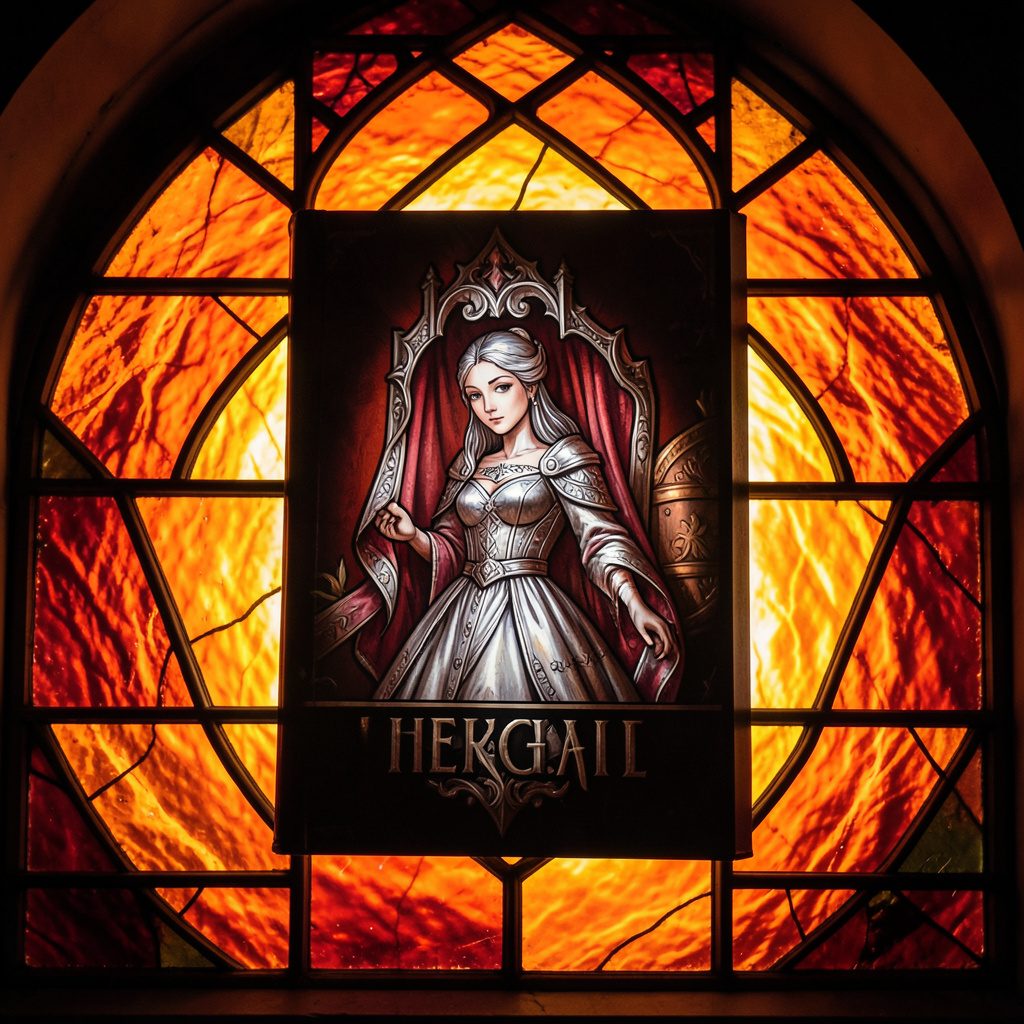
Selected works from across our quarterly issues, gathered into a printed volume. Past print runs have appeared in limited quantities and are available while supplies last.
Volumes cover poetry, short fiction, photography, paintings, drawings, reviews, and interviews — curated to reflect the breadth of artists who have shared their paths in the journal.
Browse Past IssuesInside the Pages
Since 2011, Stone Path Review has hosted contributions from more than twenty artists — poets, photographers, musicians, and filmmakers — along with interviews, readings, and film entries.
Recent volumes have included poetry from Mark Doty and Jim Harrison, an interview with a jazz musician from Minneapolis, MN, and the short film Efflorescence from Deep Field Cinema.
From the Blog
An all-star cast assembled for the fall issue — poetry, short stories, photography, and an interview with a jazz musician from Minneapolis, MN.
Read More →
A featured film entry from Deep Field Cinema, programmed as part of our ongoing screen series.
Read More →
418 Publishing, Inc. was started as the parent company of Stone Path Review, with five issues published by this point.
Read More →
Photography and artist interview, part of an ongoing series highlighting new and established contributors.
Read More →
A recorded poetry reading captured on video and shared alongside the print issue.
Read More →
Browse past quarterly issues of Stone Path Review, available online with limited print quantities.
Read More →