Events
Fall Issue Update
An all-star cast assembled for the fall issue — poetry, short stories, photography, and an interview with a jazz musician from Minneapolis, MN.
Read More →An Artistic Journal · Est. October 2011
A quarterly publication — online and in print — joining poets, photographers, painters, storytellers, and musicians into one open forum for cross-cultural expression.
An artist’s book treats a publication as an art object: pages, images, typography, binding, sequence and physical handling all carry meaning. It can be an illustrated poem, a compressed exhibition, a sculptural object, a collaborative score or an inexpensive zine. Its history lies in the tension between the intimate scale of a book and the public reach of multiplication. A reader may follow it from beginning to end, or circle a display, handle a loose page and compare variants.
That tension also makes the form open to new technologies and new readers. Its international community can be sampled through Stone Path Review, an artistic quarterly publishing writing, visual art, photography and moving image across cultures. The history is as much about making and circulation as about famous individual books. The survey below follows the artist’s book from illustrated and private-press traditions through avant-garde experiment, postwar codification and Australia’s lively small-press culture.
| Period | Typical shape | Historical significance |
|---|---|---|
| Medieval–18th century | Manuscript, album or illustrated treatise | Established the book as an image-bearing object |
| 1820s–1900s | Private press or illustrated edition | Integrated design, printing and binding |
| 1910s–1930s | Dada collage or avant-garde publication | Combined typography, photography and reproduction |
| 1950s–1970s | Codex, photobook or conceptual score | Made the book an exhibition or performance |
| 1980s onward | Artist-run press, zine or hybrid edition | Shifted authorship, distribution and readership |
The artist’s book has no single starting point. Medieval manuscripts, emblem books and illustrated treatises already made the page a meeting place for text and image. William Blake’s hand-coloured books pushed that union towards a unified personal artwork. Nineteenth-century private presses, including the Kelmscott, Doves and Ashendene presses, revived the book as a collective design object. Woodcut, type, paper and binding were planned together rather than used as anonymous containers.
These precedents did not form one continuous lineage, but they supplied a productive question: who controls the making of a book? An author commissions a printer; an artist can design every element, coordinate specialists or issue a work with several states. The modern term developed from that expanded control, shifting attention from who wrote the words to how the whole publication creates meaning through touch, sequence, edition and accident.
During the First World War, Dada artists challenged the authority of the conventional book. Berlin figures including Hannah Höch and Raoul Hausmann used collage, typography and found images to turn inexpensive pamphlets into irreverent cultural arguments. Their works were reproducible and confrontational, yet each copy retained the accidents of its assembly. The publication became an interruption rather than a smooth vehicle for a settled message.
Russian Constructivism and De Stijl made design radical through geometric structure, while Futurists tested simultaneity on the page. Surrealists widened the field with automatic drawings, photography and found visual material. Max Ernst’s collage novels assembled disturbing worlds from popular sources, revealing how cheap printing could enter sophisticated art. Across these movements, the book became object, edition, performance and score, producing meaning through handling, unfolding and deliberate misreading.
After 1945, the artist’s book acquired institutions and categories. The Museum of Modern Art’s 1959 exhibition The Artist’s Book brought together illustrated works, multiples and artists’ books, giving the form international visibility. Such exhibitions established a useful shared language, although they also narrowed a field that could be handmade, mass-produced, provisional or deliberately awkward.
Fluxus pushed the codex towards an event or instruction. Robert Filliou and George Brecht treated books as scores for readers, while Dieter Roth, Edward Ruscha and Sol LeWitt explored unstable pages, photographic sequences and systematic structures. Chance became material in editions assembled from shuffled or found components. That differs from the reward logic of jackpot mechanics, where repeated turns are framed around winnings rather than interpretation.
From the 1970s onward, feminist publishers, postcolonial projects, community workshops and punk photocopiers carried the format beyond galleries. The 1992 London exhibition The Spine later surveyed its breadth with more than one hundred contributors. Small runs and self-distribution made artists’ books especially useful for experiments commercial publishing had little interest in, including samizdat, correspondence networks and collective archives.
Australia’s culture of the book is supported by strong public collections and active local markets. Melbourne Art Book Fair, Sydney’s Impressions fair, specialist booksellers, print studios and institutions such as the National Gallery of Victoria, Art Gallery of New South Wales and State Library of New South Wales create routes between makers and collectors. Zine fairs in Melbourne, Sydney, Brisbane and Adelaide also show how inexpensive editions can build audiences beyond the art world.
That ecosystem exists within distinct Indigenous practices rather than beside them. The Ernabella Press printmaking studio, now part of Tjulyuru Arts in Alice Springs, has sustained publishing and image-making with Anangu Pitjantjatjara artists. Community-controlled books and editions can hold cultural knowledge, language and authorised narratives, requiring care about access, ownership and attribution. A useful Australian history places these practices on their own terms while examining exchange with international book arts.
Distance, freight and market size shape what survives. A handmade run may carry a modest A$ retail price but still face GST, specialist paper costs and Australia Post charges when sent beyond a city. Digital files lower some barriers, though they do not reproduce the tactility of a printed edition. Migration adds another layer. The experience behind a young immigrant artist profile shows how portable visual stories can enter new networks, carrying private memory while finding a local audience.
The format remains elastic because makers use the book for purposes beyond conventional authorship. Its strongest recent work often joins physical craft with public participation, while other projects treat documentation, teaching or protest as central material. Two broad paths show how the form has continued to widen.
One path treats the book as a designed encounter between language, image and the reader’s body.
Another path treats the book as a social and technological object.
These paths overlap. A digital project may lead to a printed collection, while a handmade zine can create an online archive. The distinction between art and publication becomes less useful as artists combine formats according to the experience they want to produce.
Preservation matters because every book carries decisions that a text file cannot preserve: the weight of paper, pressure of a fold, alignment of a stamp, sequence of a loose leaf and evidence of repeated handling. Libraries, archives and collectors keep those decisions available, while careful photography and digital facsimiles can widen access without pretending to replace the original.
Artists, publishers, booksellers and readers can keep the history moving. Make a small edition, share it at a local fair, place copies in libraries and lend them to workshops. When a project needs an international platform, Stone Path Review accepts submissions without a reading fee or submission fee. Make one book by hand, circulate it locally and place it where the next artist can find it.
Identity & Recognition
Featured Book
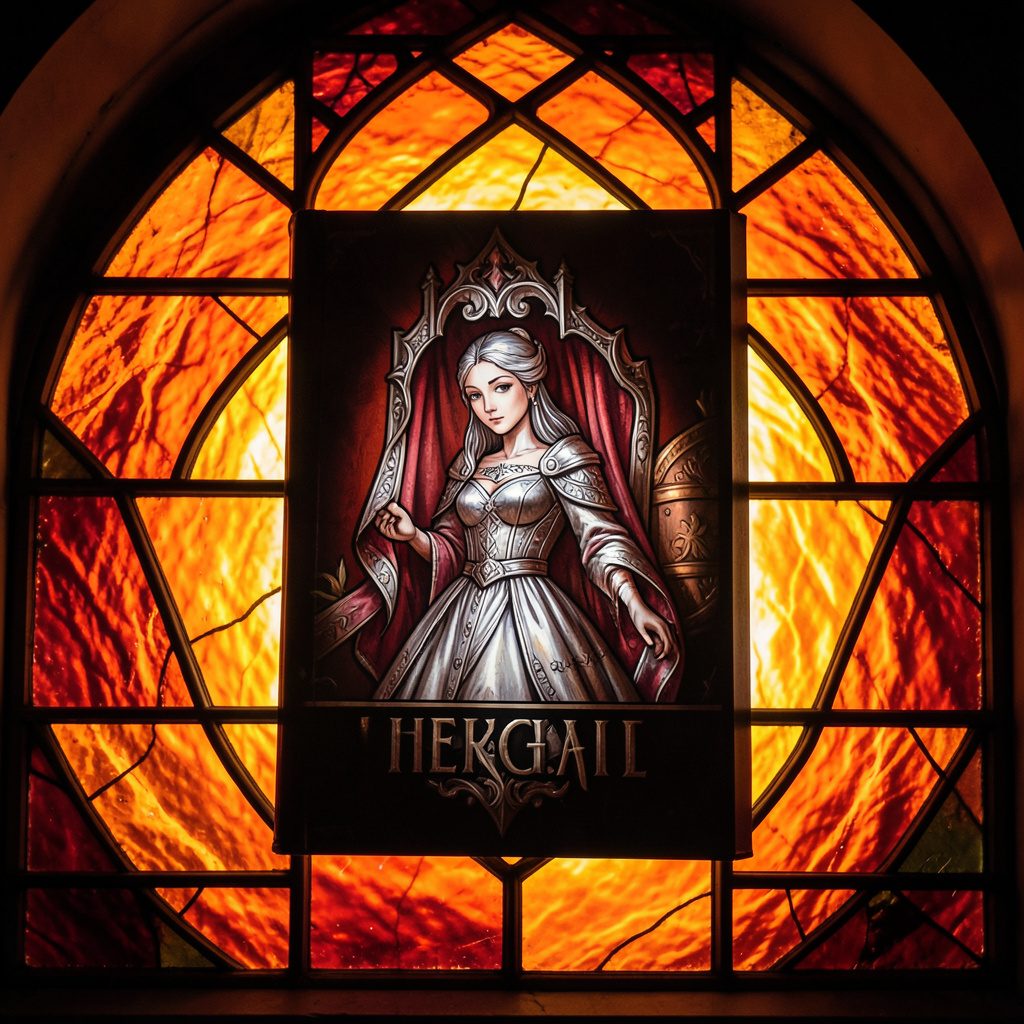
Selected works from across our quarterly issues, gathered into a printed volume. Past print runs have appeared in limited quantities and are available while supplies last.
Volumes cover poetry, short fiction, photography, paintings, drawings, reviews, and interviews — curated to reflect the breadth of artists who have shared their paths in the journal.
Browse Past IssuesInside the Pages
Since 2011, Stone Path Review has hosted contributions from more than twenty artists — poets, photographers, musicians, and filmmakers — along with interviews, readings, and film entries.
Recent volumes have included poetry from Mark Doty and Jim Harrison, an interview with a jazz musician from Minneapolis, MN, and the short film Efflorescence from Deep Field Cinema.
From the Blog
An all-star cast assembled for the fall issue — poetry, short stories, photography, and an interview with a jazz musician from Minneapolis, MN.
Read More →
A featured film entry from Deep Field Cinema, programmed as part of our ongoing screen series.
Read More →
418 Publishing, Inc. was started as the parent company of Stone Path Review, with five issues published by this point.
Read More →
Photography and artist interview, part of an ongoing series highlighting new and established contributors.
Read More →
A recorded poetry reading captured on video and shared alongside the print issue.
Read More →
Browse past quarterly issues of Stone Path Review, available online with limited print quantities.
Read More →